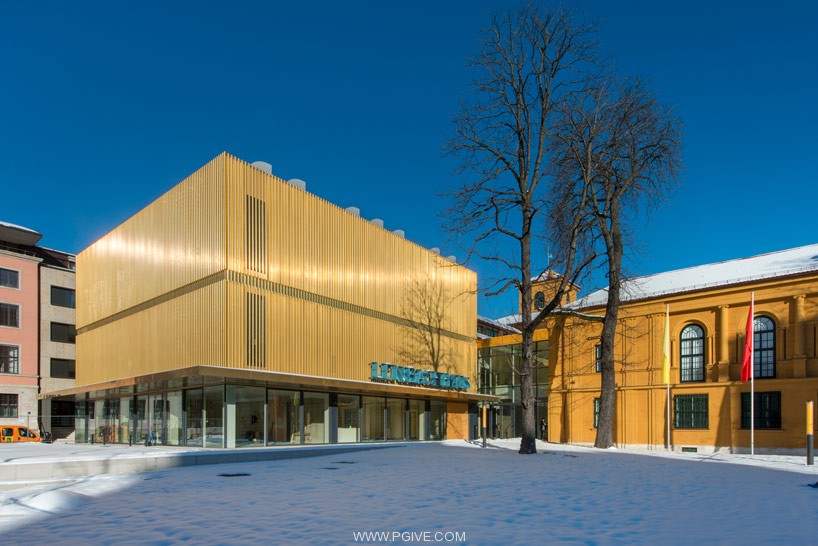
伦巴赫博物馆 建筑事务所:Foster + Partners
建筑师:Norman Foster
地点:德国,慕尼黑
年份:2013 设计团队: Norman foster, Spencer de grey, David nelson, Stefan Behling, Christian Hallmann, Ulrich Hamann, Klaus Heldwein, Florian Boxberg, Leonhard Weil, Judith Kernt, Henrietta Hahnloser, Eike Danz, Diana Krumbein, Simon Weismaier, Christopher von Der Howen, Inge Tummers, Jörg Grabfelder, Katrin Hass, Tillmann Lenz
项目管理: Du Diederichs Project Management 建筑工程公司:Sailer Stepan & Partner gmbh 机械工程公司:Ingenieurbüro Robert Ottitsch (hls + rlt) Peg gmbh (elektro) 建筑成本顾问: Höhler + Partner 建筑成本估算: CBP Cronauer 景观美化: Burger Landschaftsarchitekten 照明设计: Ingenieurbüro Bamberger 预约年份: 2002开工年份: 2009完工年份: 2013建筑占地面积:约4,000平方米总面积: 12,328平方米艺术装置:‘Wirbelwerk’ 2012 由 Olafur Eliasson负责; ‘Lenbachhaus’ 2012由 Thomas Demand负责结构:主体结构:(新建部分)钢筋混凝土,(旧楼部分)砖; 外墙:(新建部分)太古,(旧楼部分)粉刷能源:高层美术陈列室和通道充分利用自然光照,所有公用空间内均有LED照明 灯;供暖和制冷设备被安置在墙内和地板里,并使用天然地下水来协助供暖和制冷;卫生间使用雨水冲洗。 照明: LED 照明灯 材料: 外部:太古铝合金/铜合金; 内部:木地板, 铜栏杆 费用: 工程费用: 5900万欧元;LED 照明灯: 430万欧元 Lenbachhaus Museum reopens to the public 历经10年之久的翻修之后,慕尼黑的伦巴赫之家市立博物馆将通过一次特别的典礼重新向公众开放,德国文化部长、慕尼黑市长、博物馆馆长和Foster and Partners建筑事务所的建筑师Norman Foster都将出席这次典礼。该博物馆最初是在1891年作为住宅和工作室为艺术家弗朗茨•冯•伦巴赫而建。一个世纪以来,由于它被不断改作他用,因此渐渐地扩大了规模。然而博物馆急需一次修整,以容纳每年约28万前来参观的游客。Foster的修整设计对整个博物馆建筑群的环境效能进行了换代更新,并改善了支配现有建筑内的运行的各方面设施——通道、通风系统和日光照明——同时还要求在建筑群内增建一栋现代风格的侧楼,用于陈列“蓝色骑士”系列的印象派画作,并在侧楼内设餐厅、阳台、各种教育设备,以及糅合了新旧风格的、由楼面延伸至天花板的中庭。这座增建的侧楼被构思成一个“珠宝盒”,用来存放馆内的珍贵品。侧楼外部镀上一层铜铝合金,借助合金的颜色,将别墅原先明亮的橘黄色调用一种现代风格的设计再现出来。在室外通道的更新方面,主要是使庭院恢复使用,并对广场和人行道进行了新的设计,这样就更好地将新建筑和早已作古、无法呈现出真实原貌的历史建筑连接在一起了。供暖和制冷都是通过地板内的水基系统实现的,再加上雨水收集系统、低能耗的自然光照明措施,使得博物馆成为该城市的一座环保责任型建筑。 Lord Foster说:“我们遇到的主要挑战是,必须要在保持馆内展区数量不变的前提下,创造出新的通道和游客活动空间。由于馆内各个部分都经历过演变,所以要注意的不只是一些特定的地方——每一个角落都是独一无二的,都需要特殊的关注和不同的设计决策。这是一个美妙的过程。我们的设计中的另外一个很重要的方面就是为艺术作品的展览创造新的机会,让它走出传统美术展厅的范畴,如在中庭内展出。在这个空间里衍生出了‘都市空间’的概念——它是博物馆的公共与社会属性的中心,也是与更为广阔的城市接轨的场所。”
译者:筑龙网 何碧云 译稿版权归筑龙网所有,转载请注明出处。
After over ten years of restoration, the 'Lenbachhaus Museum in Munich will reopen today to the public with a special ceremony attended by the German Culture Minister, the mayor of Munich, the museum's director, and architect Norman Foster of Foster and Partners. The museum, originally built in 1891 as a villa and studio for artist Franz von Lenbach, has been gradually expanded over the course of a century as its function was re-appropriated but the structures were in dire need of a restoration to accommodate the estimated 280,000 visitors per year. Foster's design the environmental performance of the complex and improved the logistical aspects of the existing buildings—circulation, ventilation and daylighting —and also called for the addition of a new contemporary wing which houses the 'Blue Rider' collection of expressionist paintings and provides enough space for a restaurant, terrace, education facilities and full-height atrium that articulates the blending of old and new. The new addition is conceived as a 'jewelry box' containing the museum's treasures, clad in copper aluminum alloy tubes who's color represent a contemporary rendition of the original villa's vibrant yellow-orange hue. Exterior circulation is through reactivated courtyard spaces and newly-designed plazas and walkways that better connect the new structure with the historical construction which was stripped of most of its aged annexes to expose the true original design. Heating and cooling is now carried out through water-based systems within the floor, coupled with rainwater collection systems, low-energy and natural lighting make it an environmentally responsible structure within the city. Lord Foster states: 'Our main challenge has been to maintain the same amount of exhibition area within the museum’s footprint, while creating new circulation and visitor spaces. Given the way that the different parts of the museum had evolved, there was no such thing as a typical space— every corner is unique and required individual attention and different design decisions. This has been a fascinating process. Another important aspect of our design has been creating new opportunities for works of art to be exhibited outside the traditional confines of the gallery, such as in the atrium. This space develops the idea of the ‘urban room’ —it is the museum’s public and social heart, and point of connection with the wider city.'图包下载
页:
[1]