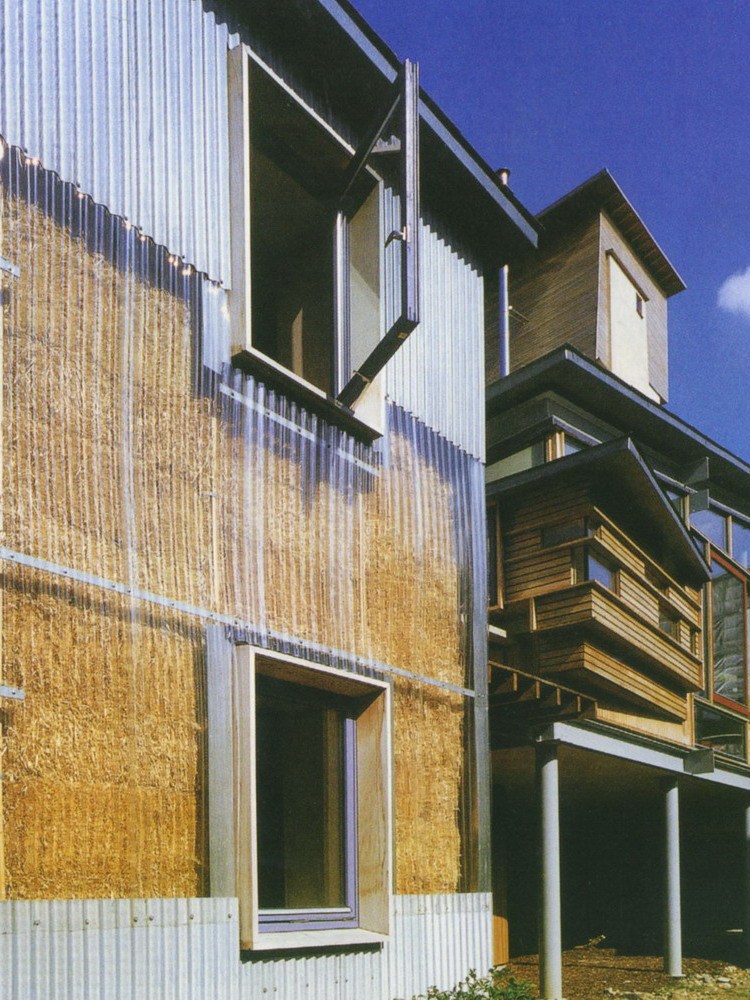
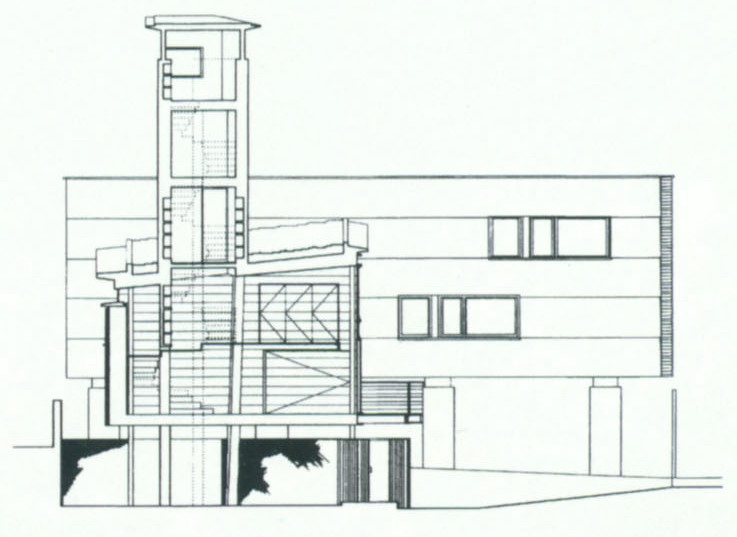
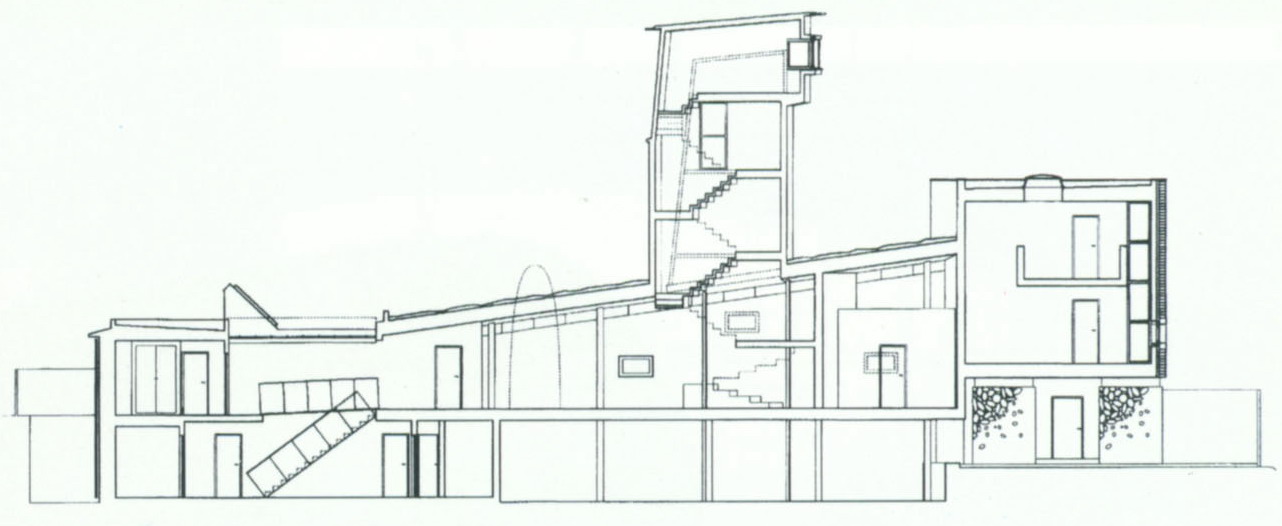
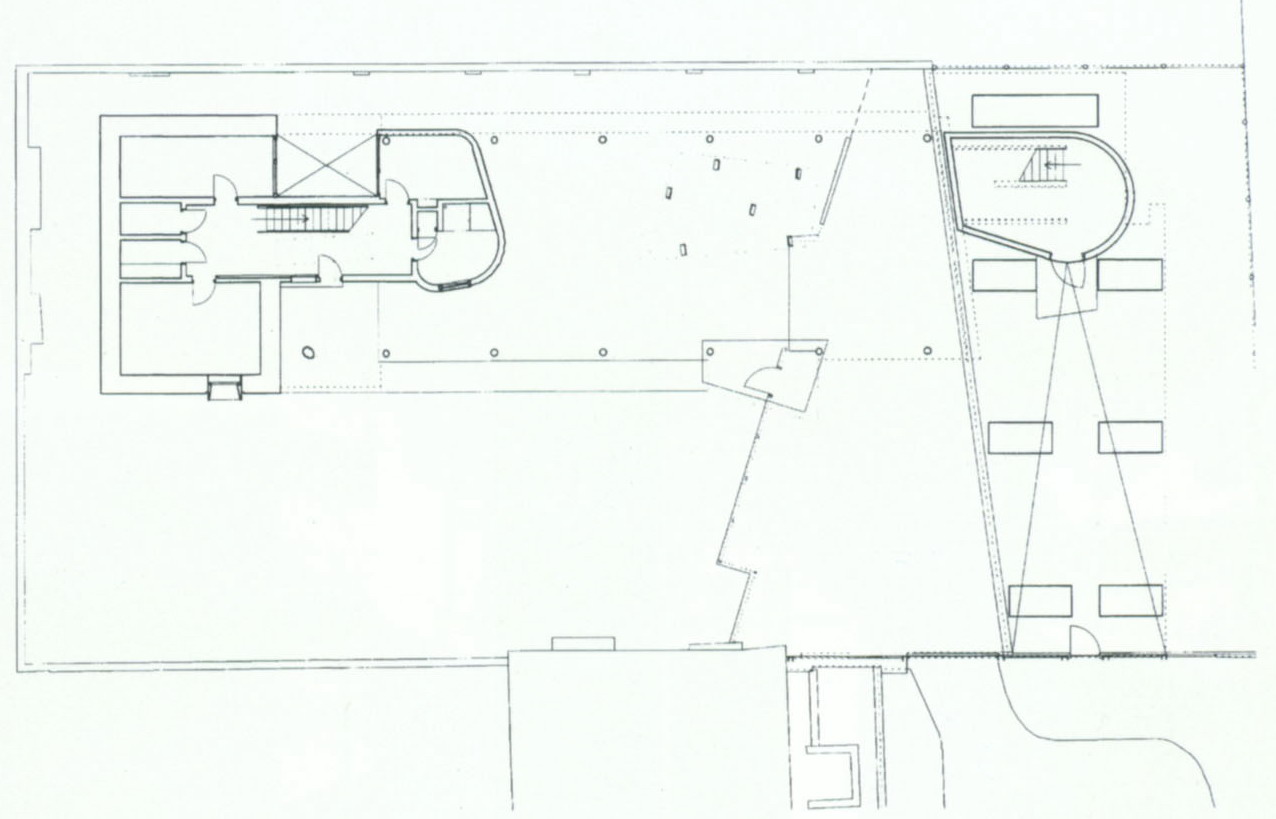
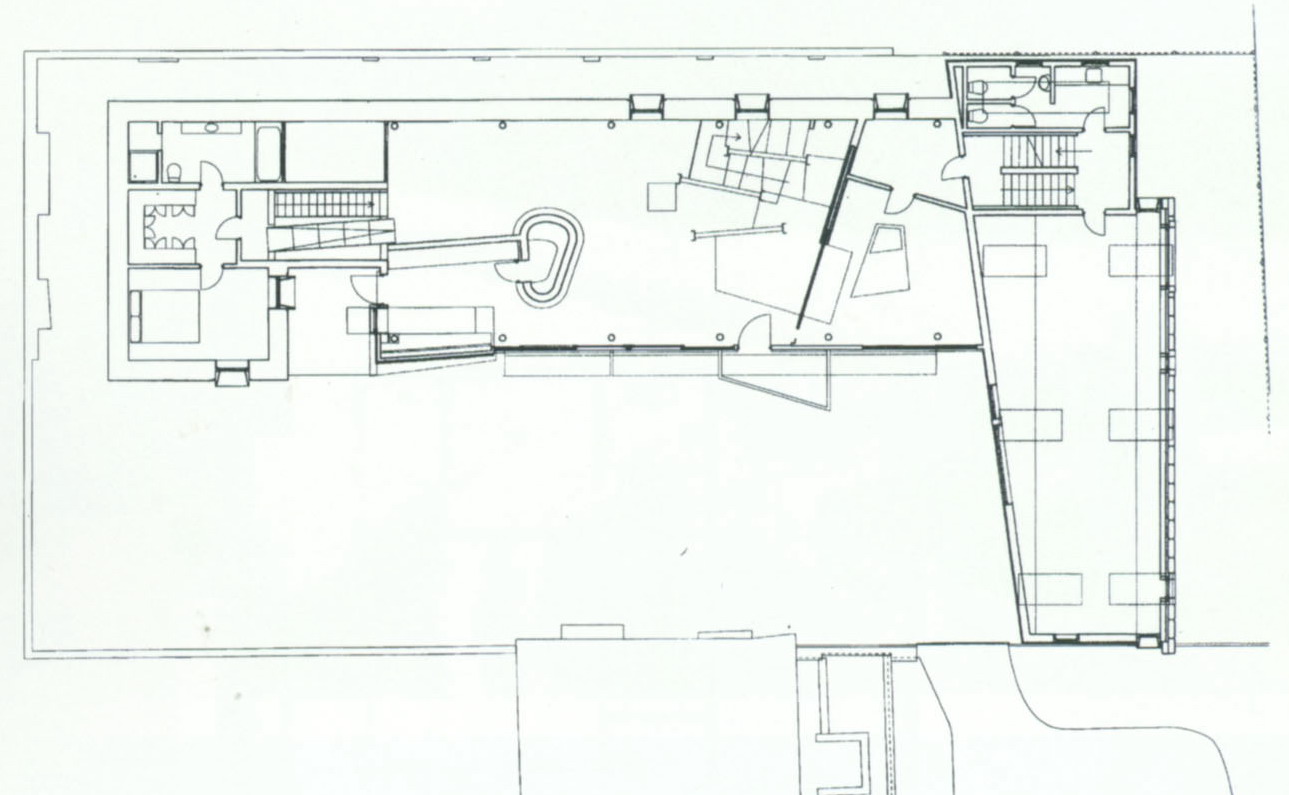
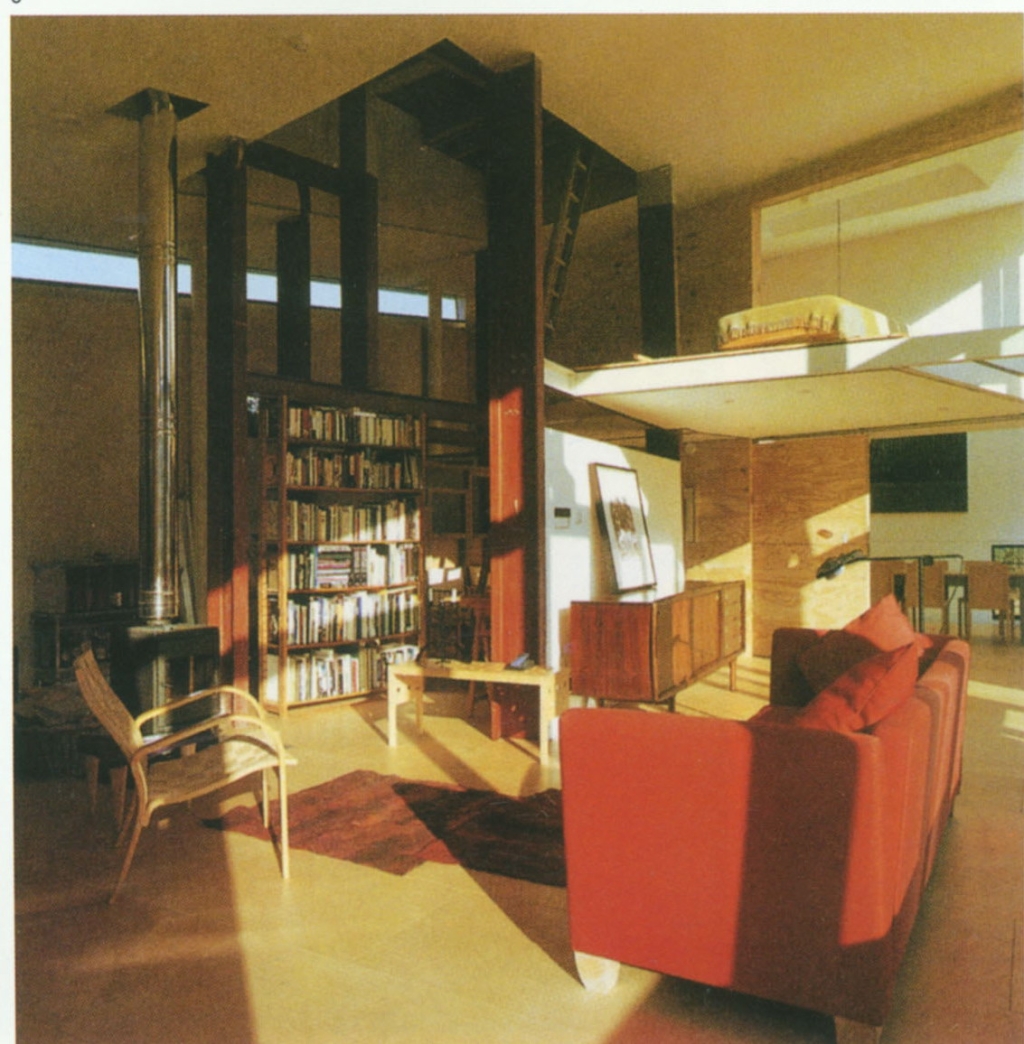
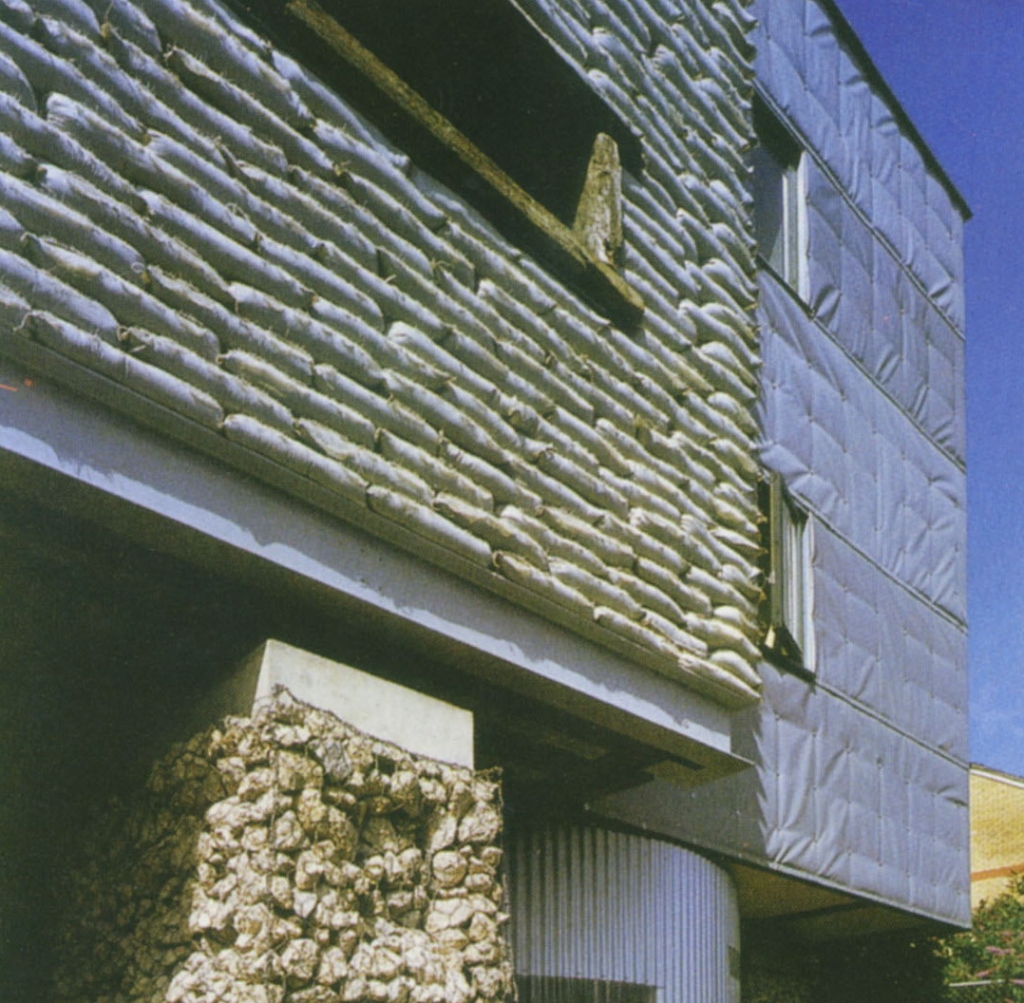
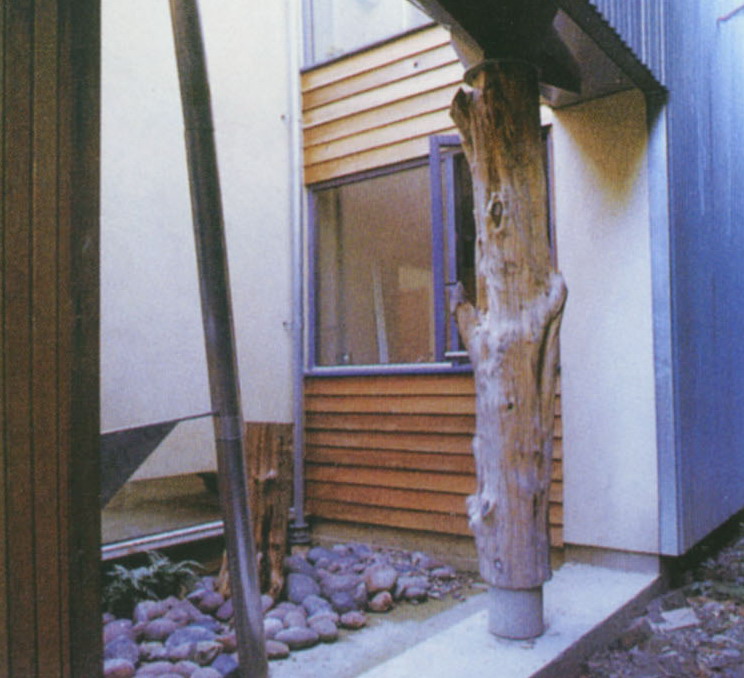
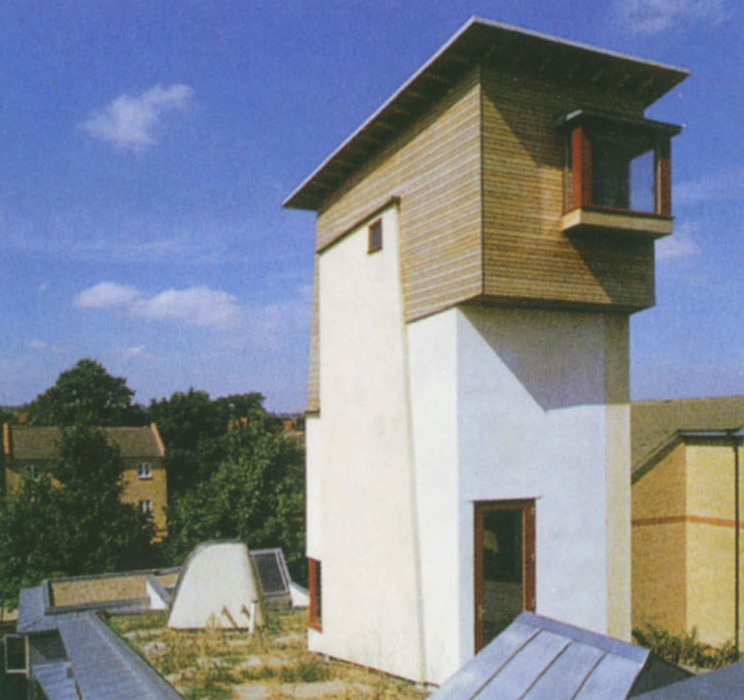
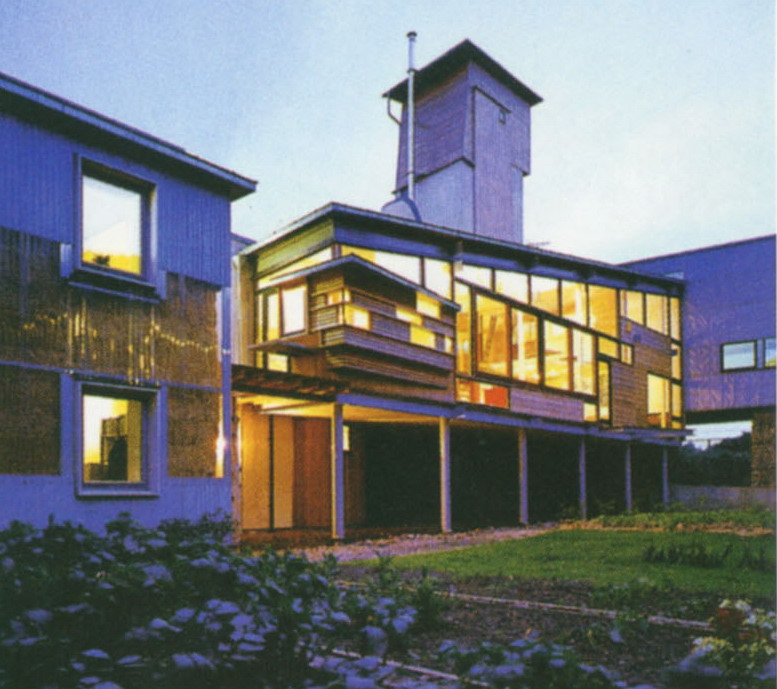
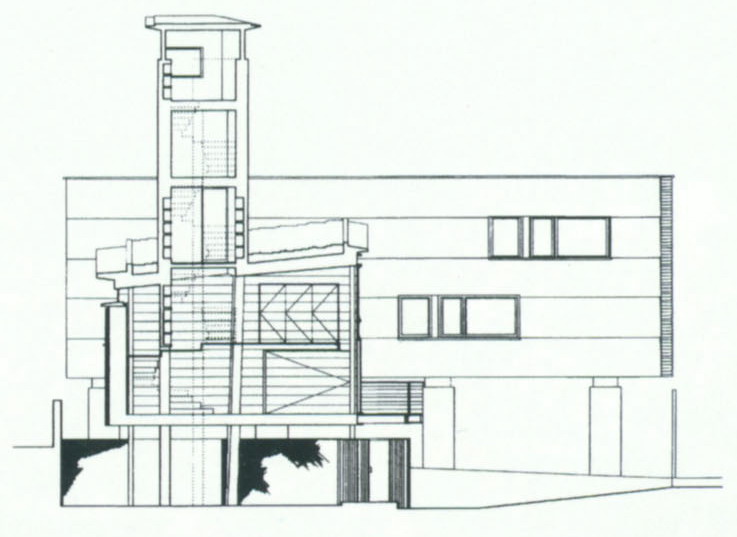
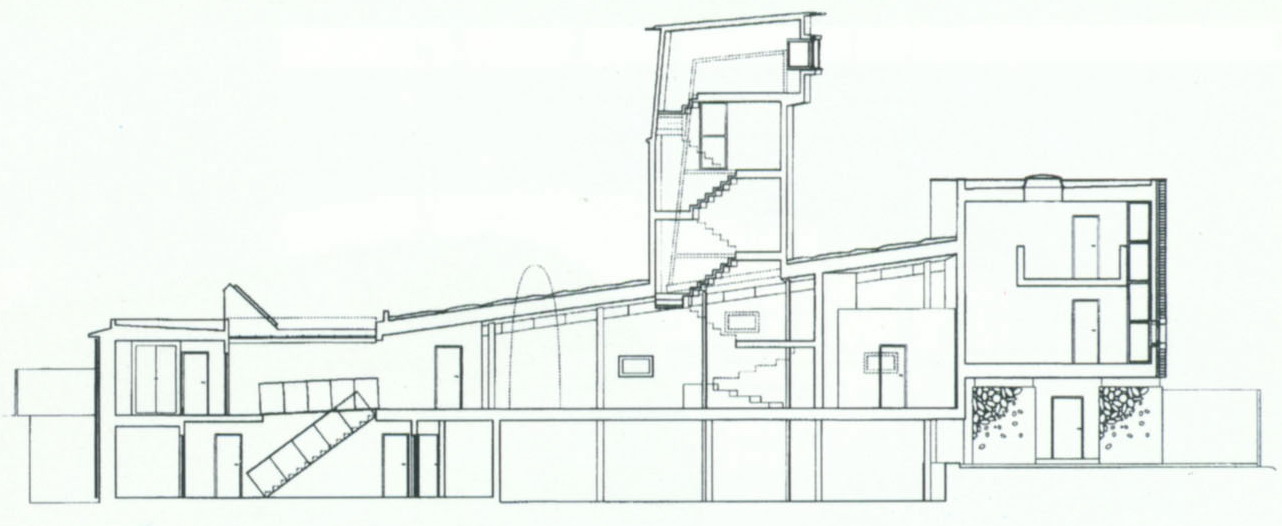
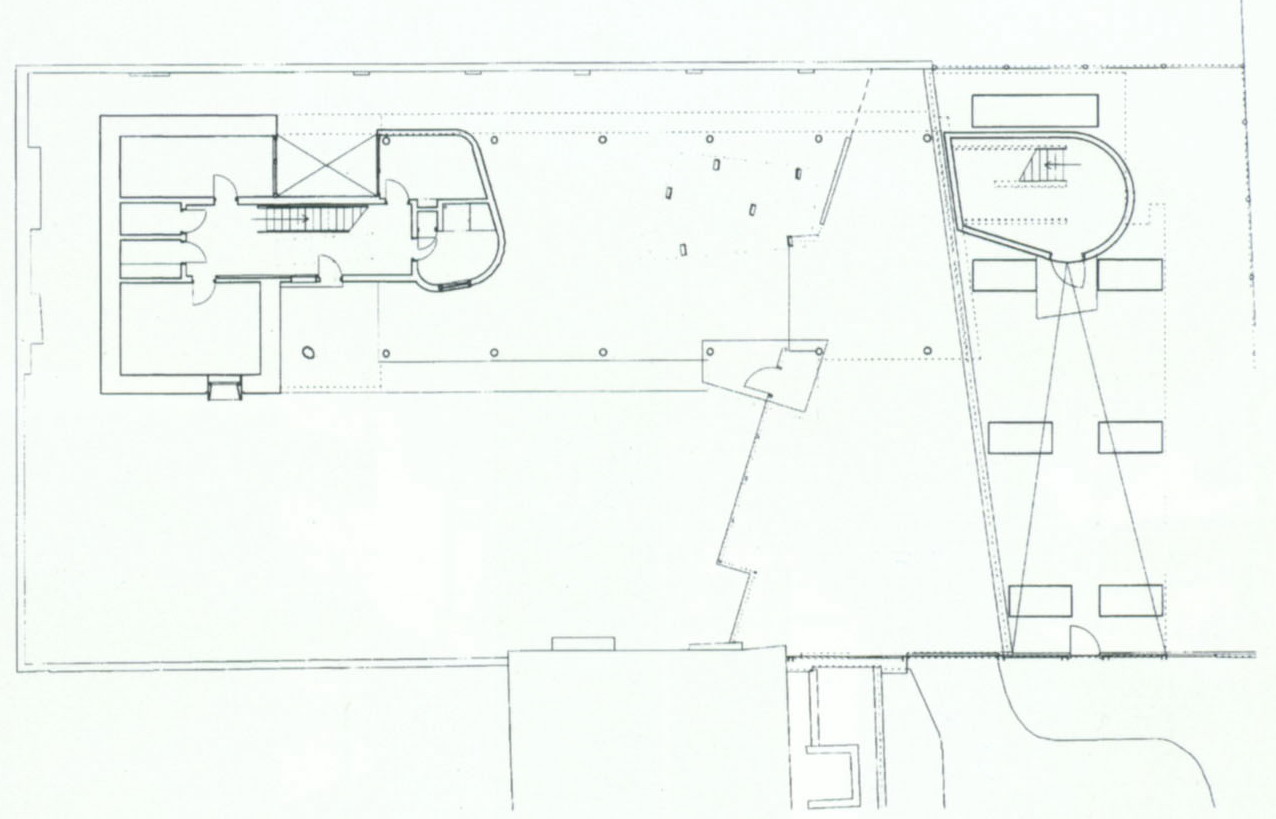
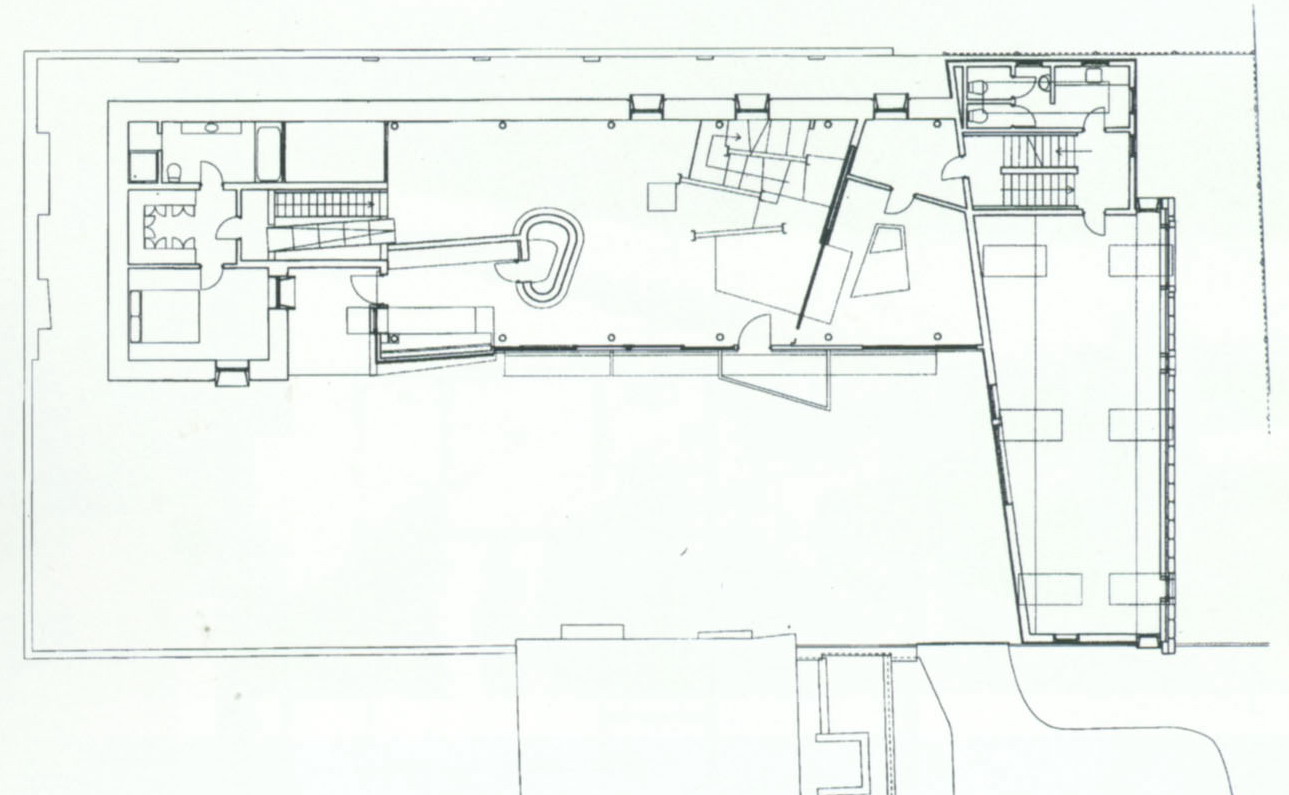
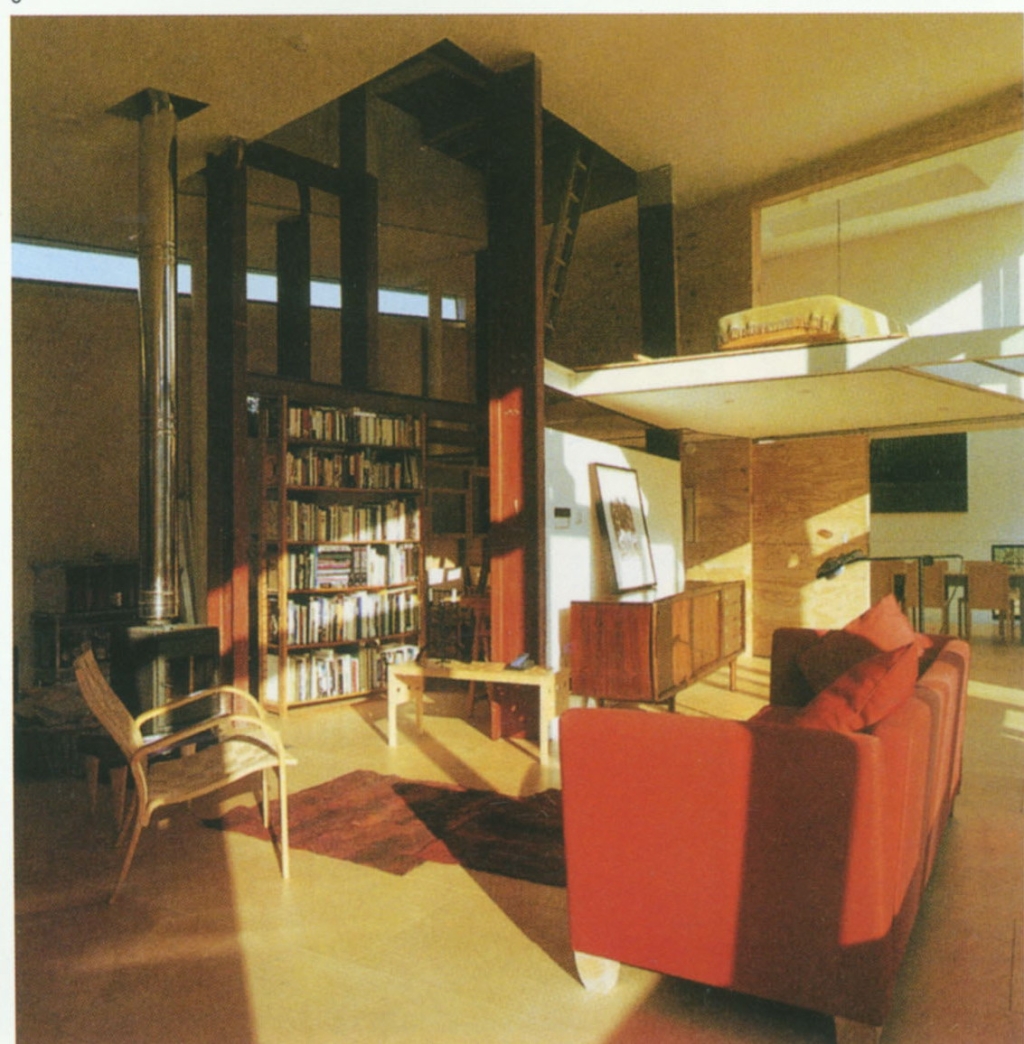
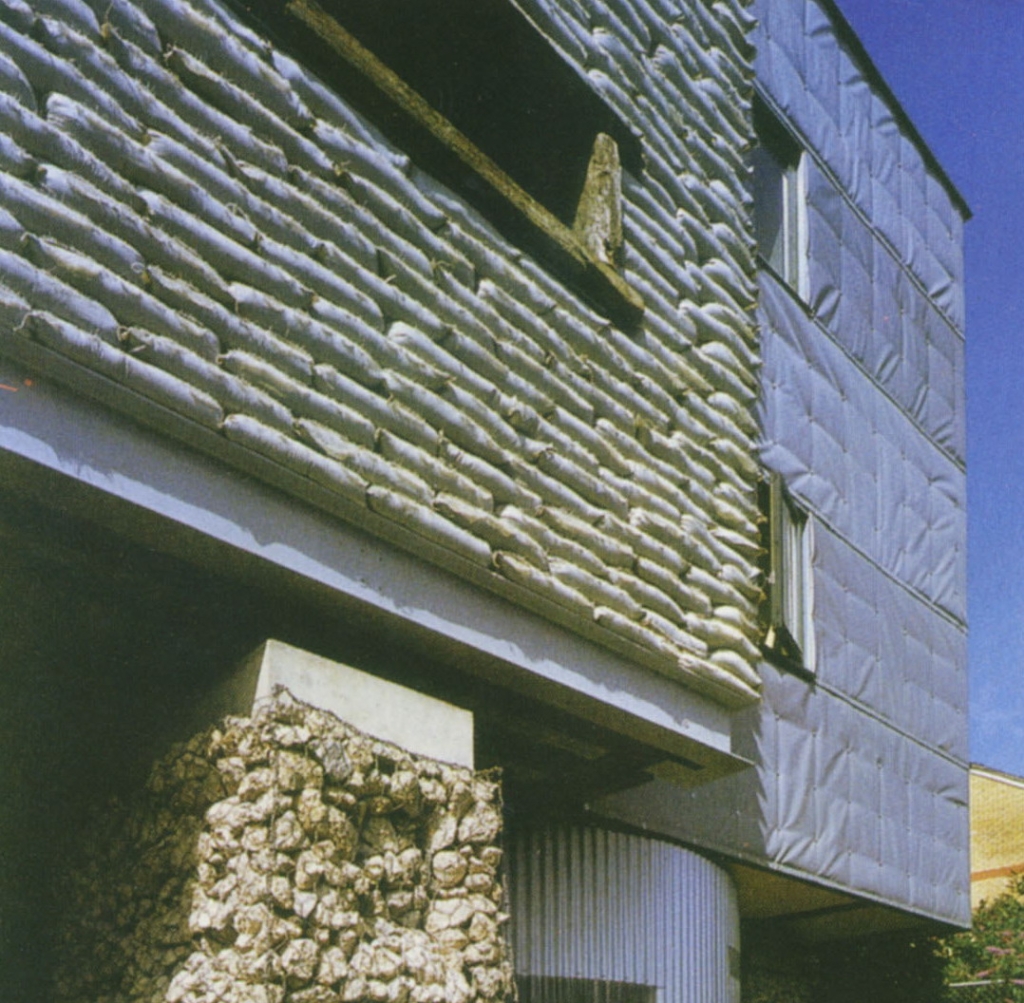
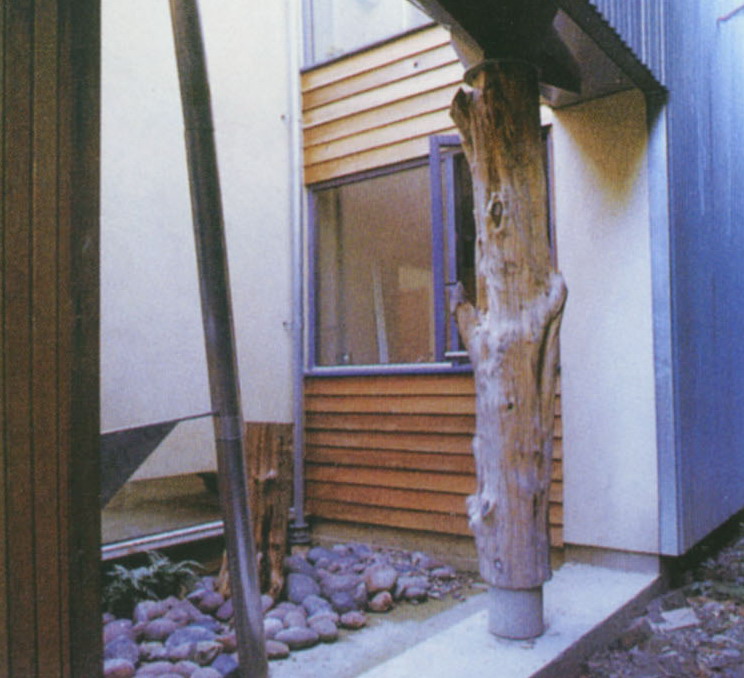
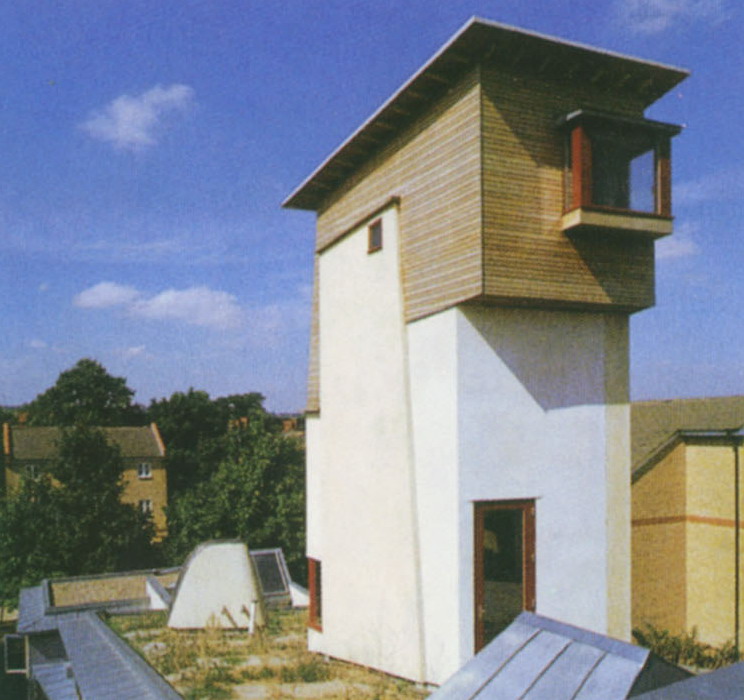
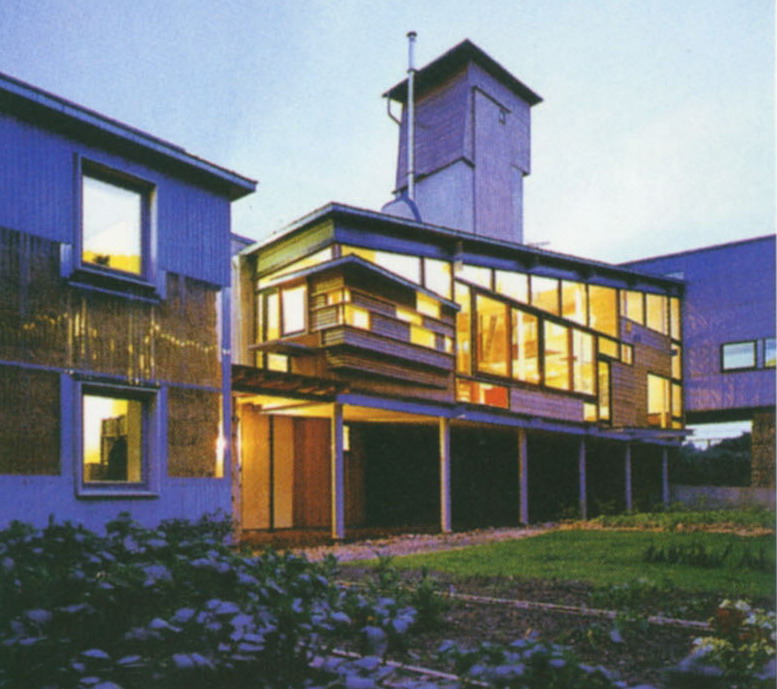
At the end of a row of Victorian railway cottages, in a north London street that has been described as a place where cars come to die, Sarah Wigglesworth and Jeremy Till have created their own unique and experimental new home and studio. L-shaped in plan, the new building comprises two wings: the office wing that sits as a solid buffer above the adjacent railway lines, and the perpendicular dwelling wing that returns to enclose a more secluded garden and shared entrance courtyard. At the junction of the two wings a hybrid conference and dining room is notionally pinned to the site by a five-storey tower, which not only subverts the distinction between the functions of life and work, but which also creates a domestic landmark at the end of the street. The building has many experimental details, including spring-loaded gabion piloti that reduce low frequency vibrations from passing trains, the use of polycarbonate and straw bale construction, and, most conspicuously, the distinctive sandbag facade that provides excellent sound insulation along the railway line boundary. As a long, and at times painful, design and construction process that was even the focus of a television programme, this project demonstrates personal architectural experimentation at its most extreme, and has produced a building that the architects have stated will remain permanently incomplete.
 关注公众号
关注公众号 川公网安备51010702000609号


 发表于
发表于