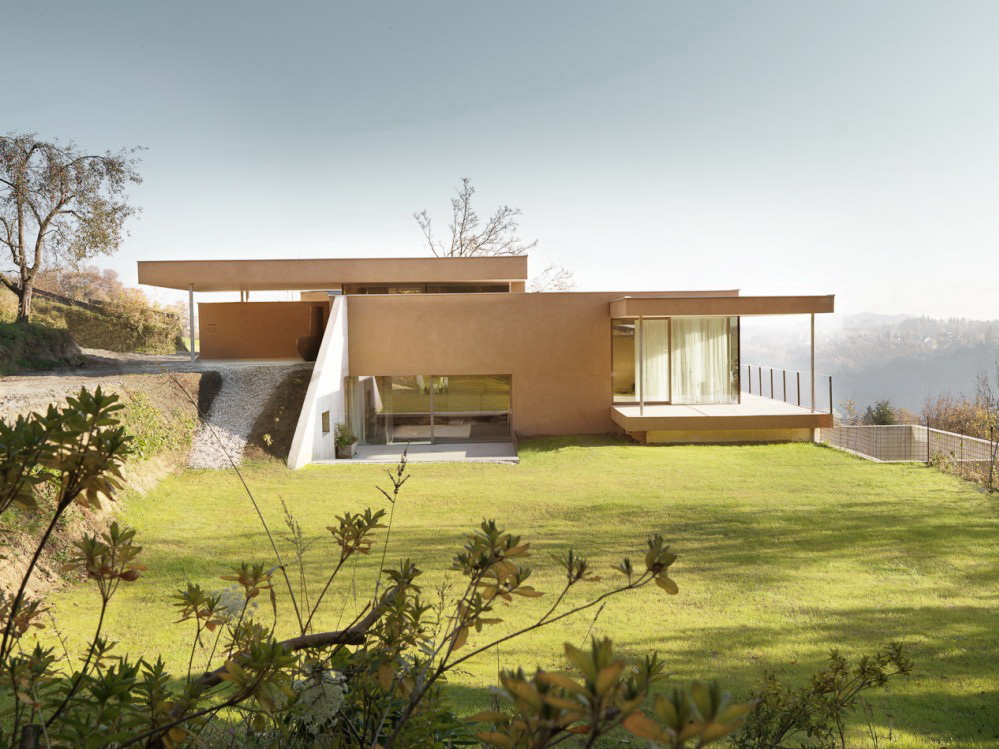
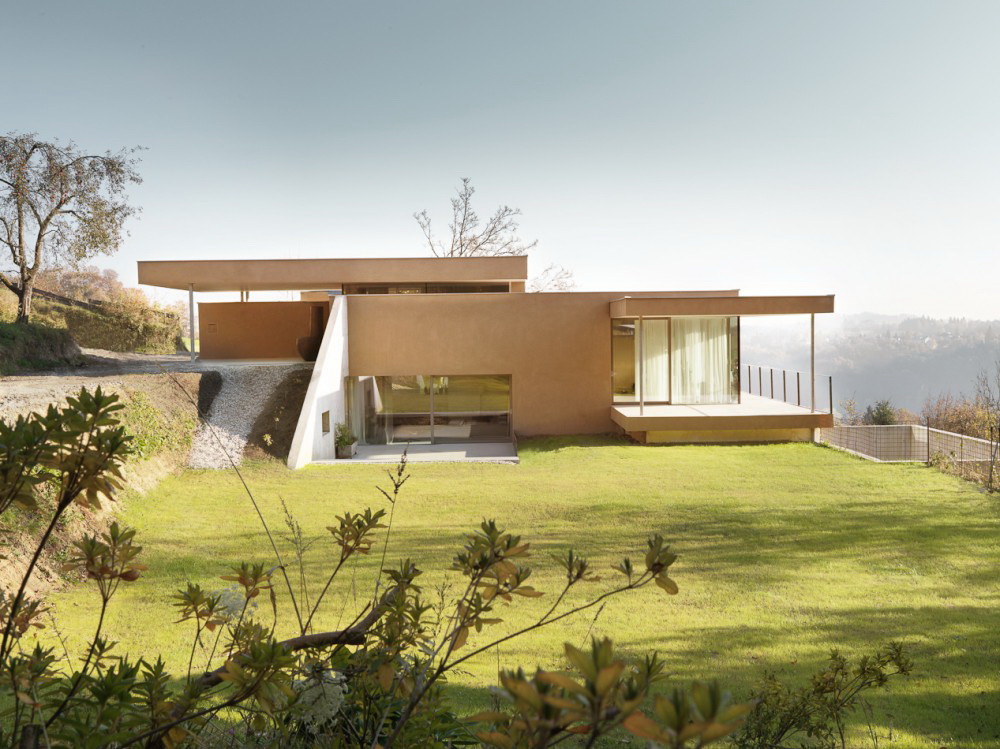
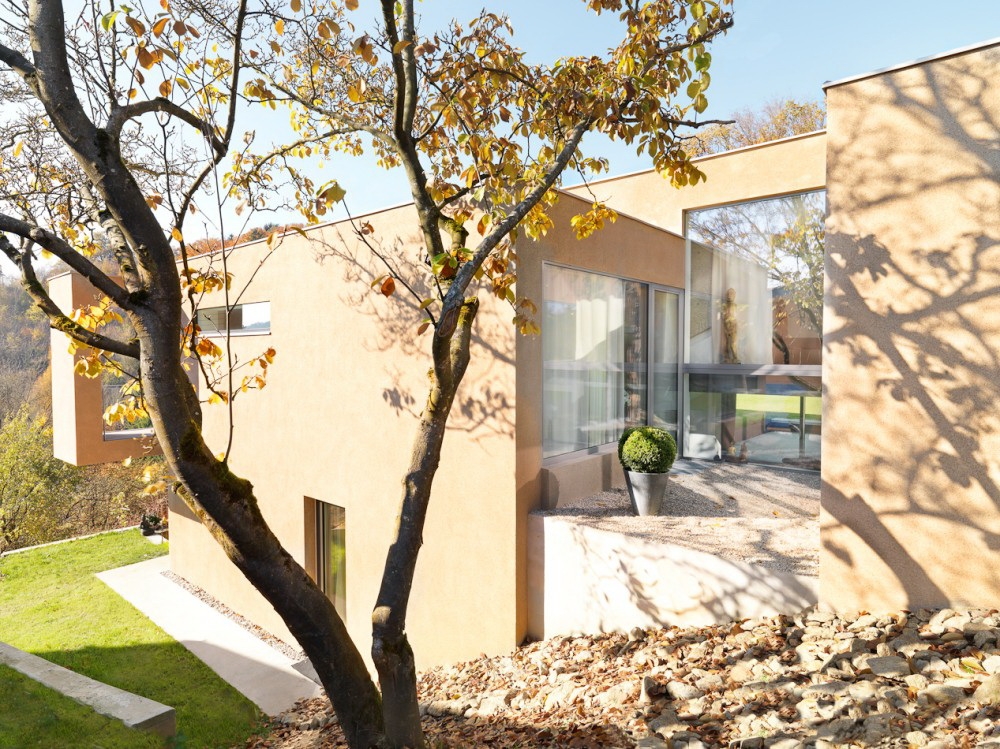
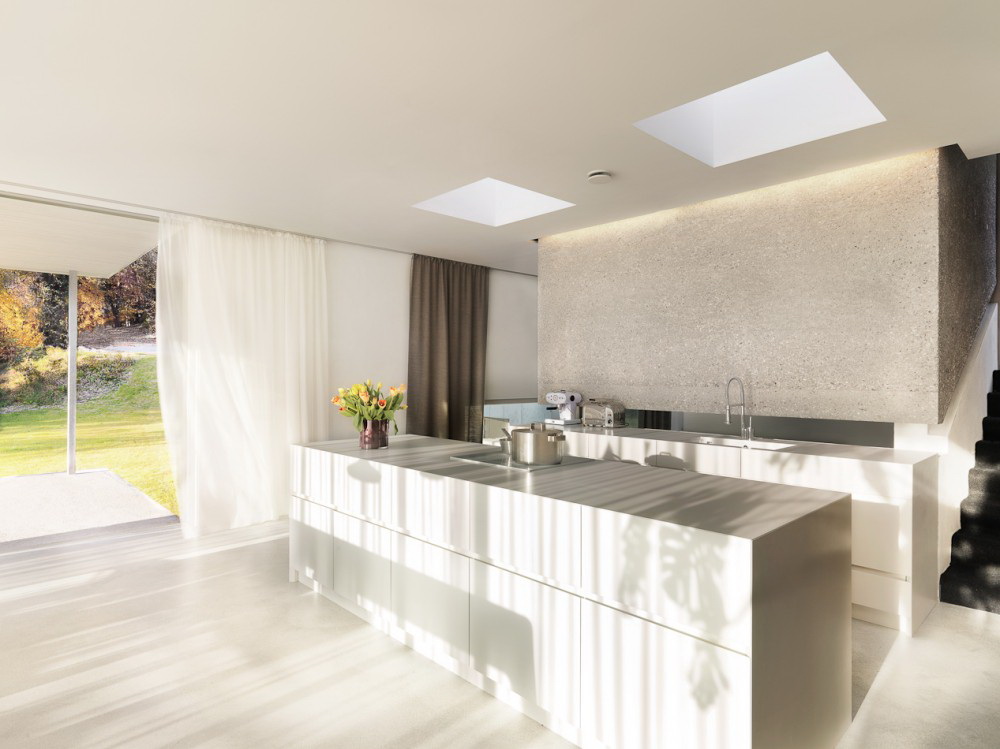
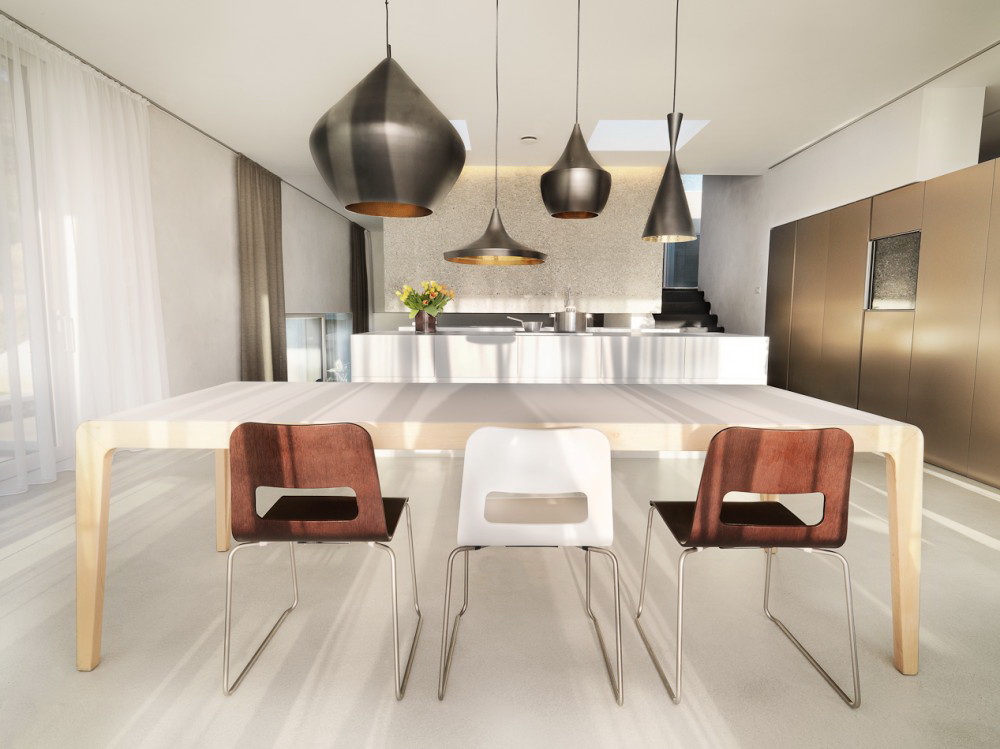
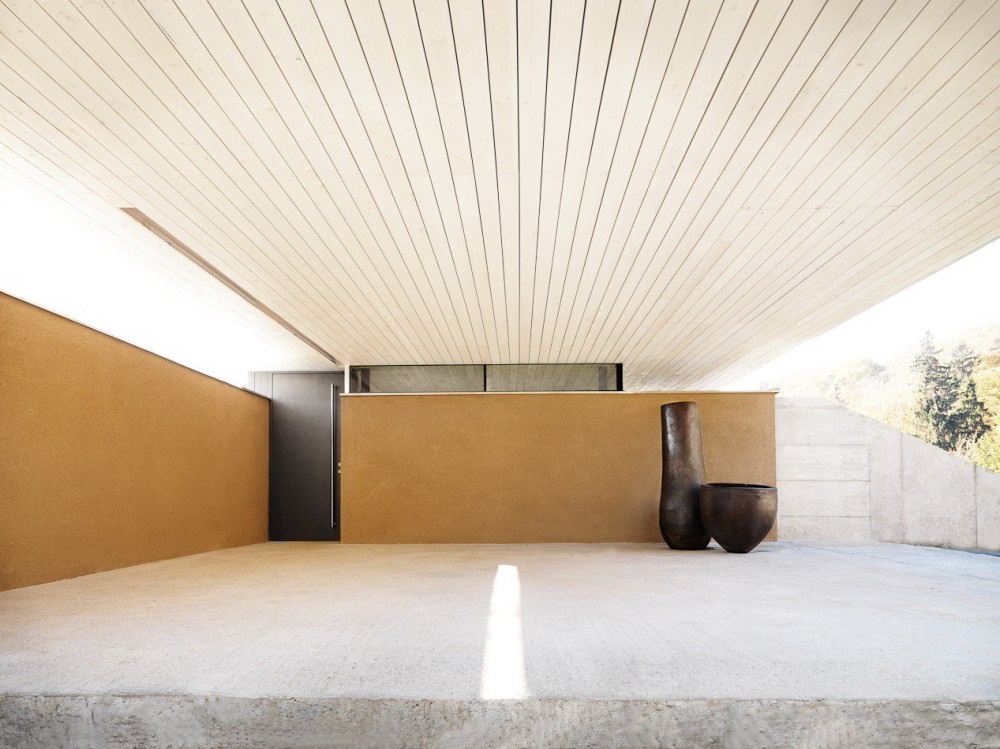
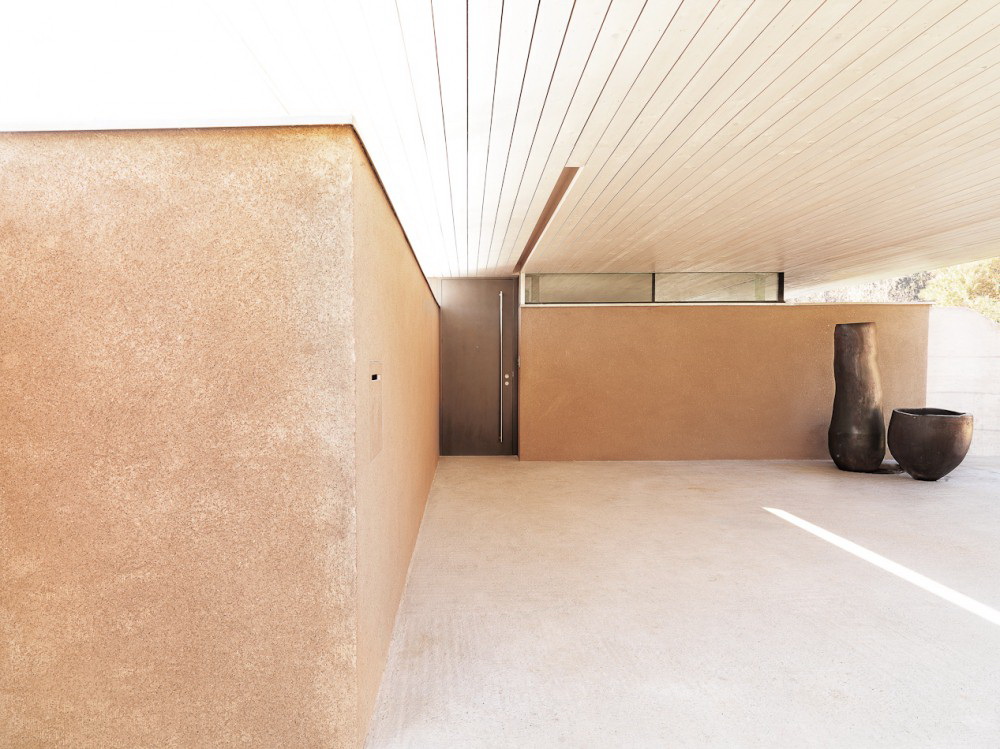
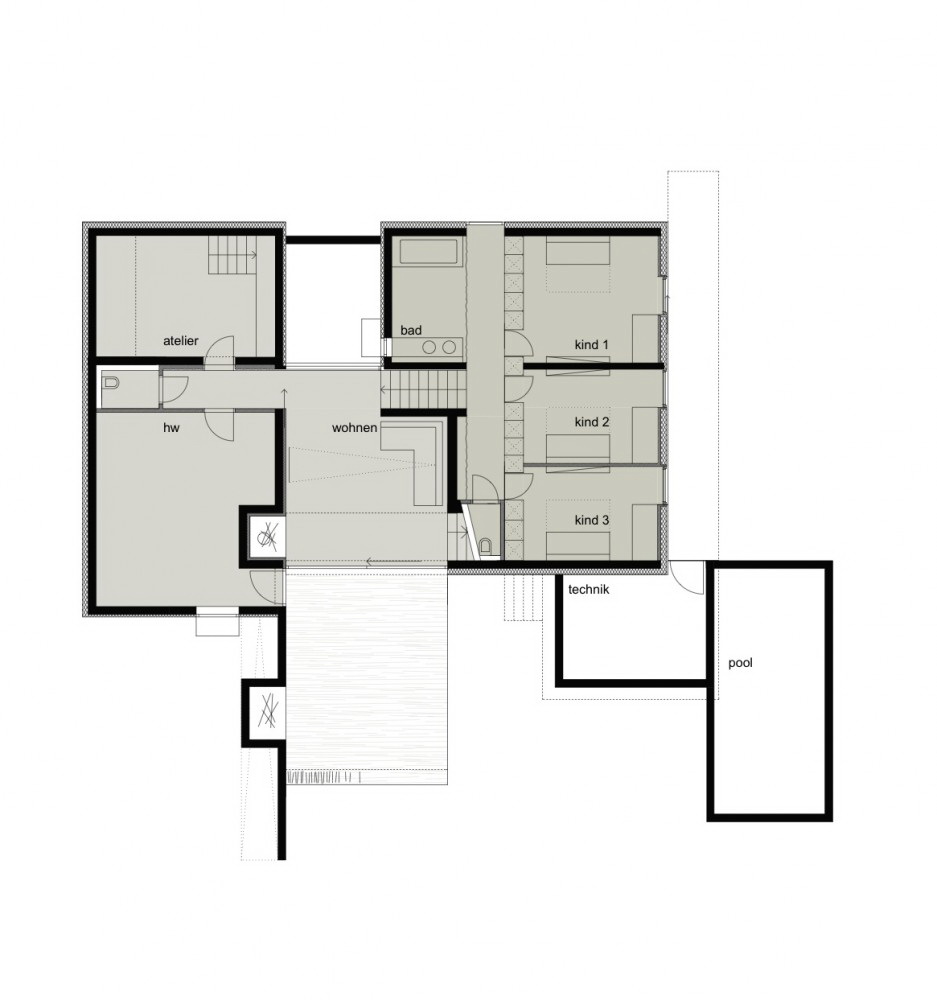
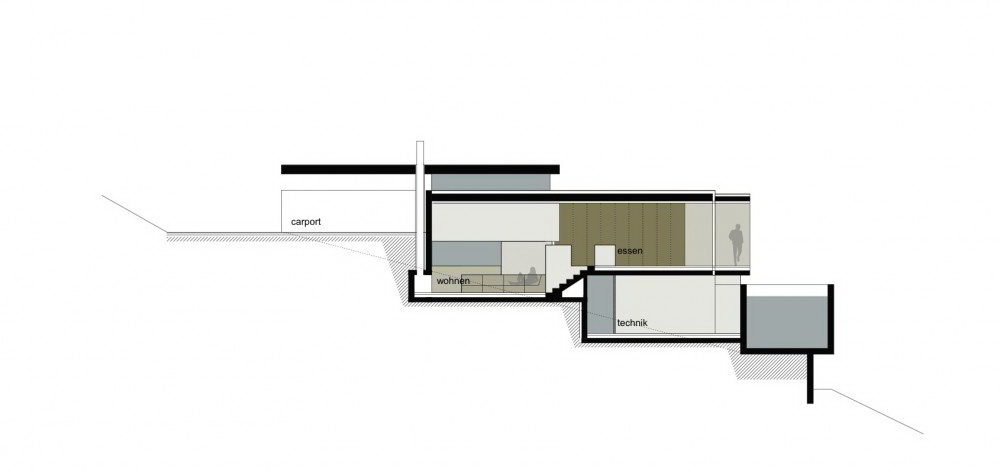
这个位于林地旁边的住宅沿着陡峭的斜坡向下延伸,周围环绕田野和果林。森林保护和区域划分及当地的规范只允许建筑位于场地的东北部,设计目的是为了融合森林边缘场地的独特性,确保与普通住宅相区分,同时使住户能有山谷的美好景色。建筑的平面由建筑窗户定义,它们随着场地地形排布,被拆开分为不同的层次,与室外空间相互作用。一个暴露的带有铺石板的混凝土躯干是住宅的中心。分开的层次使所有楼层都有不同的天花板高度,院落被嵌入在上层楼面,它从四周为房间带来光线,而邻里一侧则是一个巨大的封闭的表面。 The woodside property, which steeply slopes down to the Danube Valley, lies at the foot of the Pöstlingberg Mountain which is surrounded by woods, fields and orchards. The forest protection zone and the development plan only allow the building to be situated in the north-eastern part of the property. The objective was to integrate the uniqueness of the forest edge location into the building concept, ensuring a simultaneous separation from the settlement while staging the view over the Danube Valley and foothills of the Alps. The building’s floor plan is marked by the building windows and, following the topography, is stepped into split levels, which play with the surrounding outdoor space. An exposed concrete body with flagged surface forms the center of the house. The split levels allow for different ceiling heights on all floors. The courtyard is cut into the upper floor and illuminates rooms on all three levels, leaving neighbors to face a monolithic, closed-looking facade.
 关注公众号
关注公众号 川公网安备51010702000609号


 发表于 2026-5-20 15:05:43