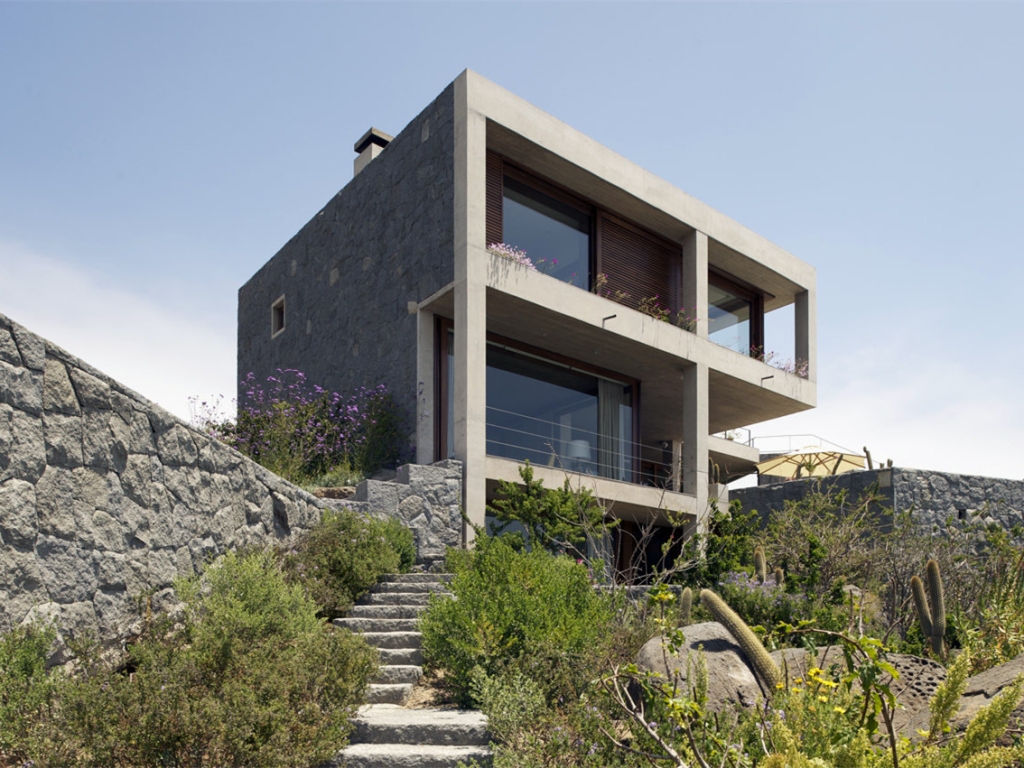
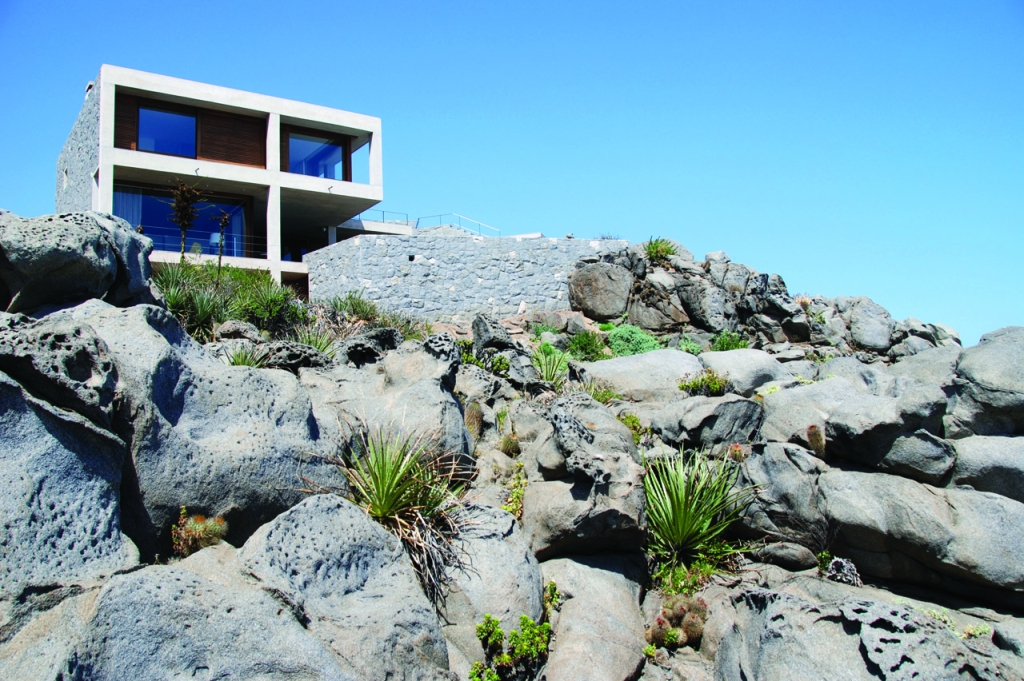
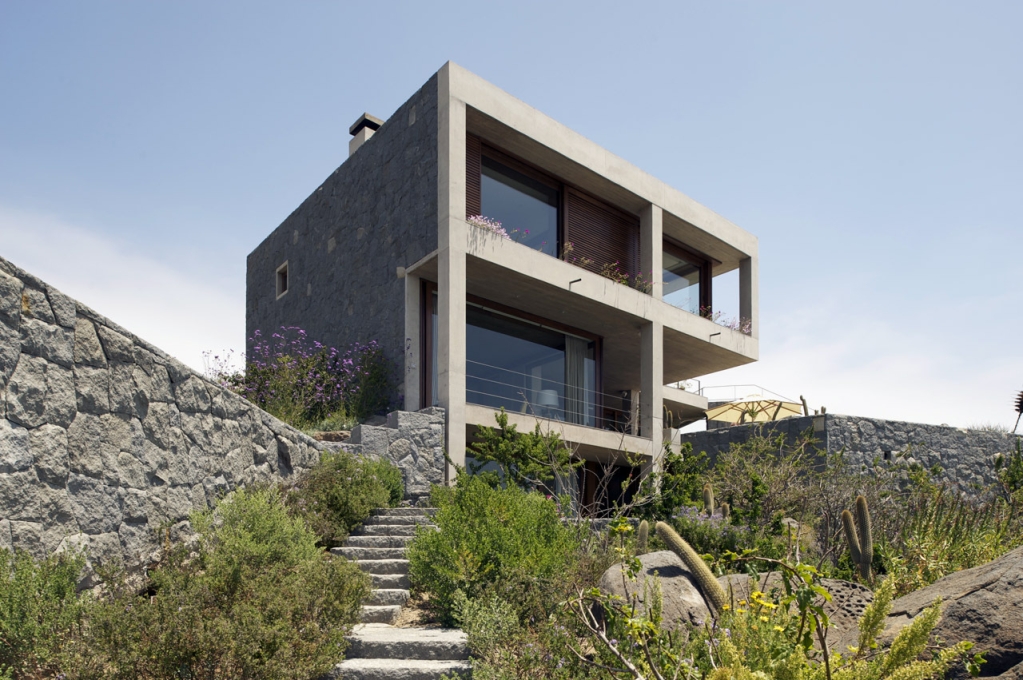
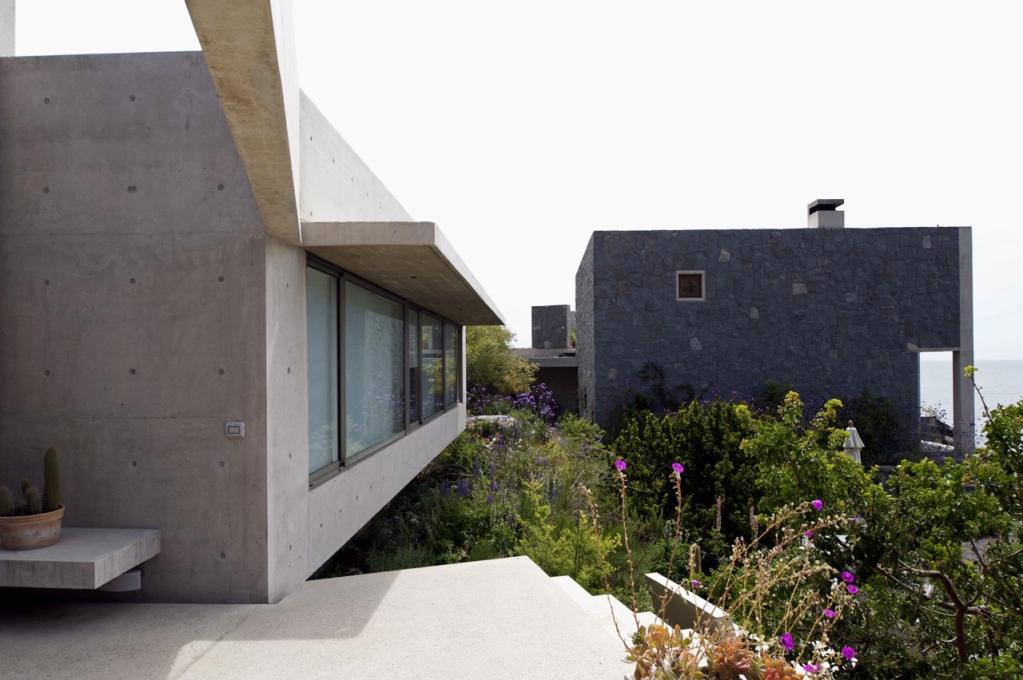
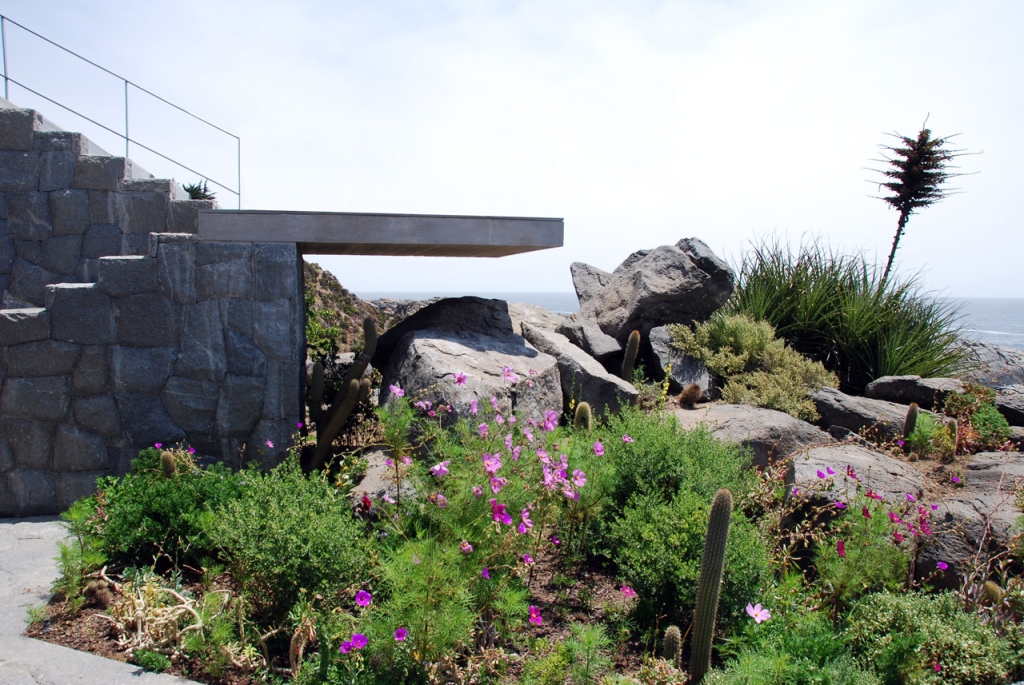
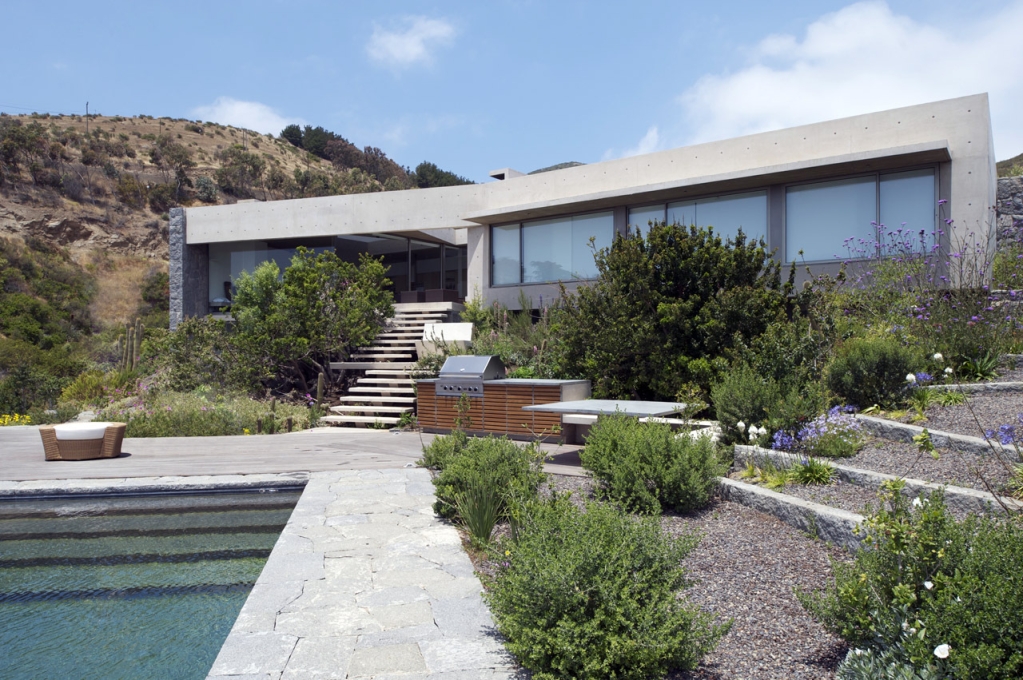
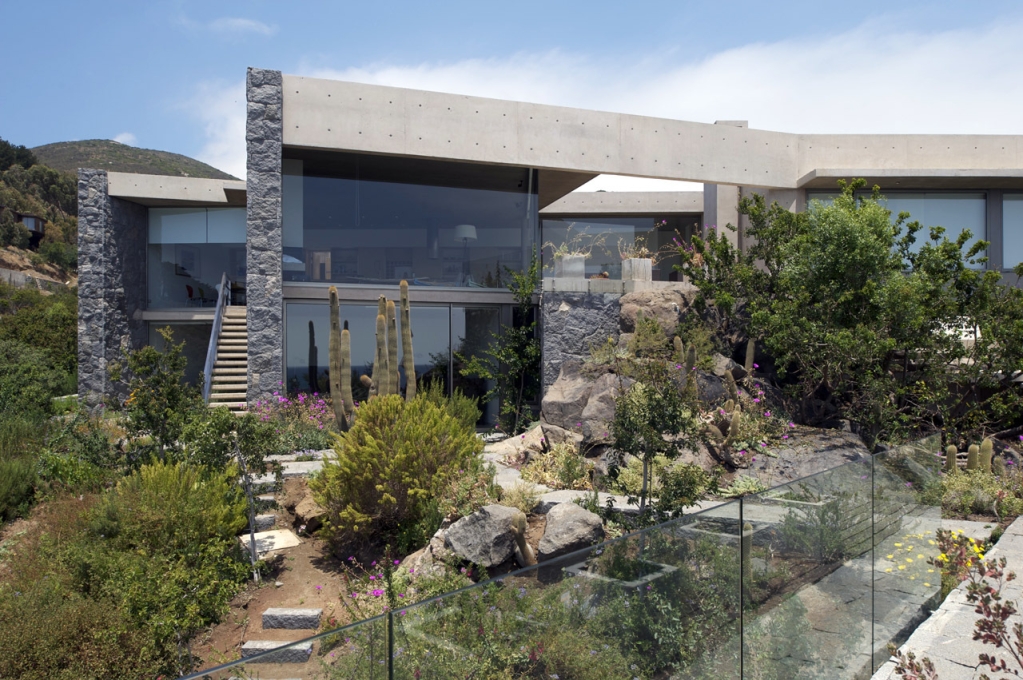
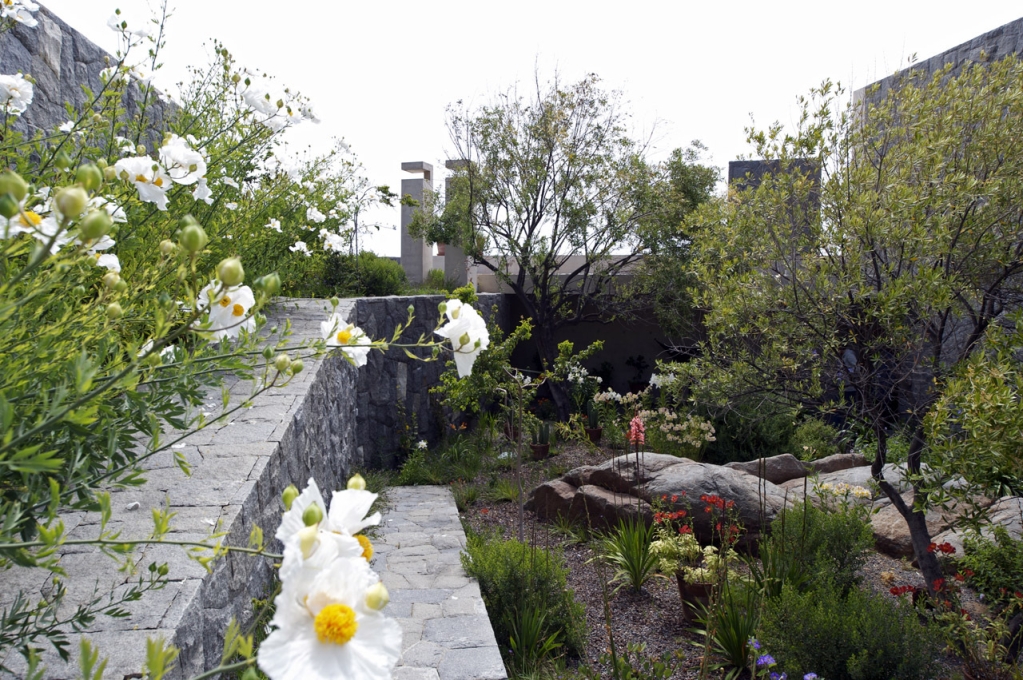
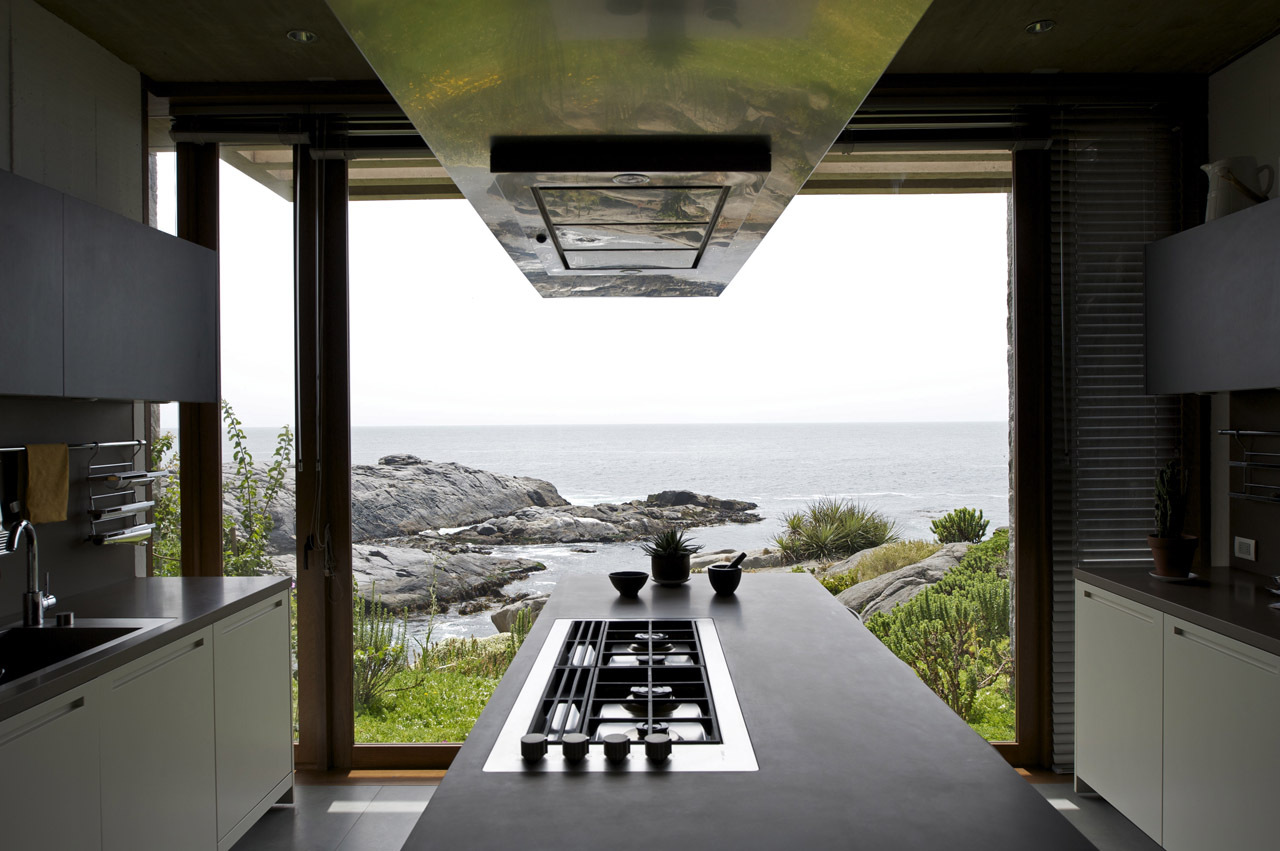
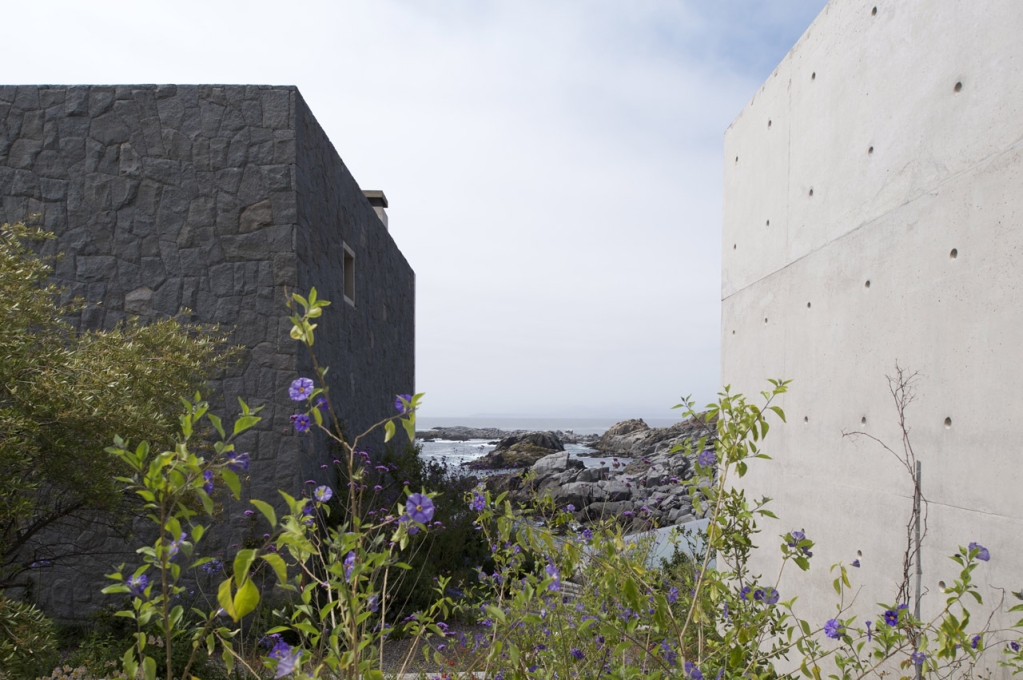
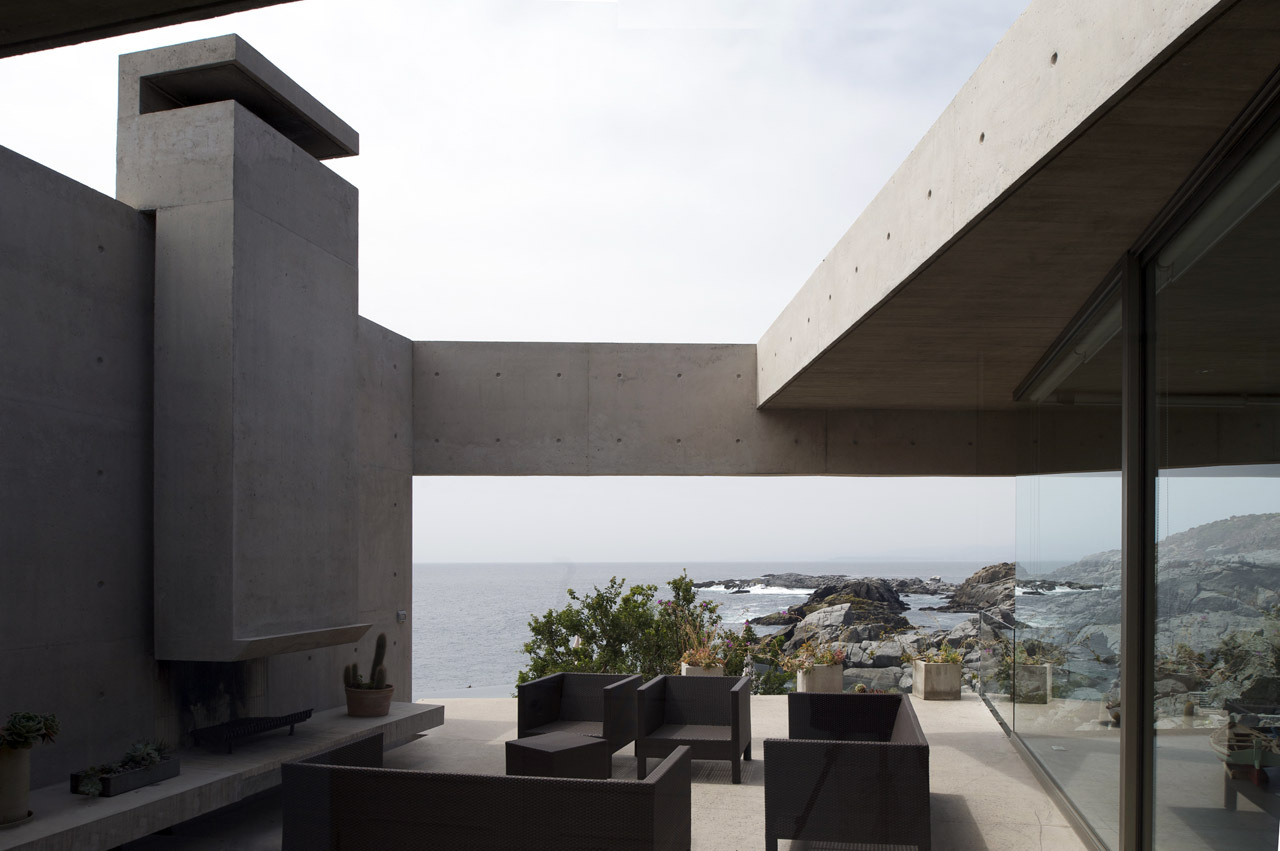
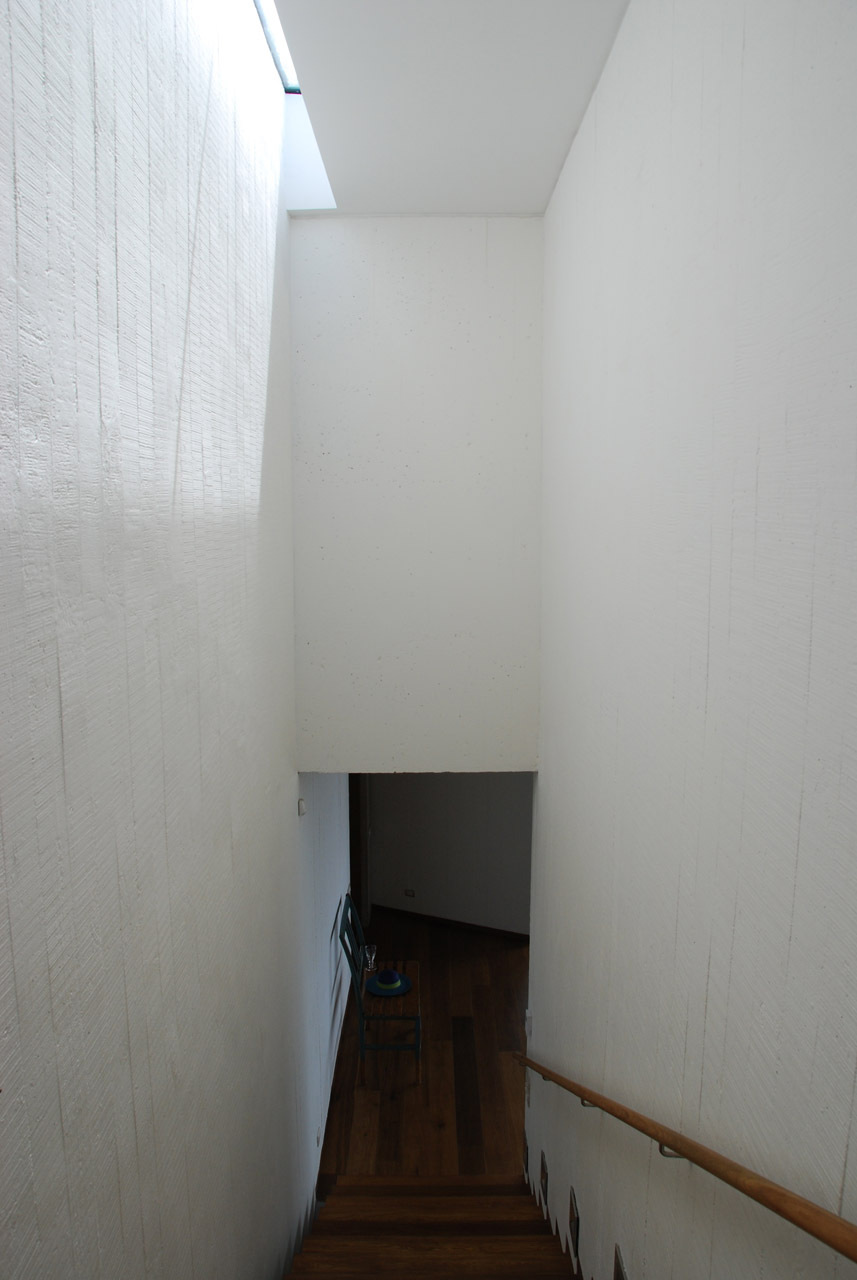
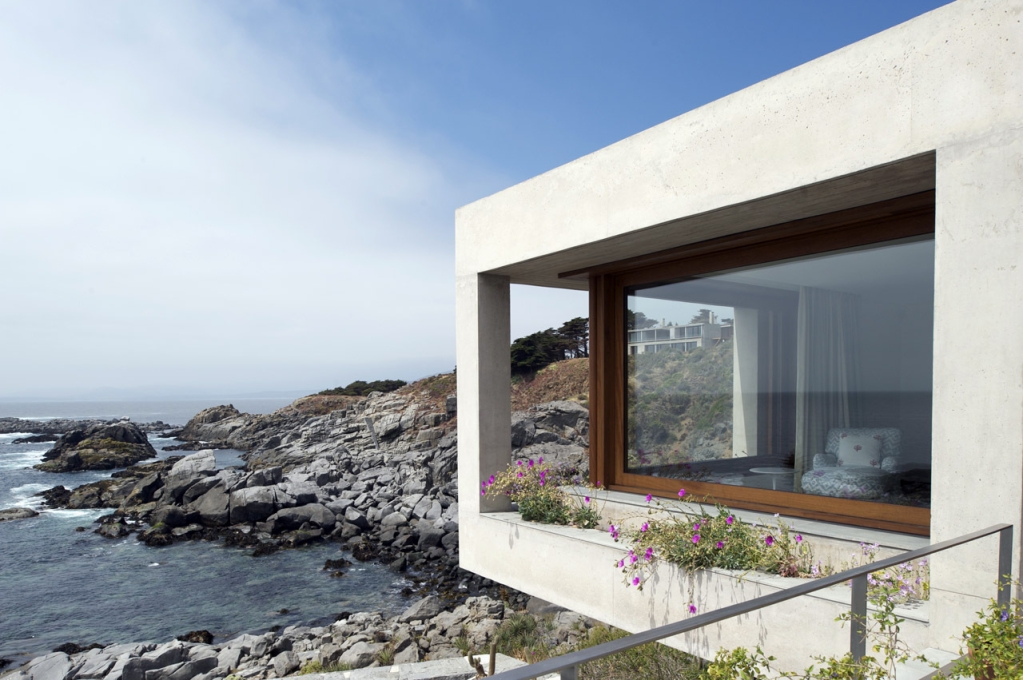
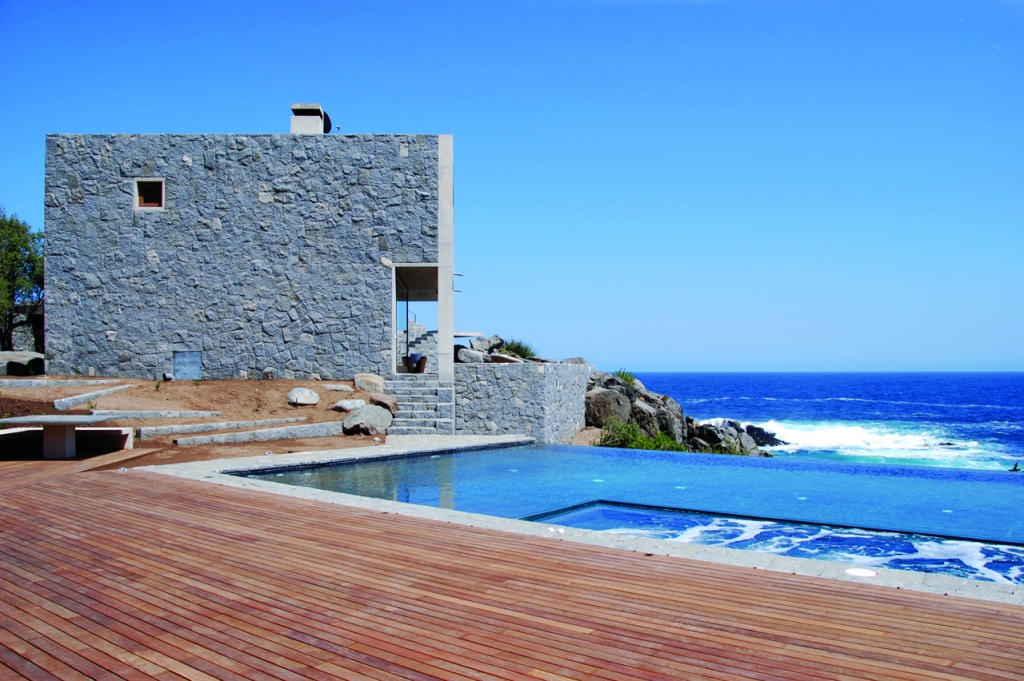
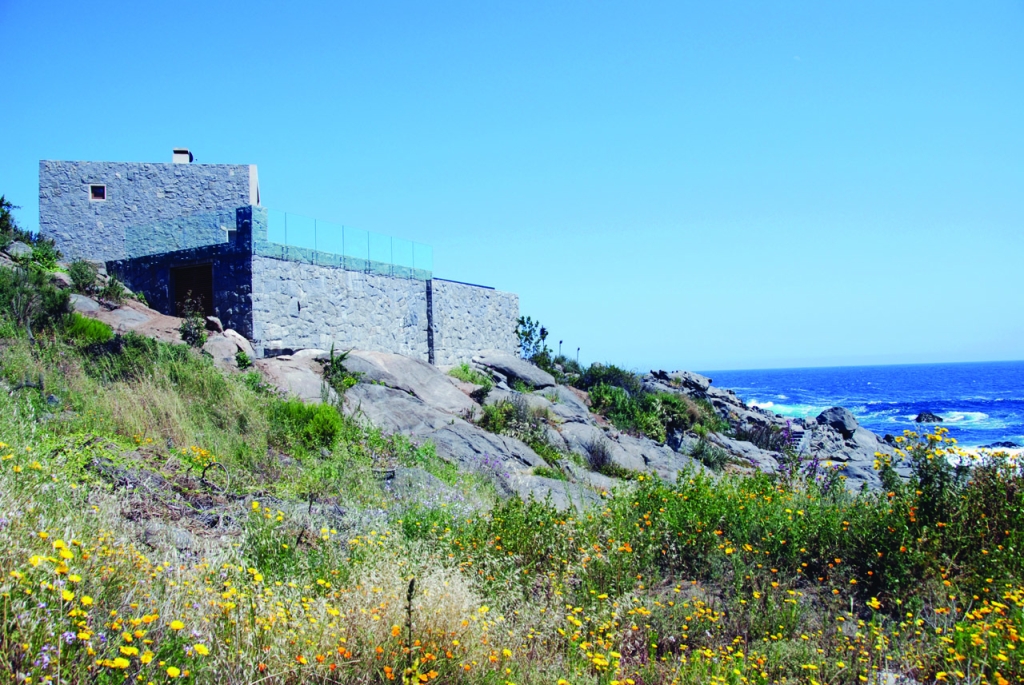
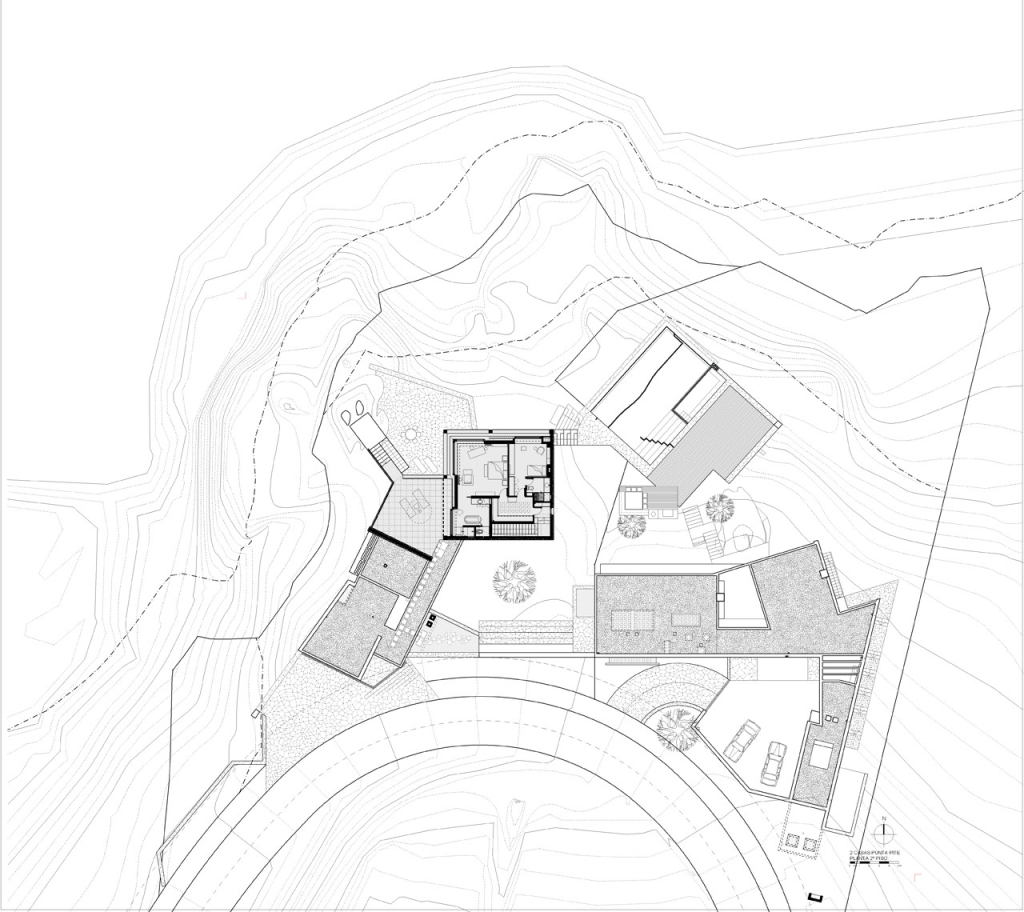
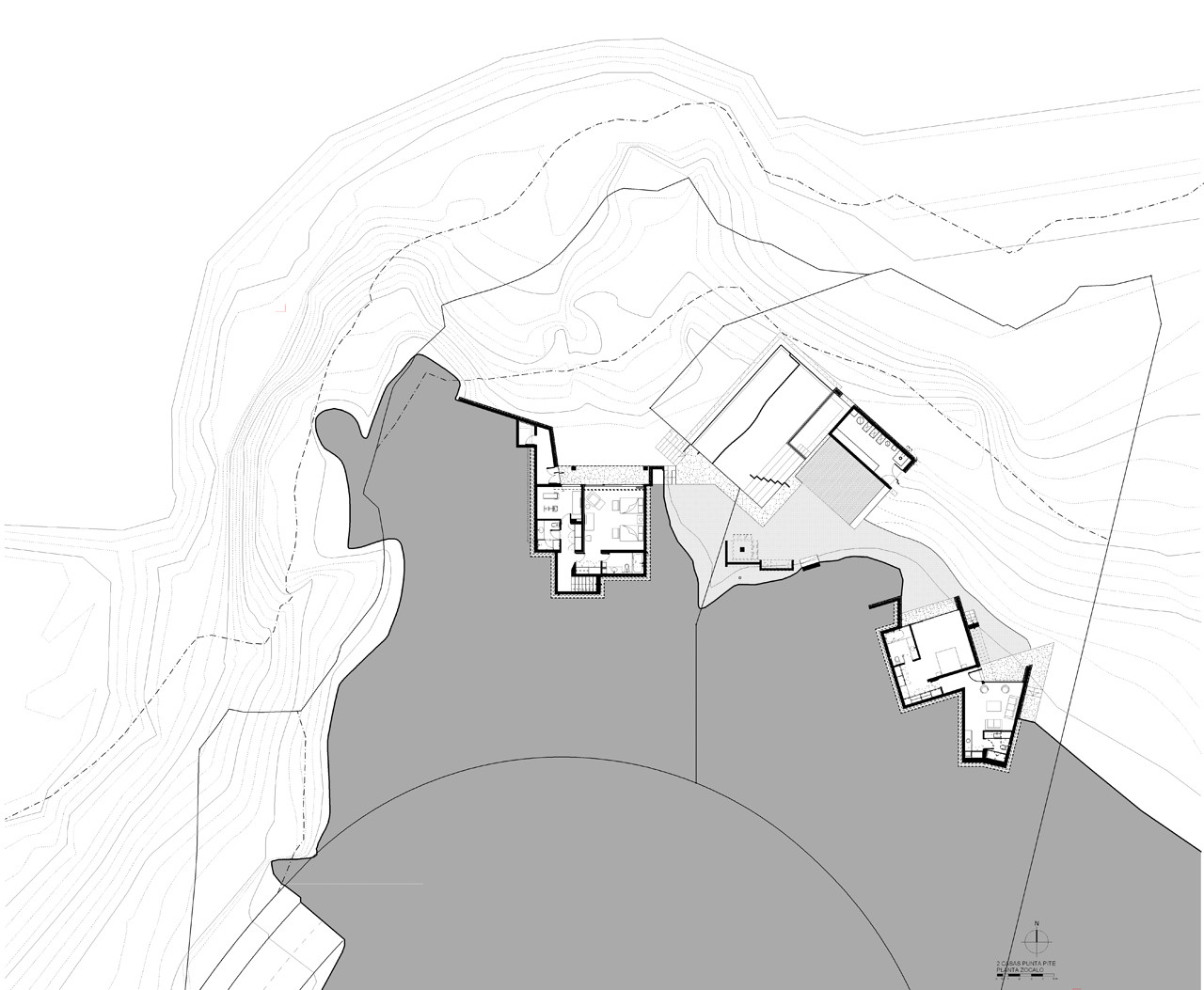
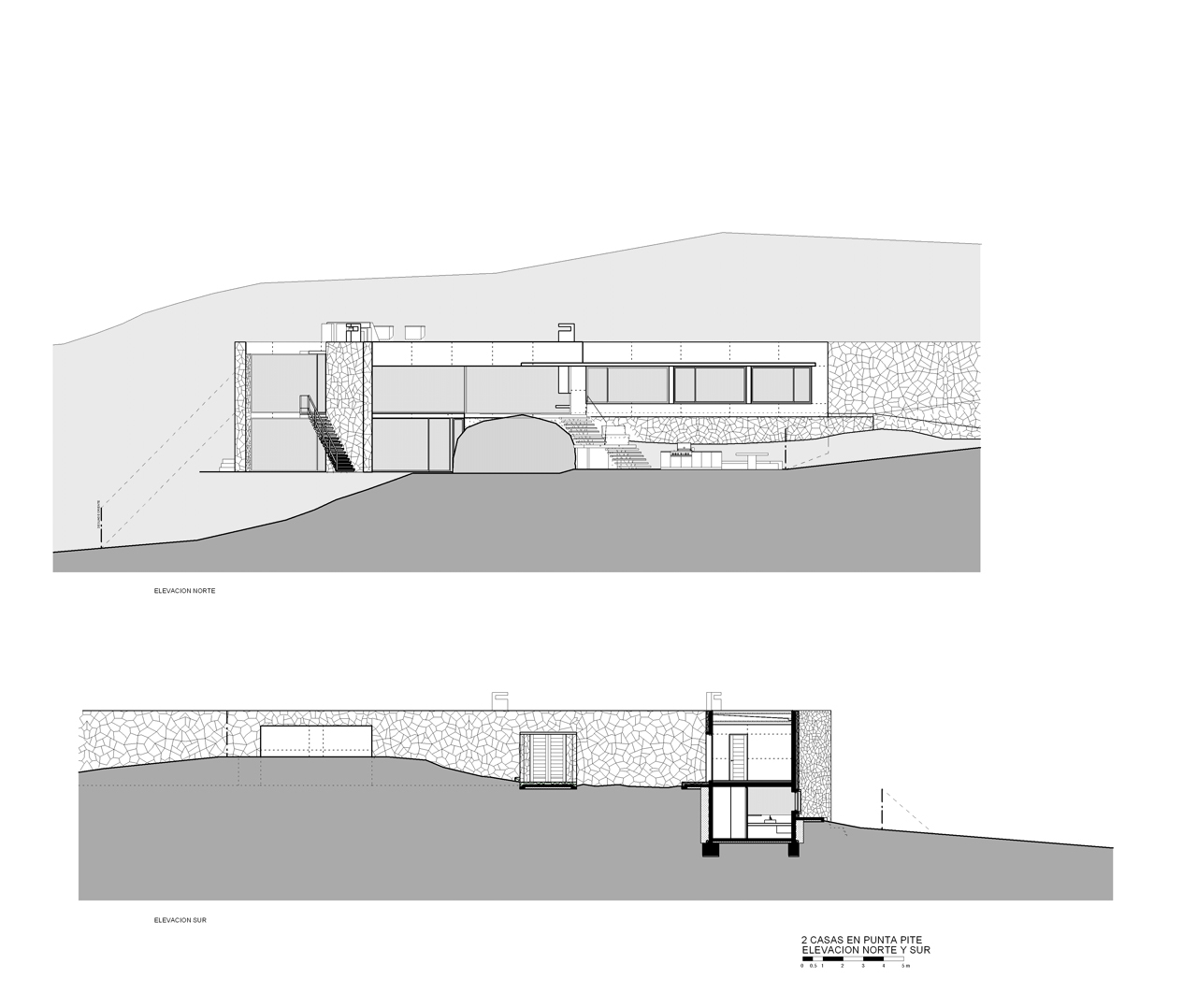
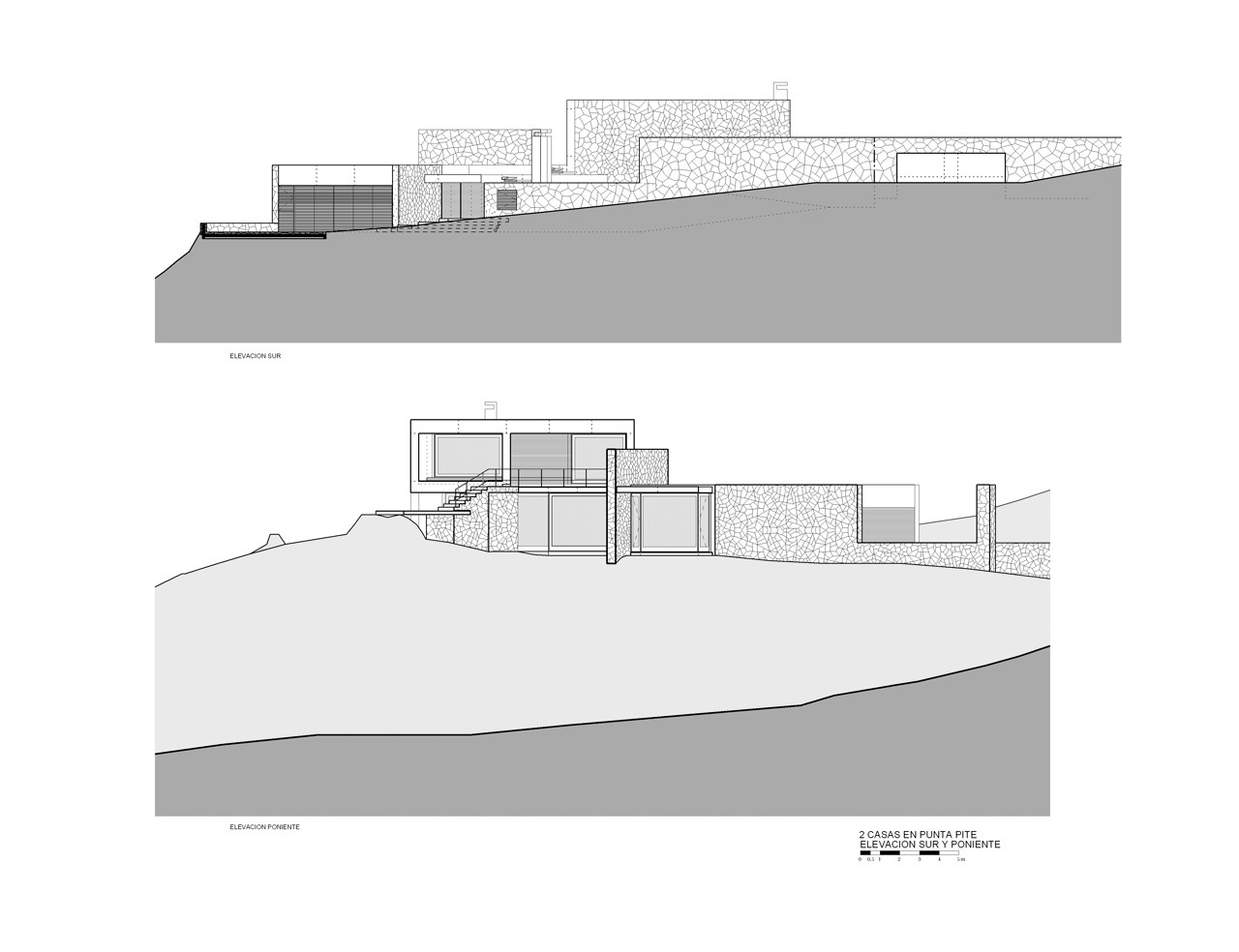
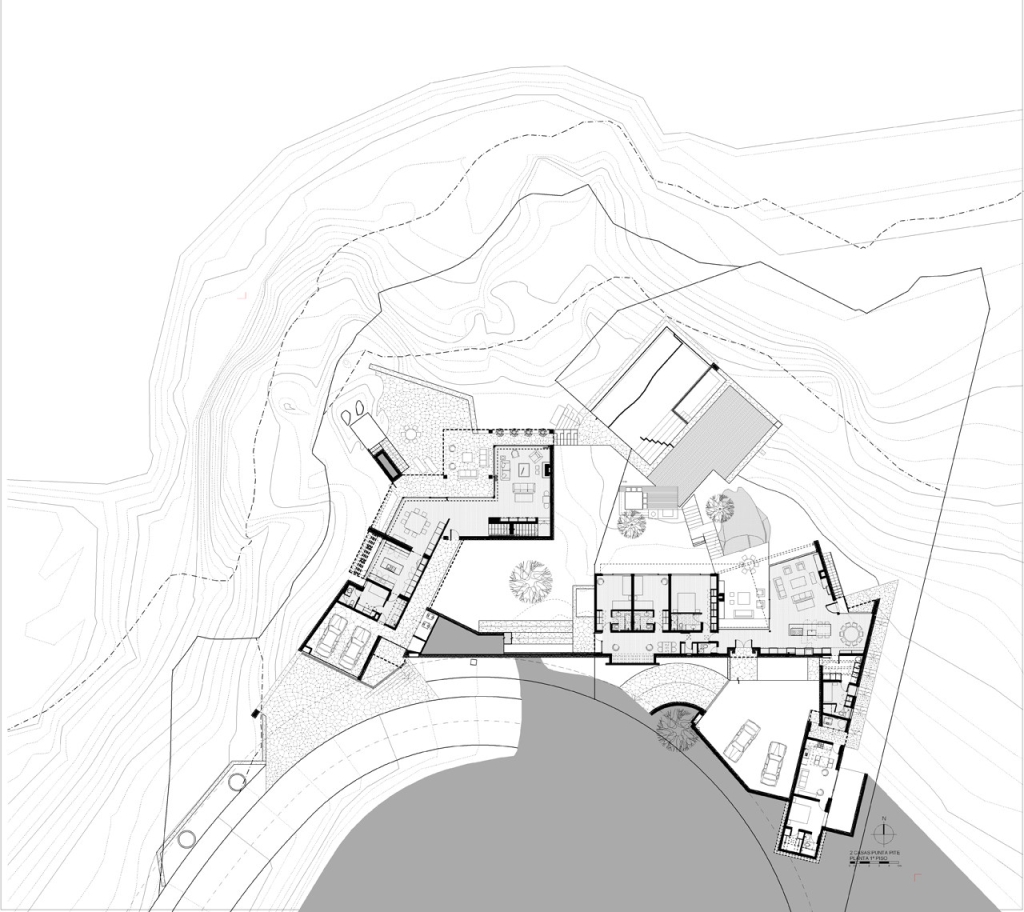
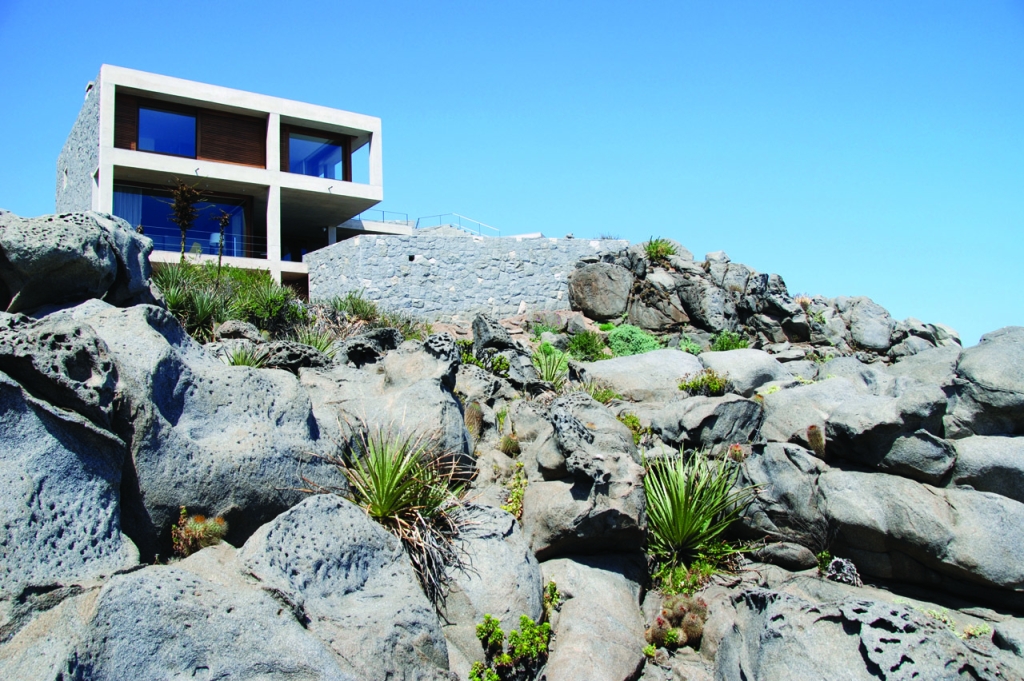
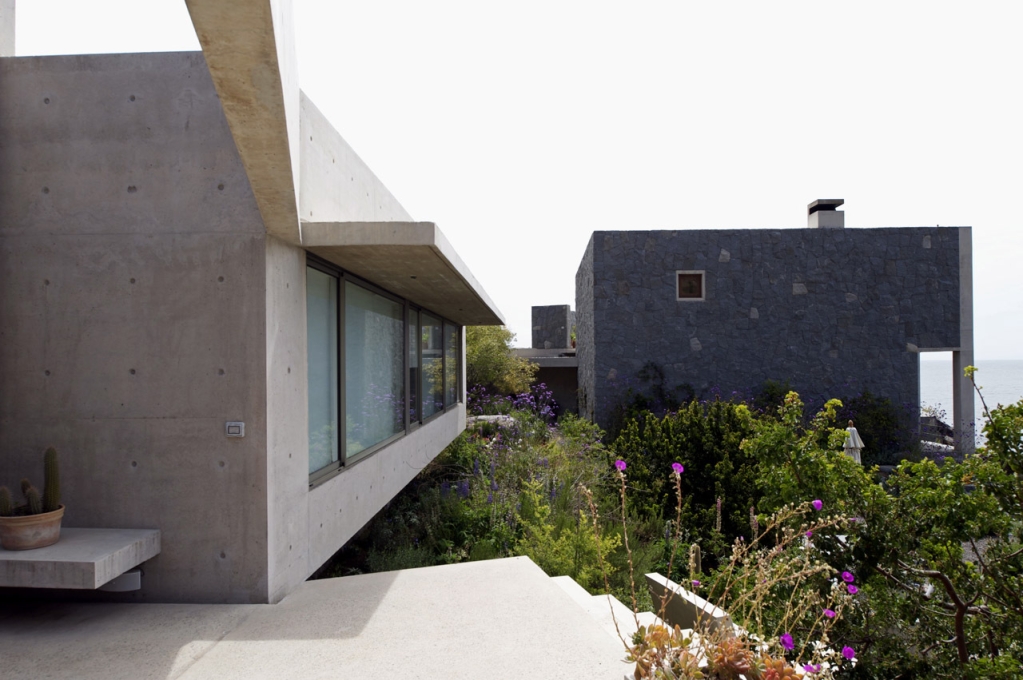
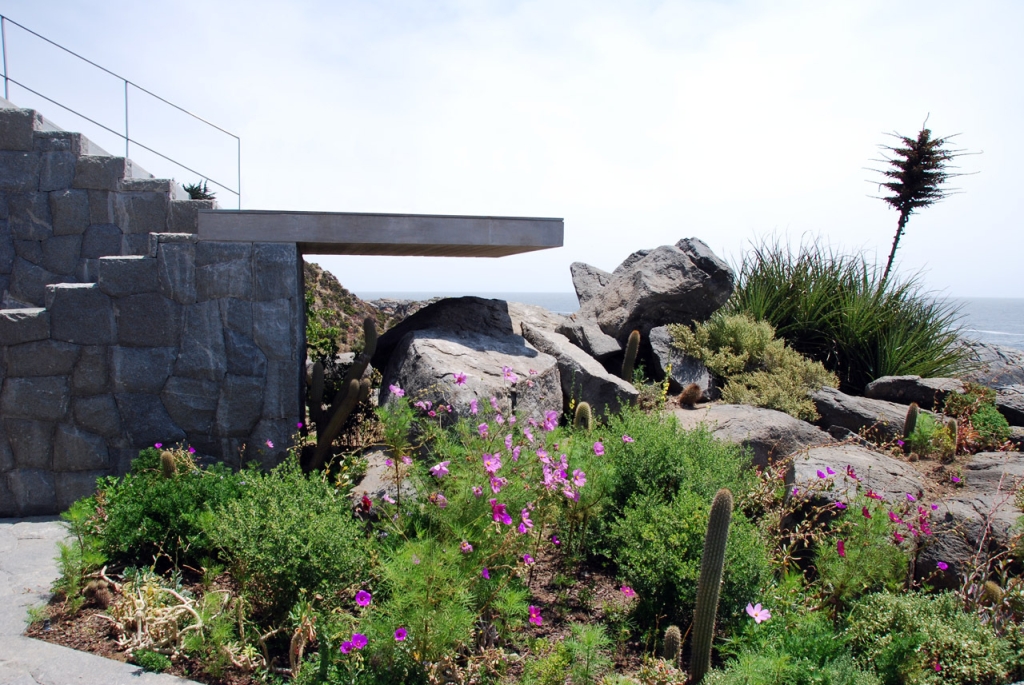
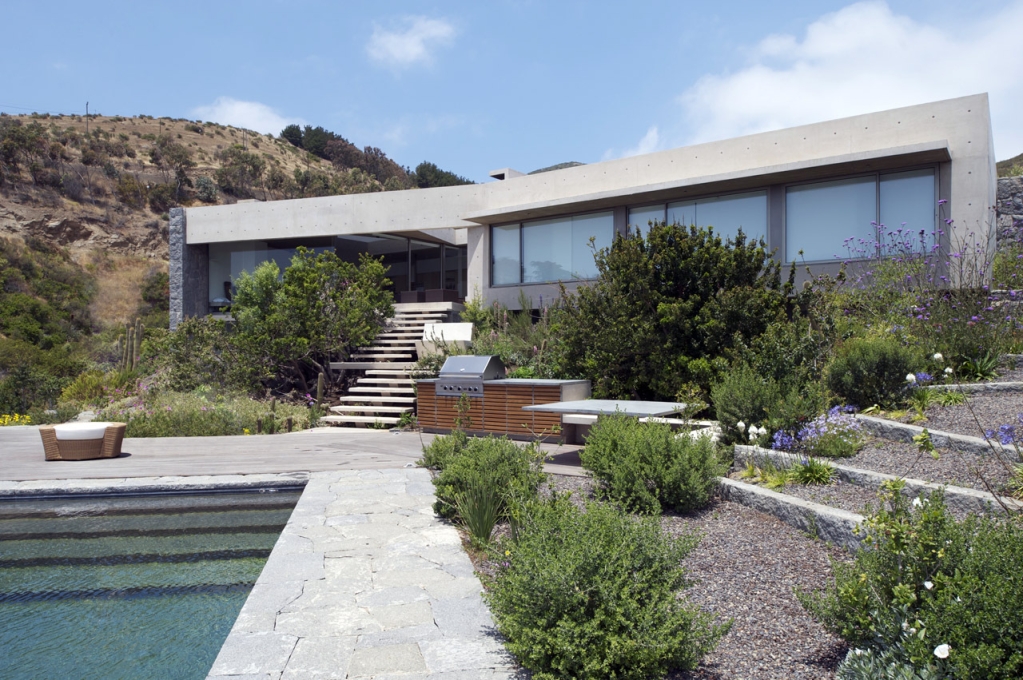
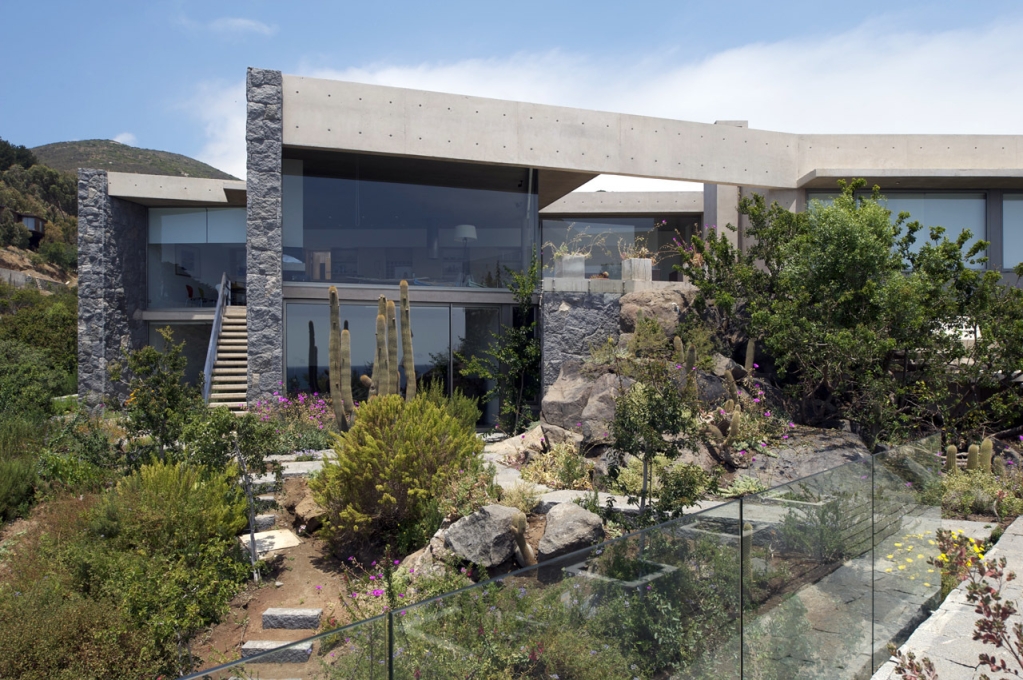
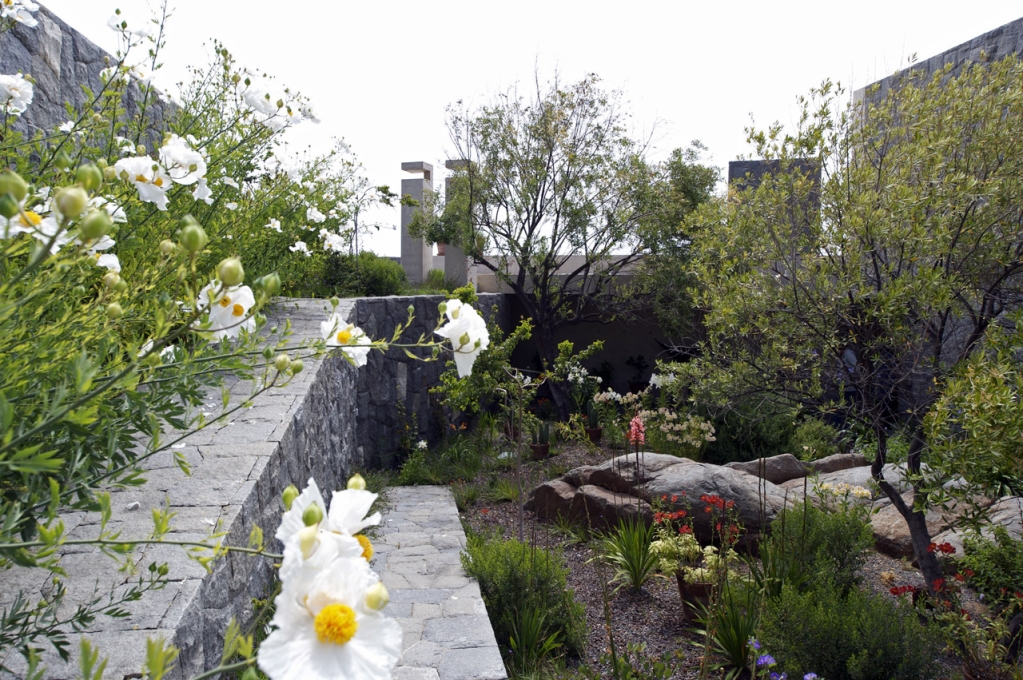
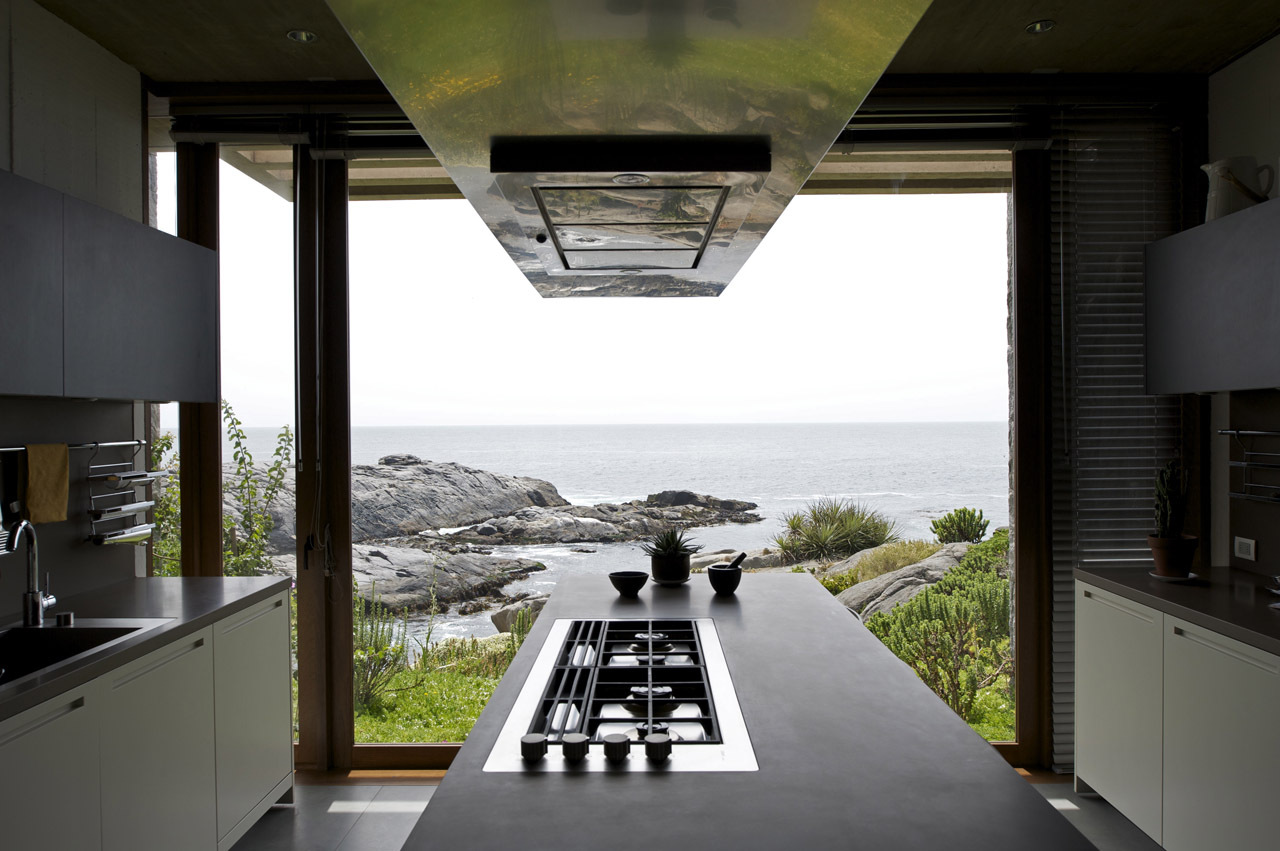
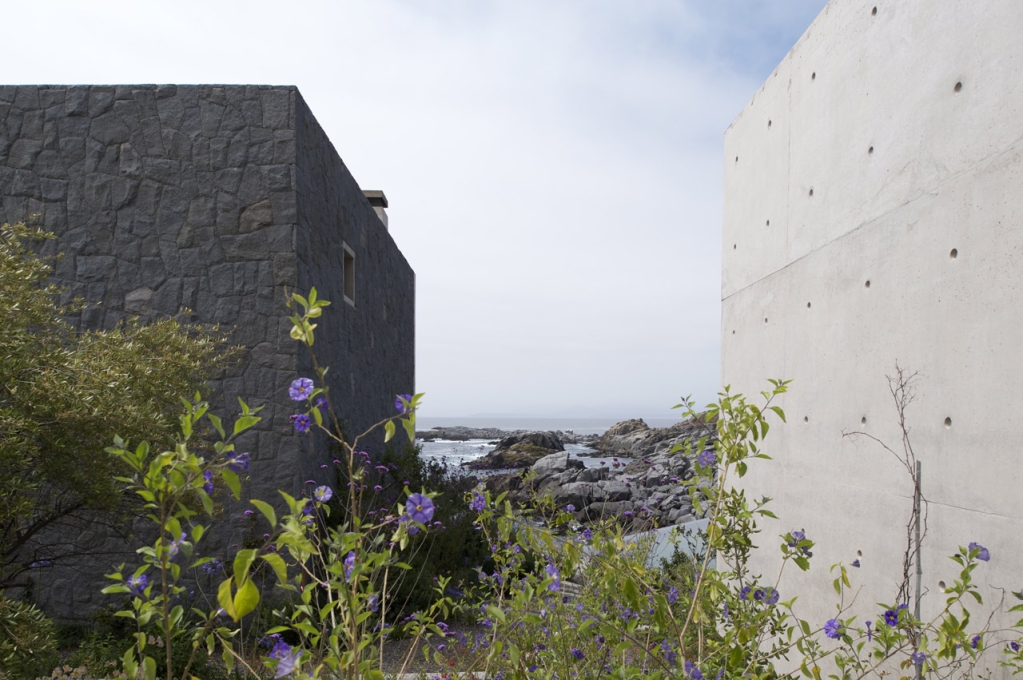
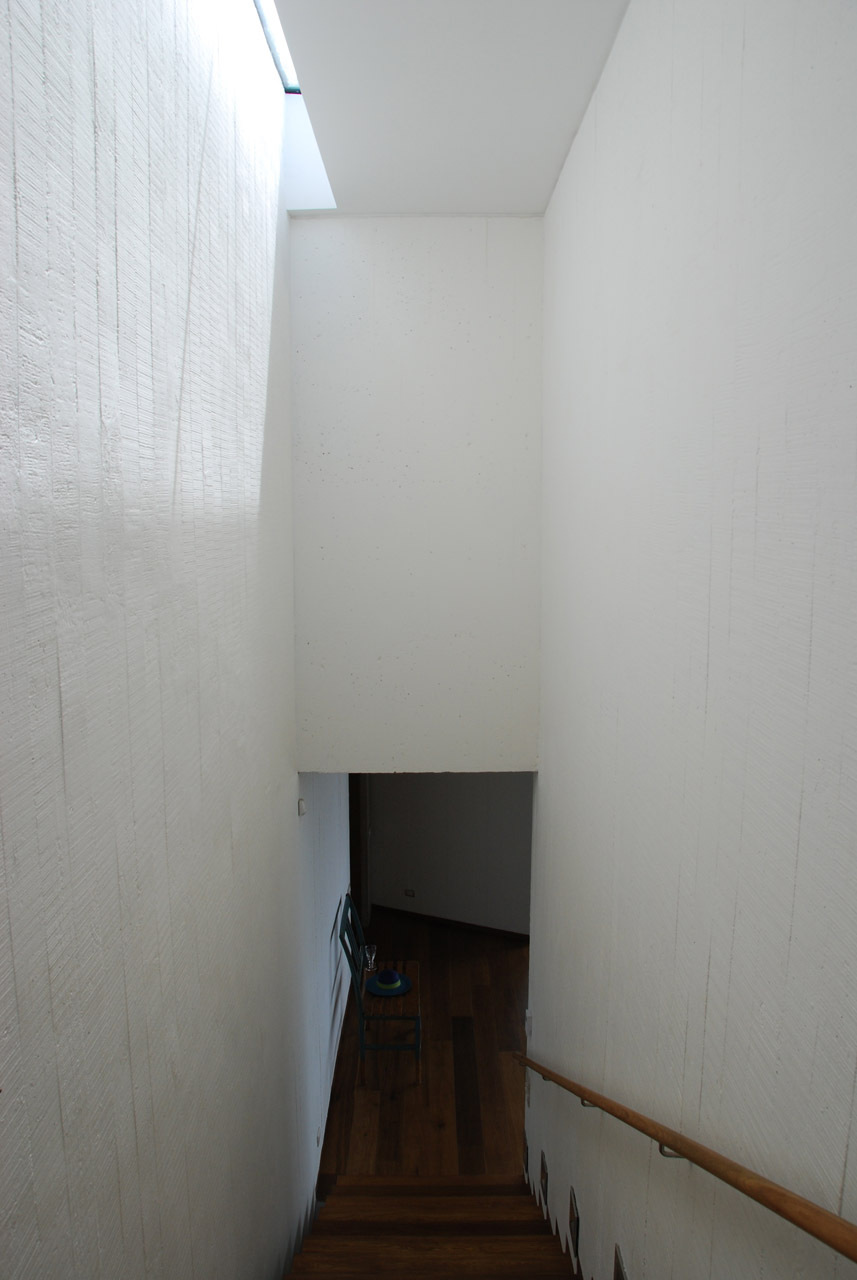
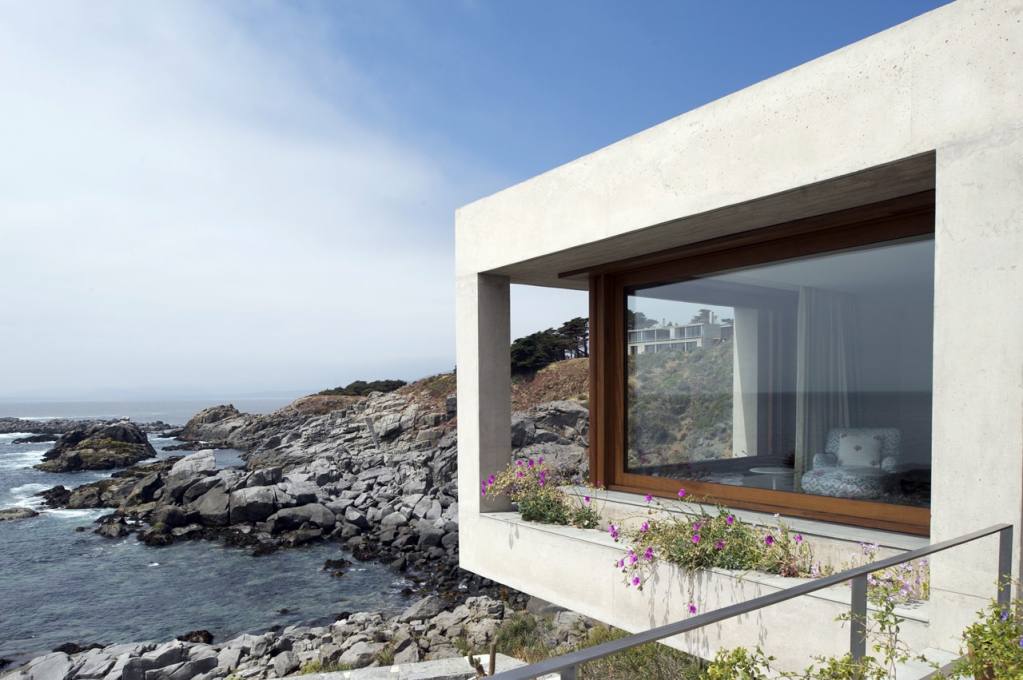
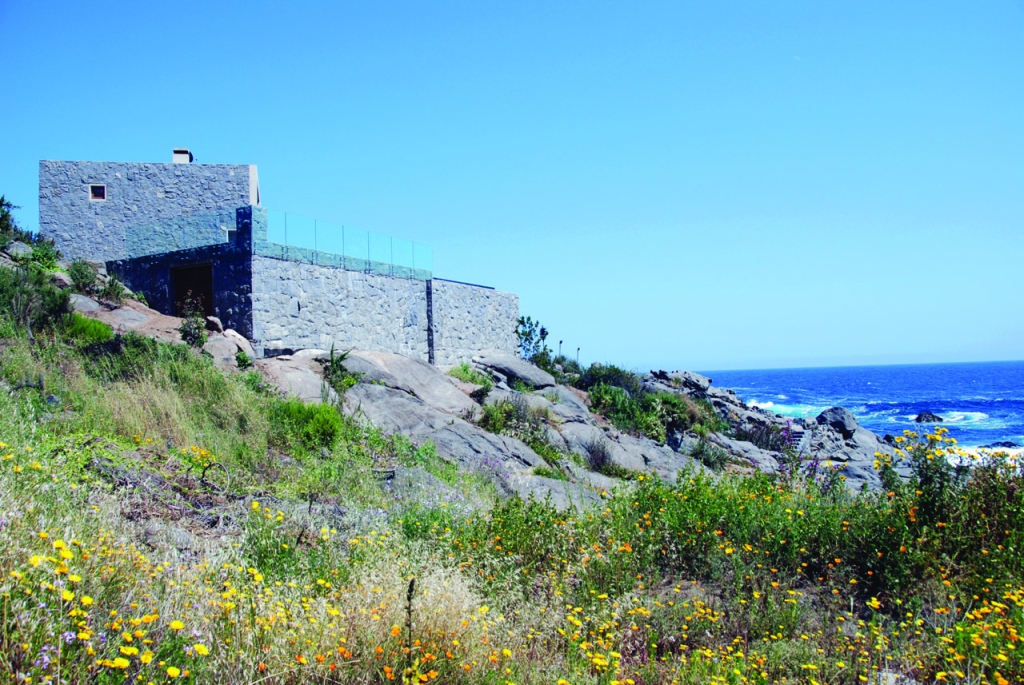
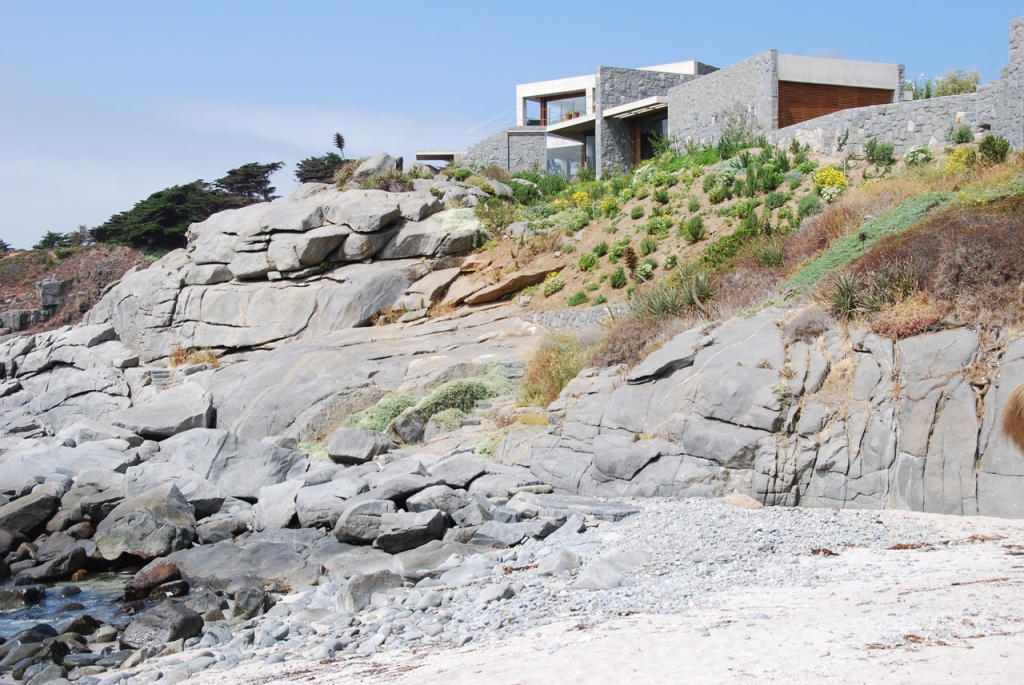
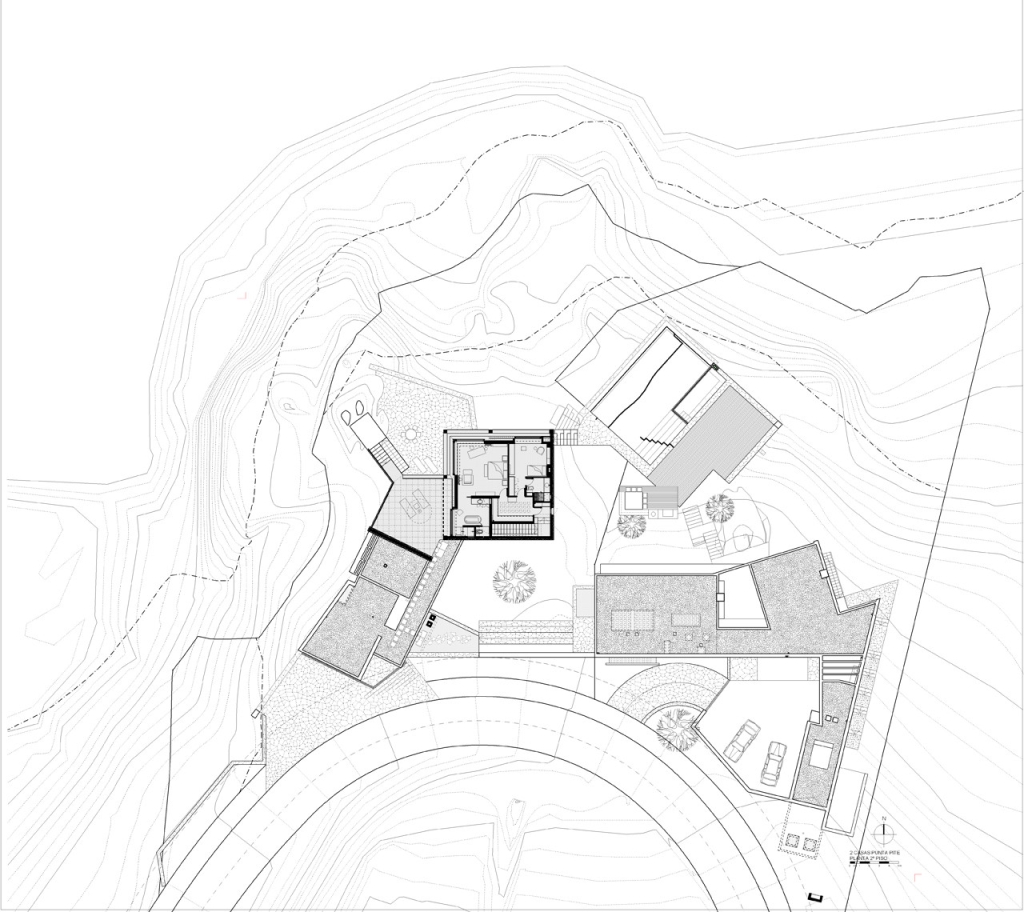
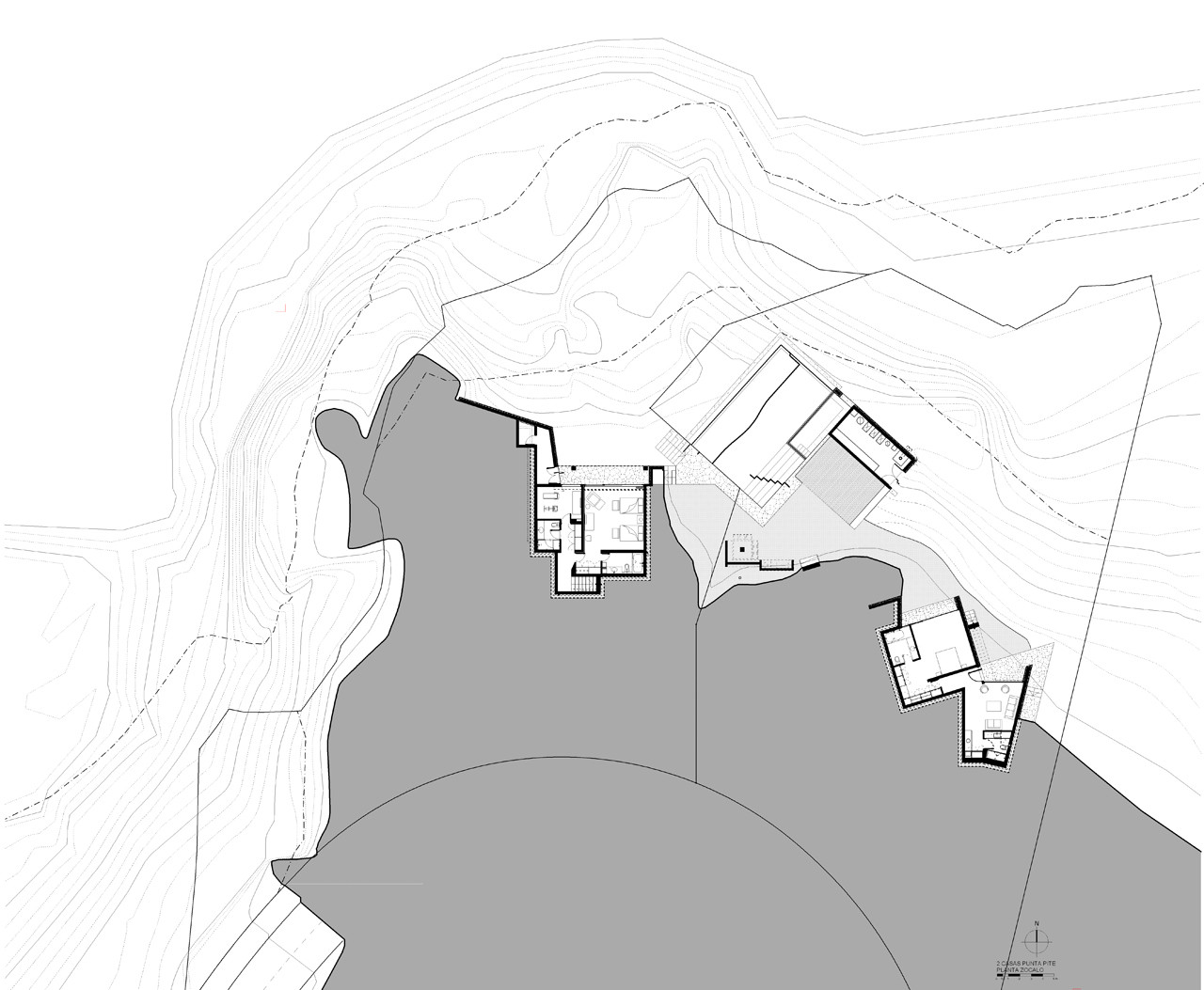
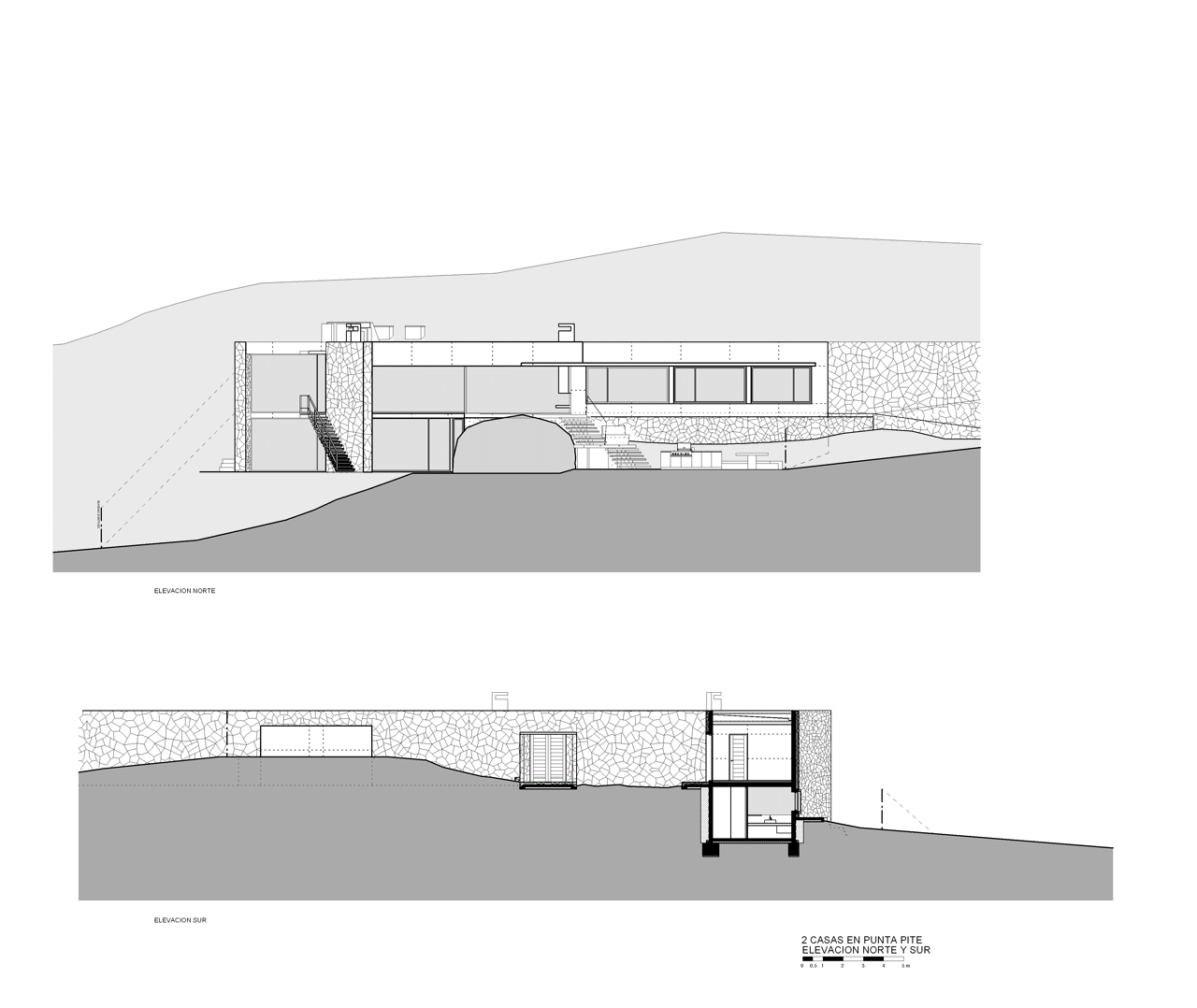
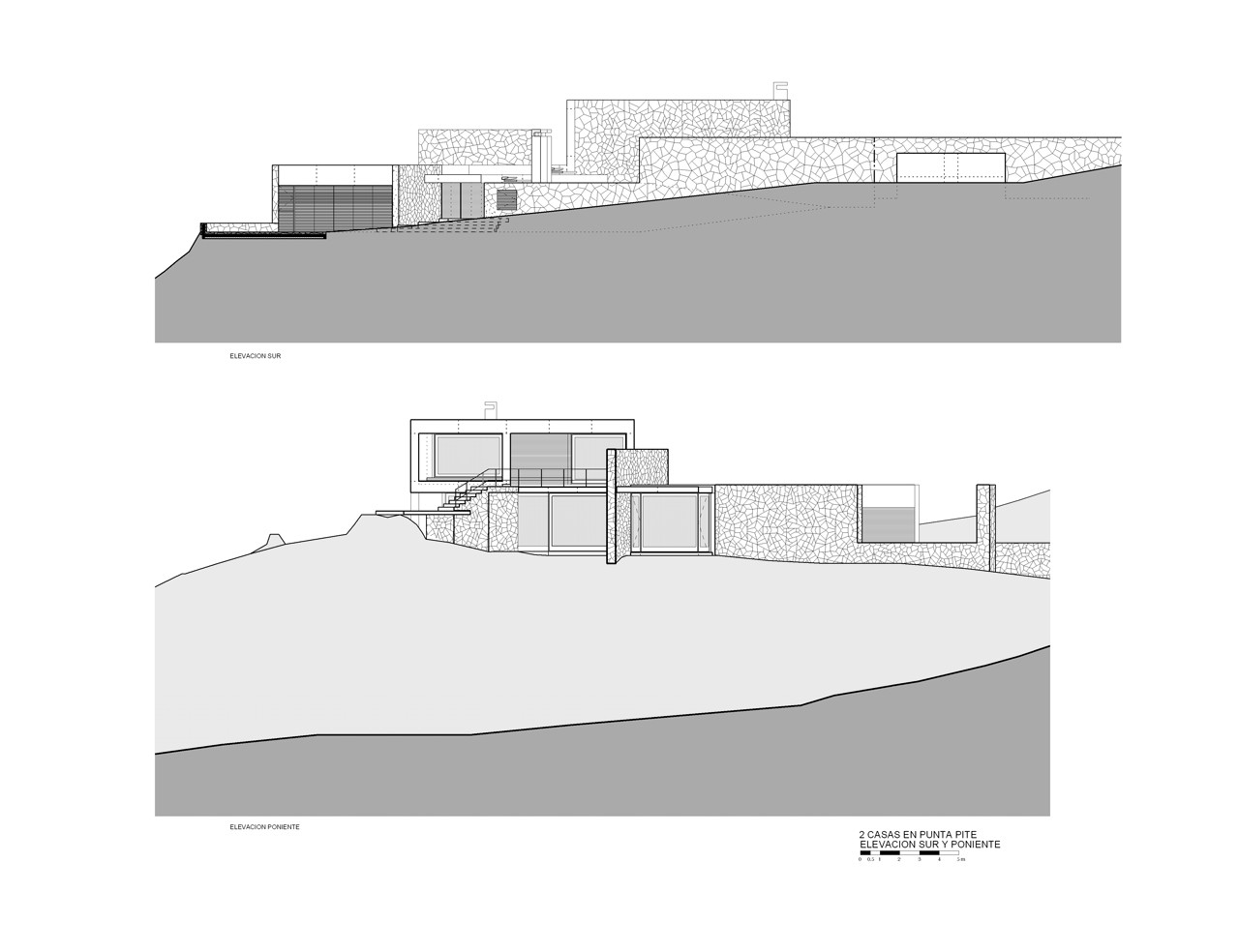
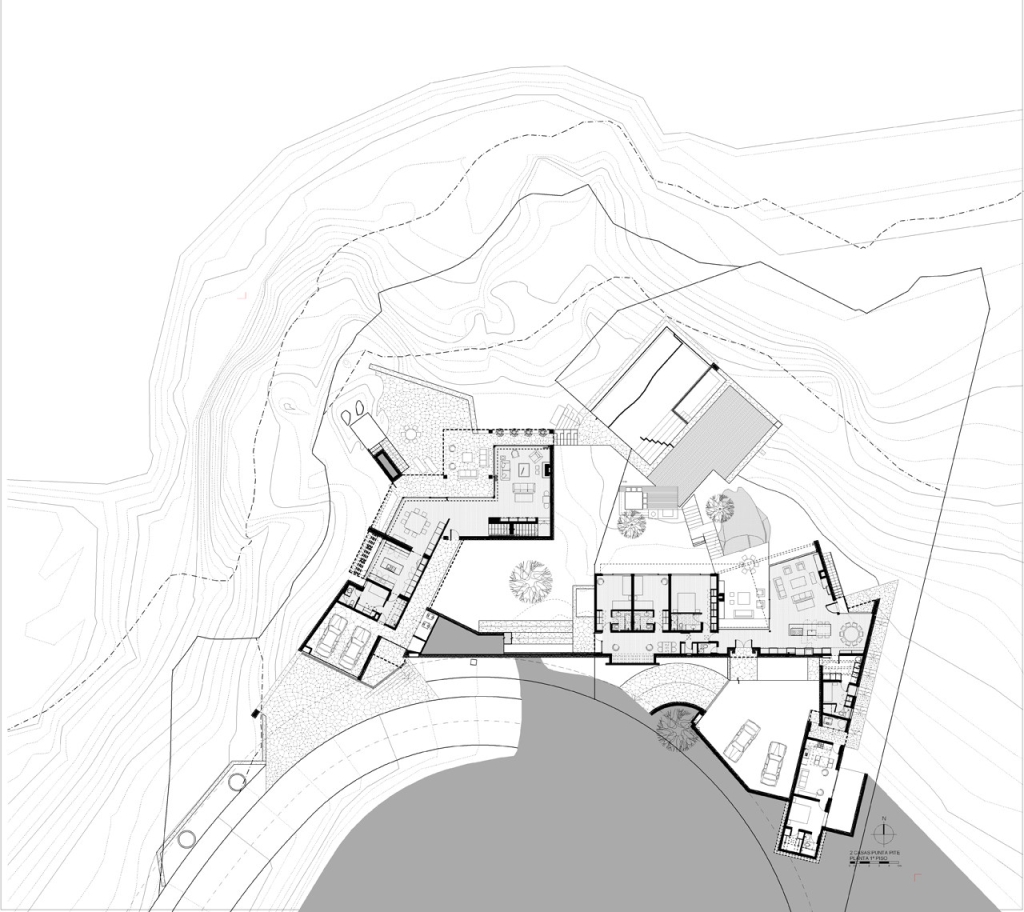
这是伊斯基耶多莱曼设计的智利Punta Pite双别墅,即两代人分开住的度假别墅。它坐落太平洋的蓬皮特(土著语称为‘风’),此处到圣地亚哥只有两个小时的车程。建筑位于被海风吹拂的海角岩石上,从小岛西部,东部,海滩都能看到这处房子。南北街道也很宽敞,能看到浪花从海平线不停的拍打着海岸。两套房子位于岩石和植被之间的空隙中,父母的房子在西,儿子的房子在东。这座建筑与附近的环境融合的十分恰当。 房子的出入口可以让邻居很方便的进入,且室内有很好的采光和通风。地板,墙壁和屋顶雕有石刻;楼板,横梁和承重墙由钢筋混凝土构筑;房子外部用人造石料装饰。整个项目旨在表现环境与建筑能完美融合。 图片来源:路易斯·伊斯基耶多 译者: 砖头 The project consists of two vacation homes for two generations of the same family. It is located in Punta Pite (“place of the winds” in the indigenous language), a two-hour drive north of Santiago, at the foot of the Pacific Ocean. The land is located on a promontory of rocks exposed to southwest winds, visible from the beach to the west, and from the houses that follow to the east. Accessed by a street located on the south side, the frontal view to the north is free, where the waves crash hard on the rocks in front of the horizon. The two houses are located in the interstices between the rocks and the vegetation, the parents’ house is on the west end of the site, the sons’ house to the east. Their interiors and exteriors are linked by a system of paths that traverse from the ceilings to the floors, and communicate with the near surroundings. The rooms progress in their aperture and exposure to the outside, gradually opening to the north and closing to the neighbors and wind. Carved stone from the site was used for the construction of walls, floors and ceilings, and reinforced concrete was used for slabs, beams and columns. As an artificial stone, the project seeks to mediate the relationship between the natural landscape and the built space.
 关注公众号
关注公众号 川公网安备51010702000609号


 发表于 2026-5-23 08:27:29