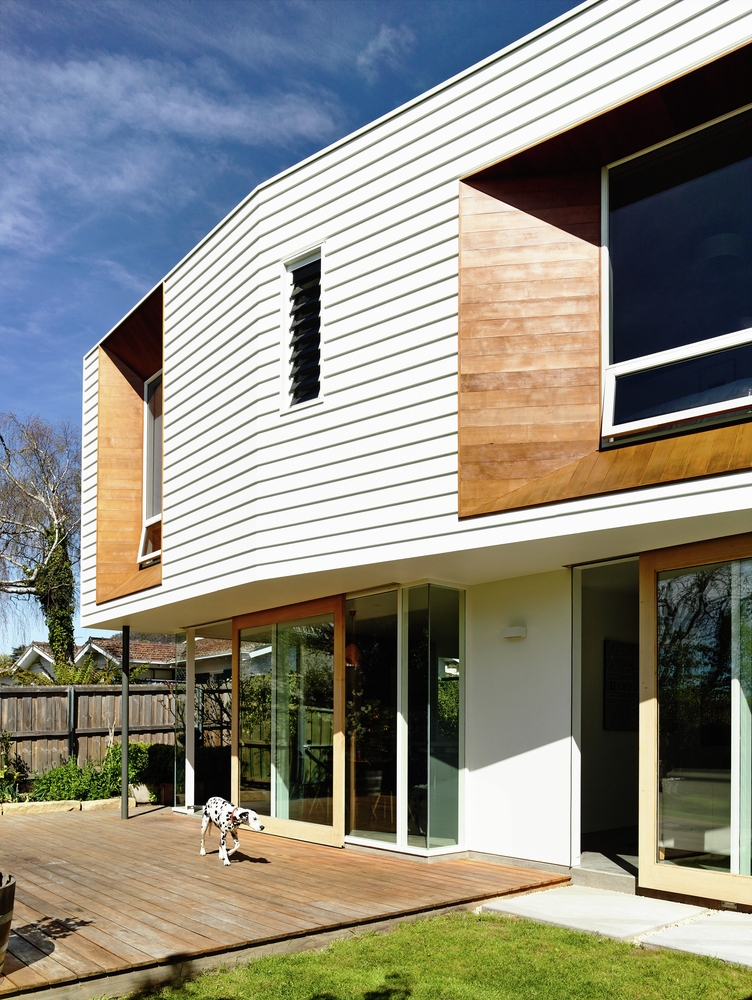
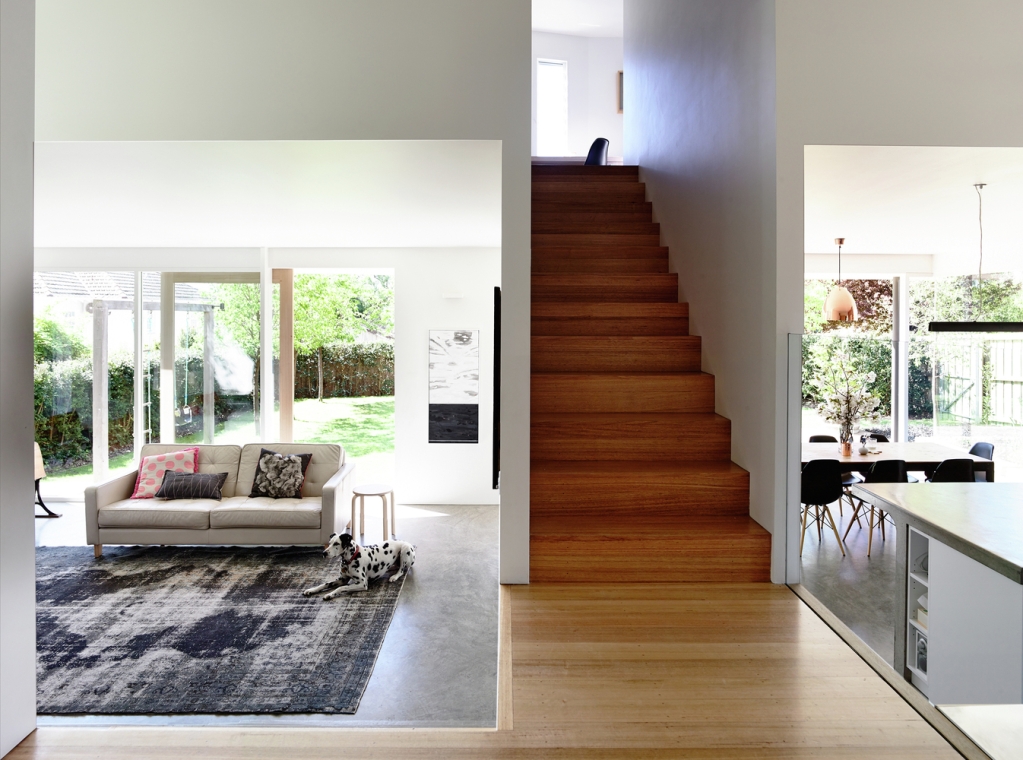
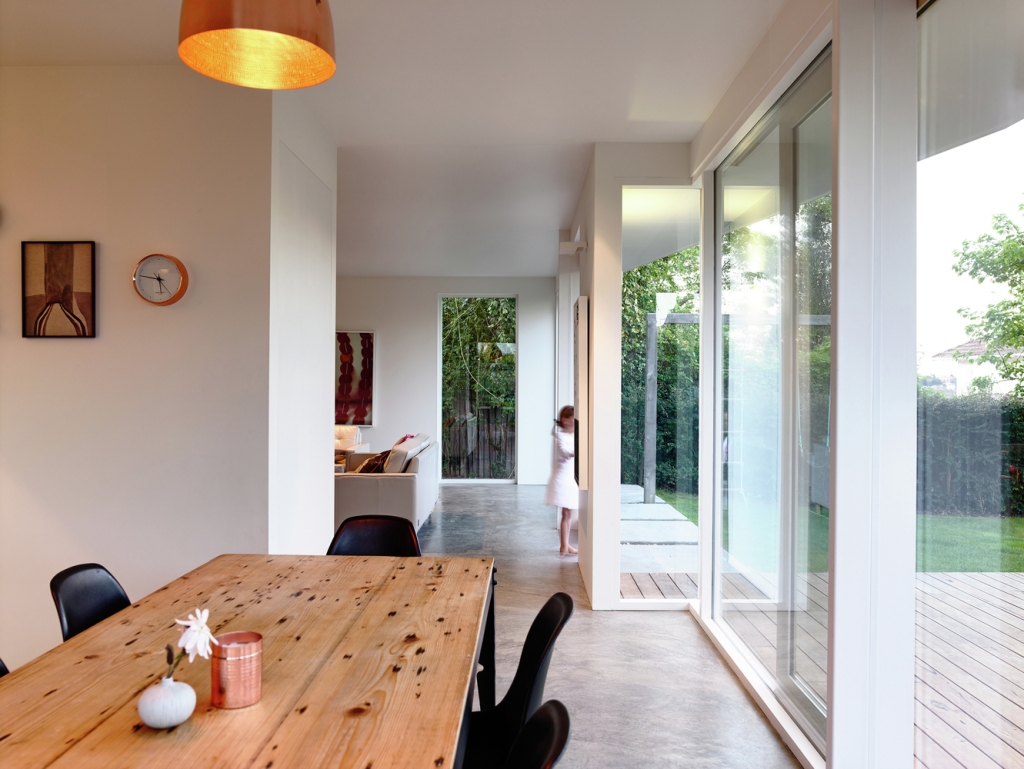
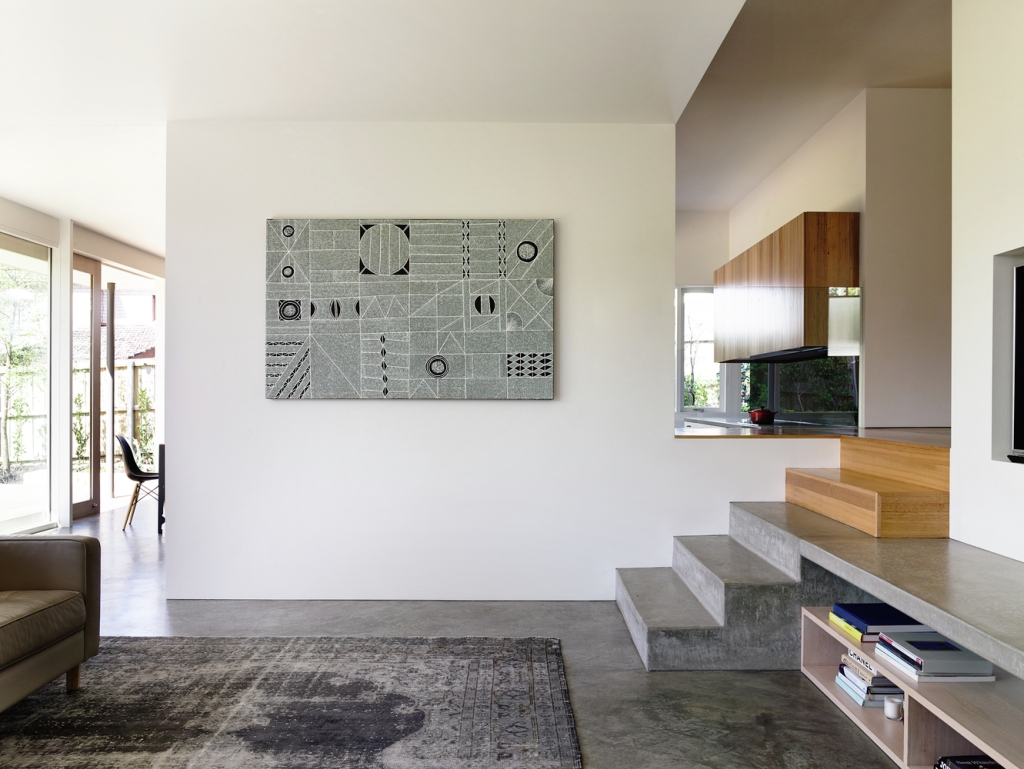
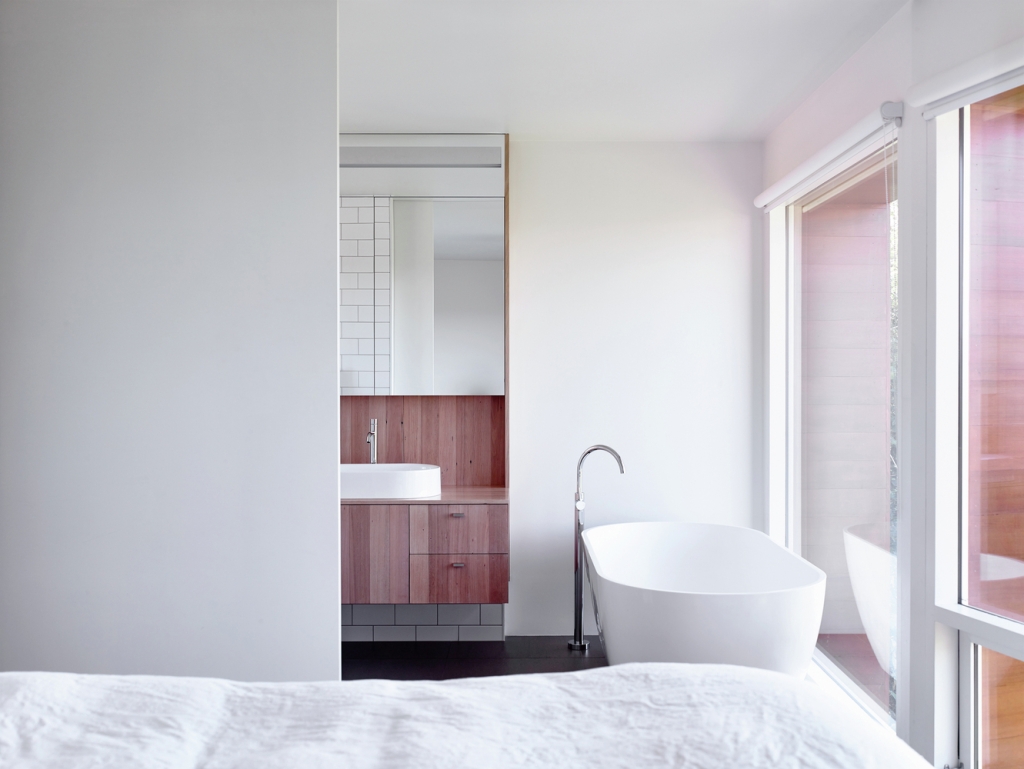
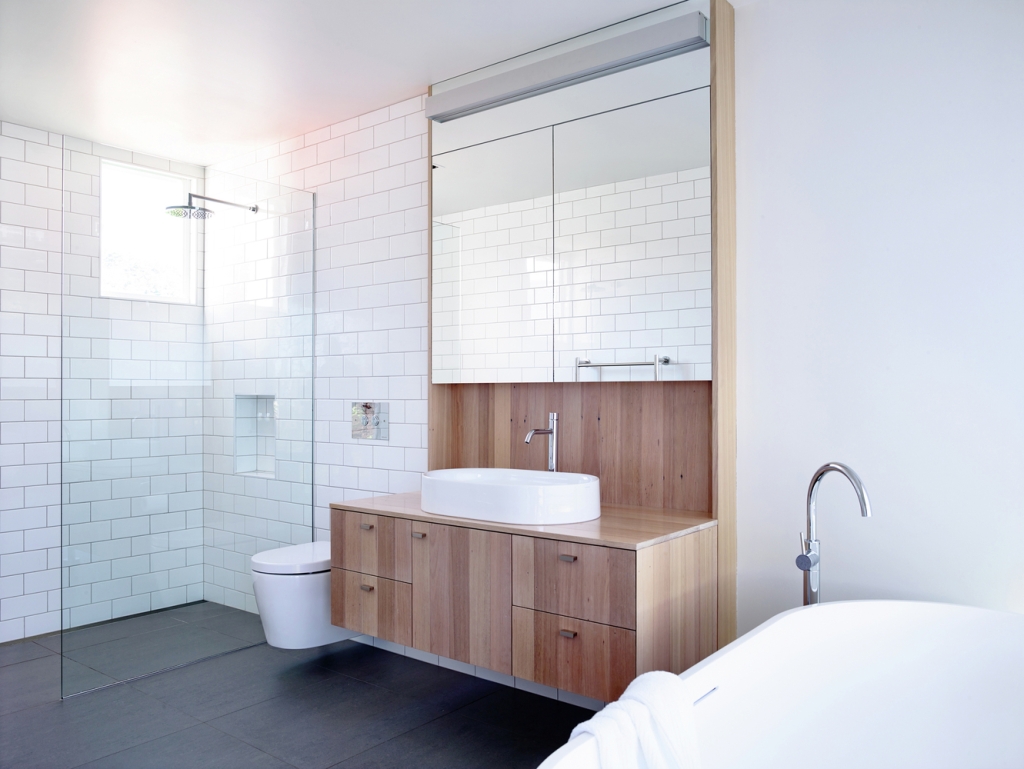
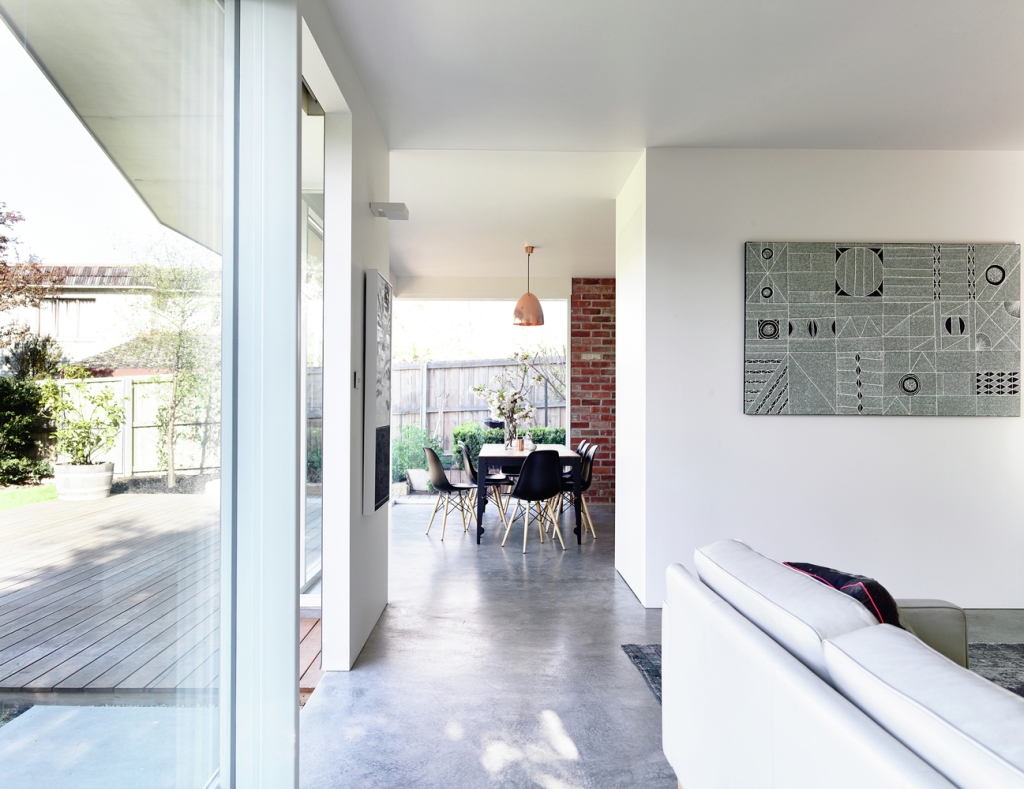
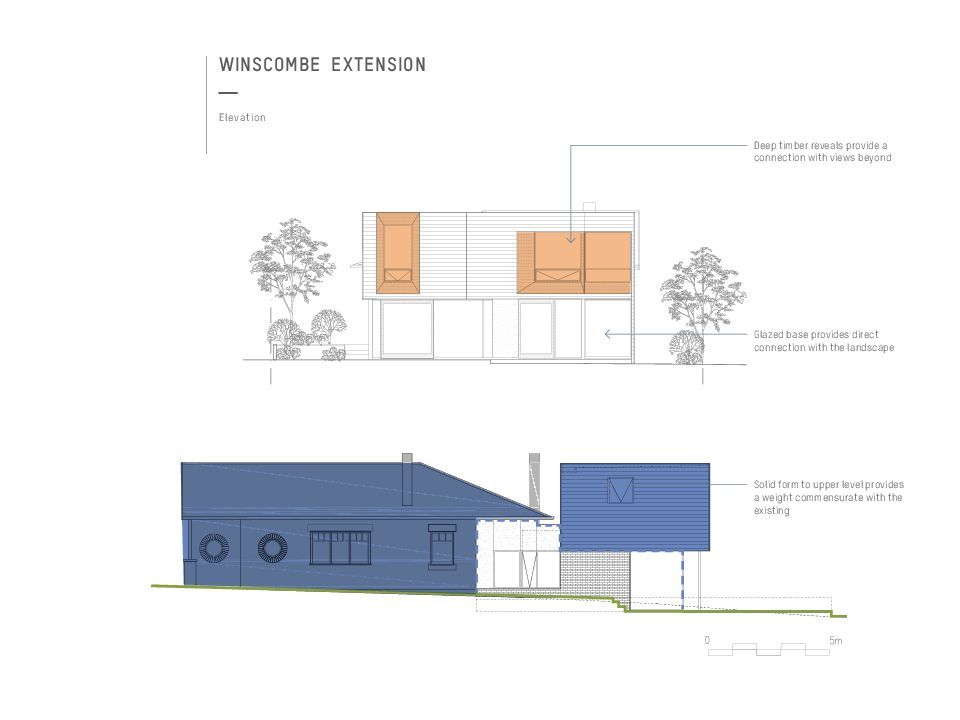
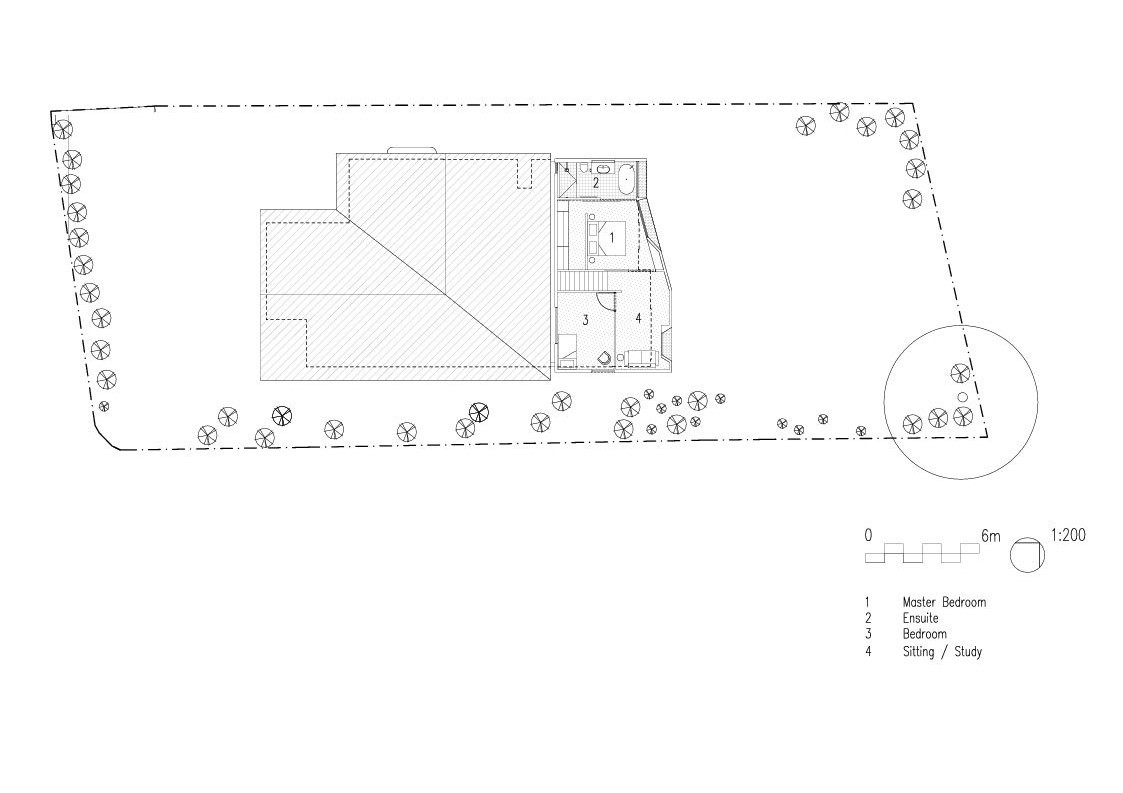
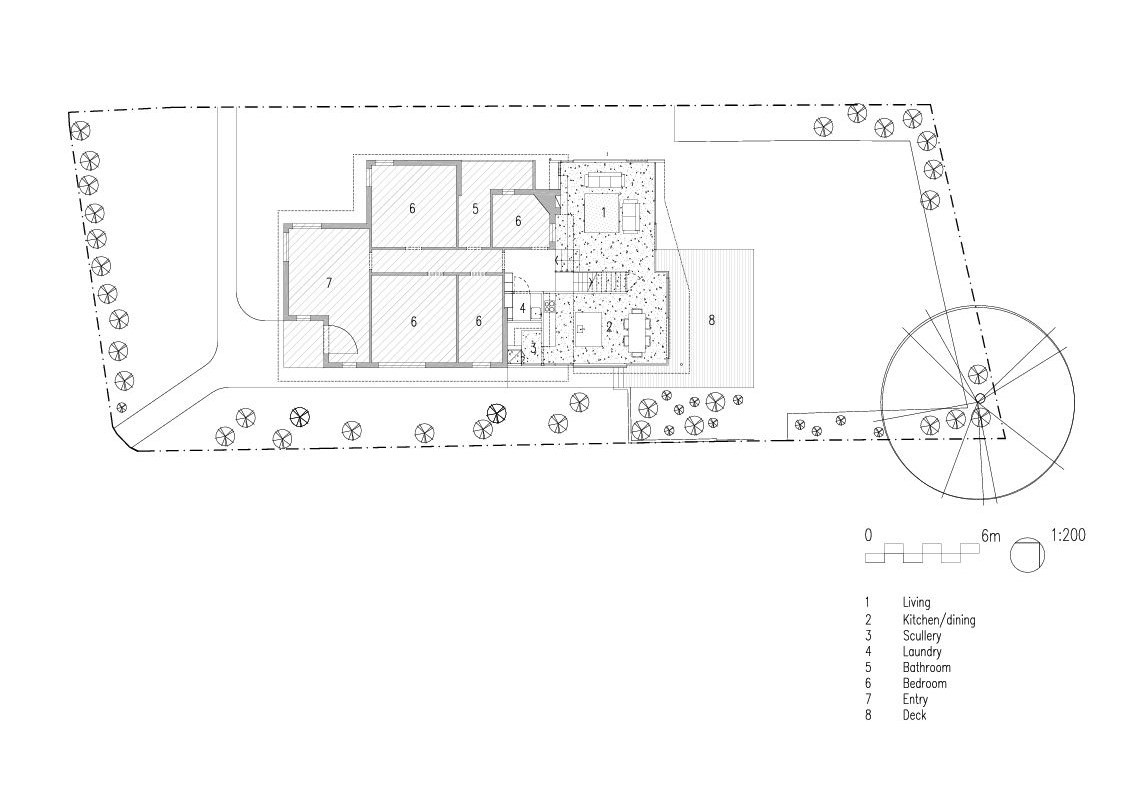
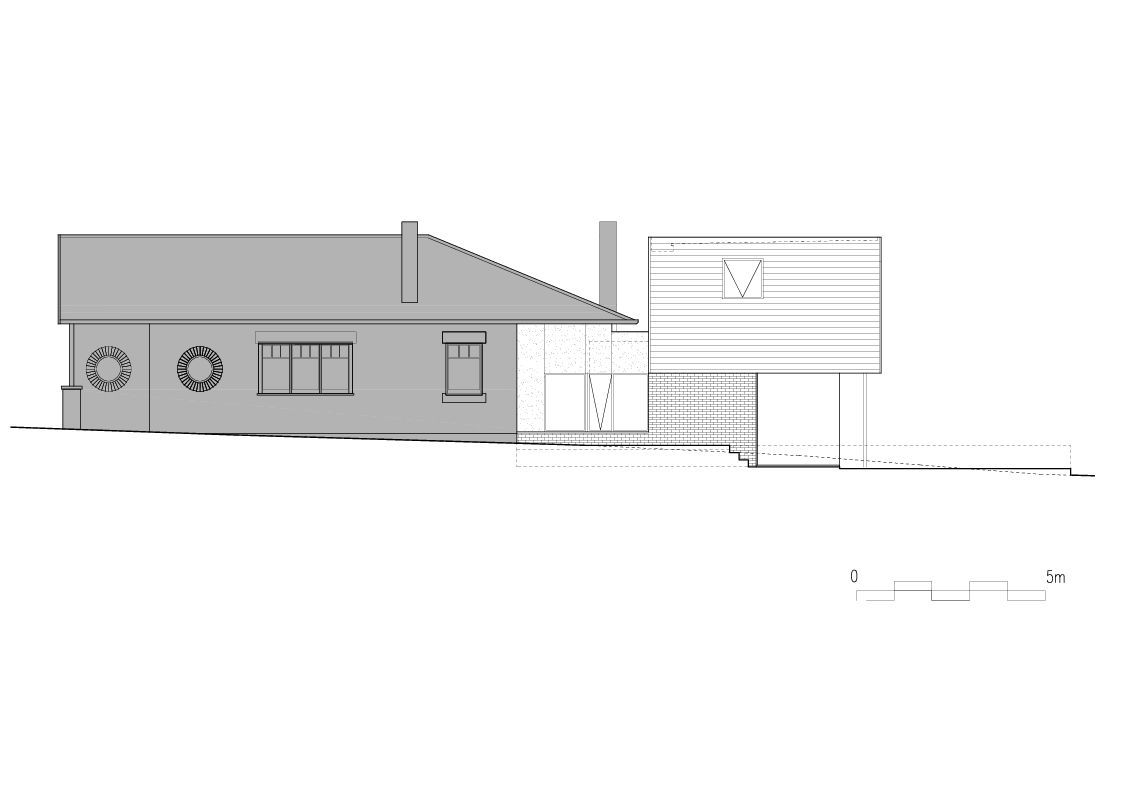
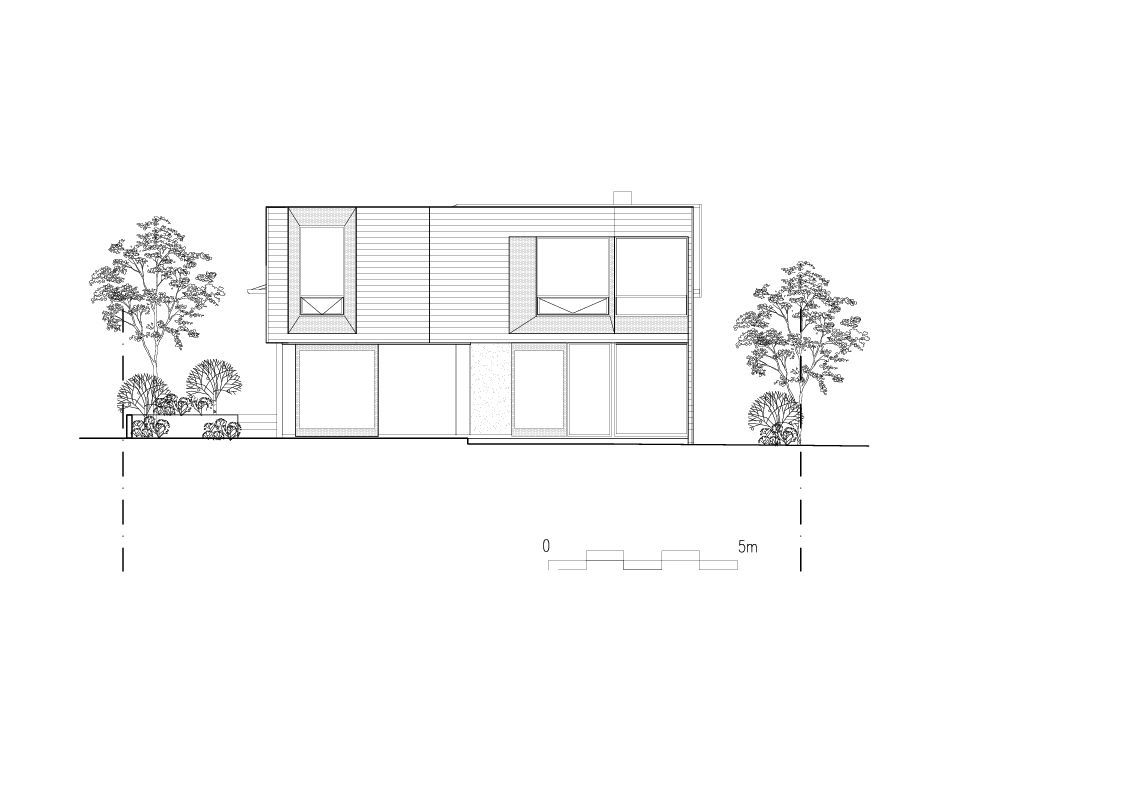
文斯科姆扩建工程就是在一栋修建于二十世纪二十年代的加利福尼亚平房的后部增加一个部分,项目坐落在霍巴特的内部城市边缘。因为家庭成员的人数在不断增加,客户产生了一个连接起修剪整齐的后花园的强烈愿望,项目中包含了新的生活空间、厨房、餐厅和卧室空间,空间安排比较紧凑。项目坐落在原始房屋的后部,所以并不是很显眼,这个新的扩建别墅是两层楼的设计,卧室位于别墅的二楼,而开放设计的生活区域则位于一楼。为了克服新旧体量交界处原始建筑体量的楼层平面稍高的问题,并与花园直接连接在一起,我们使用了一个分裂的楼层安排。 中部的楼梯在原始建筑区域和新扩建体量中提供了一个关键的区分和方向元素。模仿着新的扩建部分,楼梯既开放又封闭着,露石混凝土的踏板引导着居住者通向一楼的生活空间,还引导居住者远离封闭的楼梯,并通往二楼的私人空间。楼梯还有更进一步的功能,它连接并划分项目的每个组成部分,并通过楼梯上的一个孔洞提供了交叉的视野,还在楼梯和生活空间之间提供了一个结实的背景幕。在为每个空间提供着一种封闭感的同时,让它们开向了花园。 译者:蝈蝈 The Winscombe Extension Project called for a new rear addition to a 1920’s Californian Bungalow in an inner city suburb of Hobart. With a growing family and a strong desire to establish a connection to the manicured rear garden (not present in the existing house) the project introduced new living, kitchen, dining and bedroom spaces within a compact footprint.Discreetly positioned to the rear of the existing house the new addition is arranged on 2 levels with bedrooms above and open plan living areas below. To overcome the existing elevated floor level at the junction of old meeting new and provide a direct connection to the garden a split level arrangement has been used. The central stairs provide a key dividing and directional element both within the existing areas of the house and throughout the new addition. Mimicking the addition the stair juxtaposes open and enclosed with exposed concrete treads leading you to the lower living whilst also guiding you away from the enclosed stair to the upper level private spaces. Further the stair is used to connect and divide each component of the program offering cross views between spaces through a void over the stair landing, and a provide a solid backdrop (divider) between the kitchen and living spaces; providing a sense of enclosure to each whilst also focussing each space out to the garden.
 关注公众号
关注公众号 川公网安备51010702000609号


 发表于 2026-5-23 11:44:02