设计团队:Magdalena Beczak, arch. Maciej Beczak, arch. Aleksandra Denis
图片:26张
摄影师:jankarol
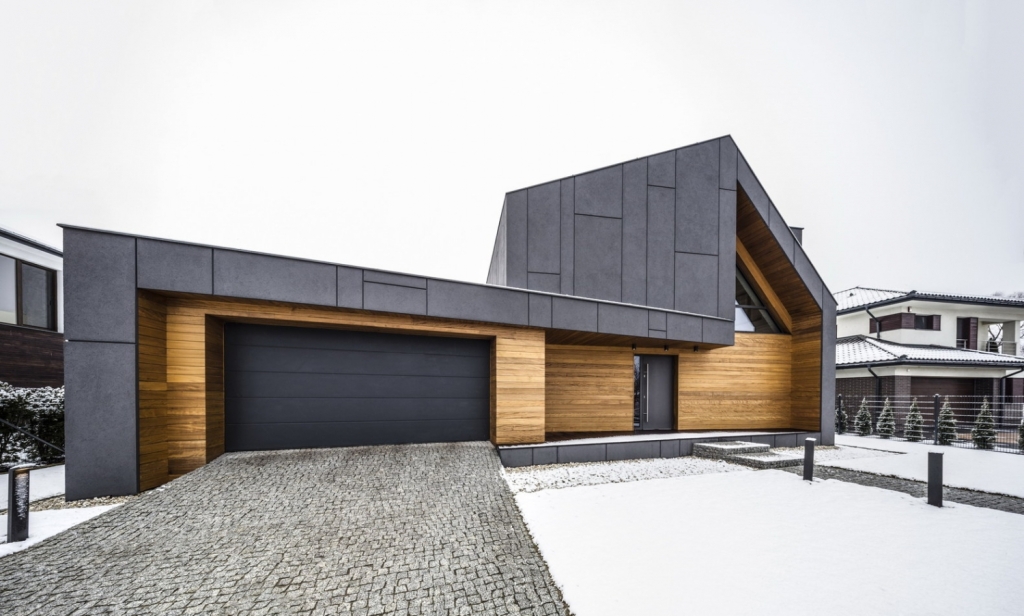
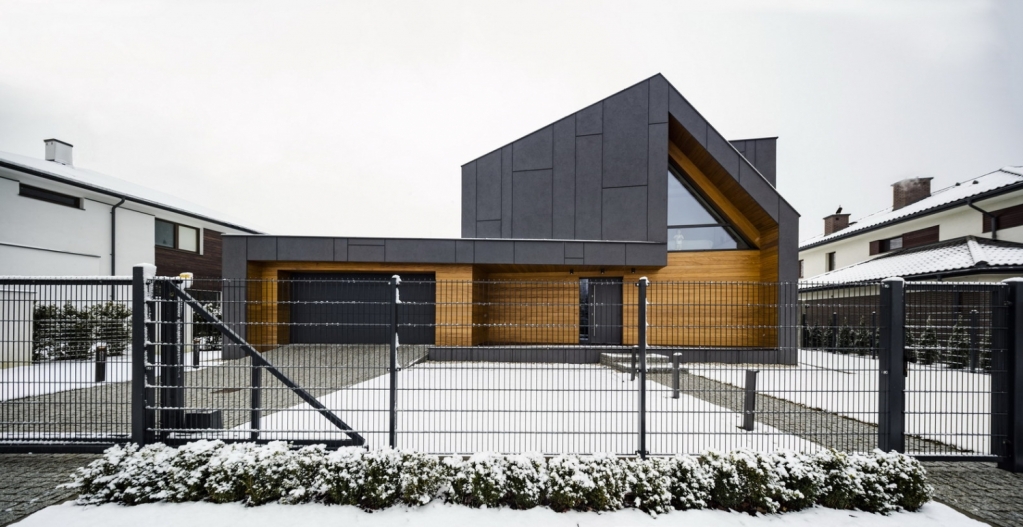
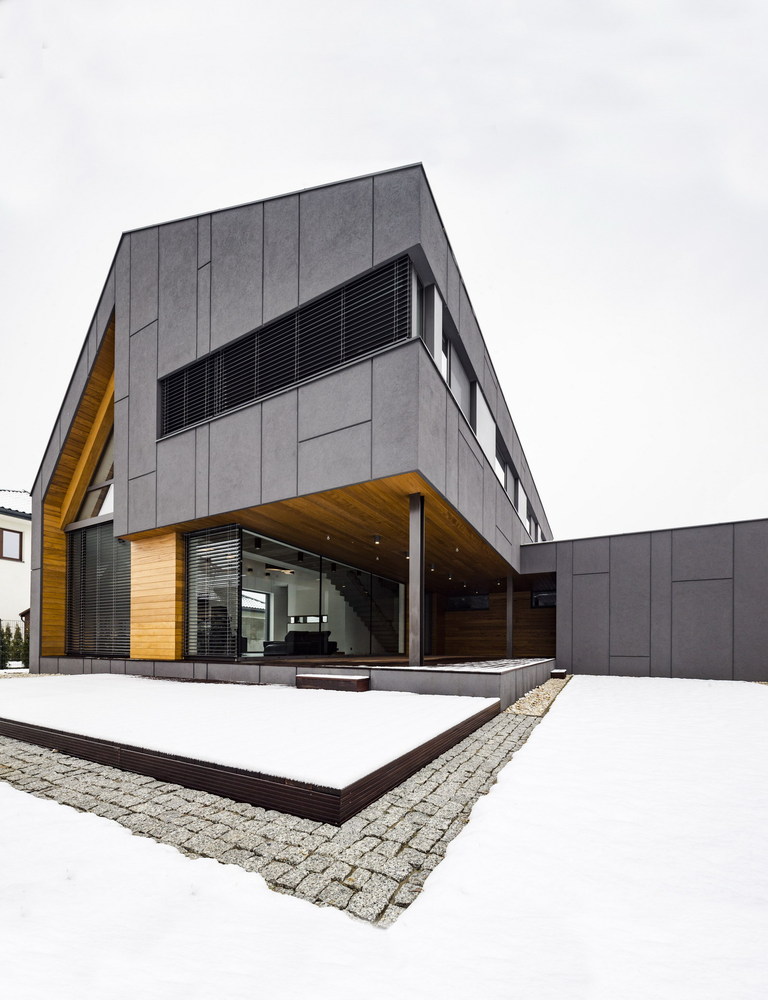
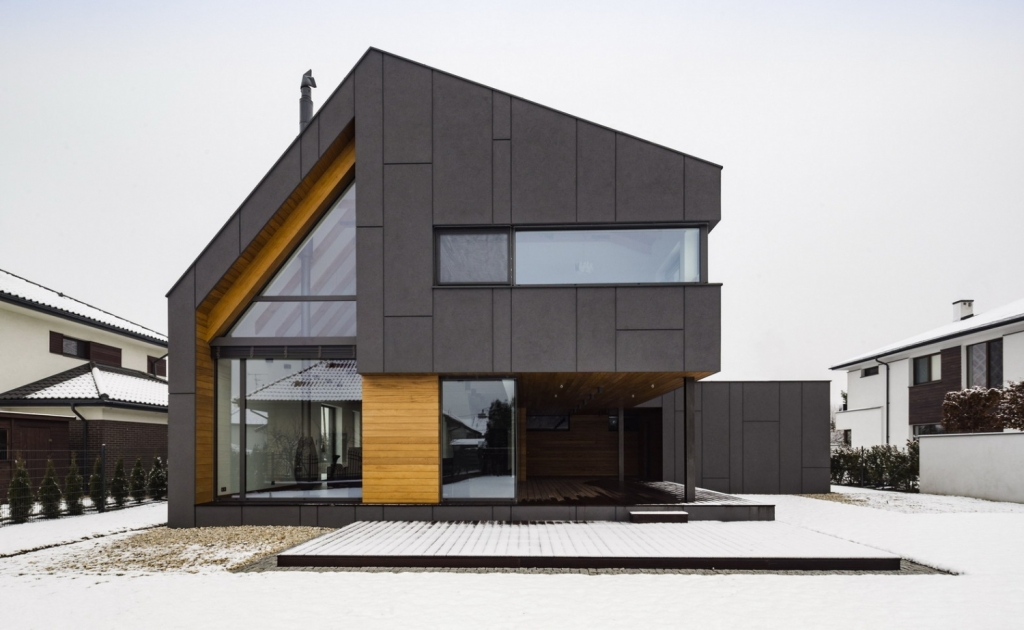
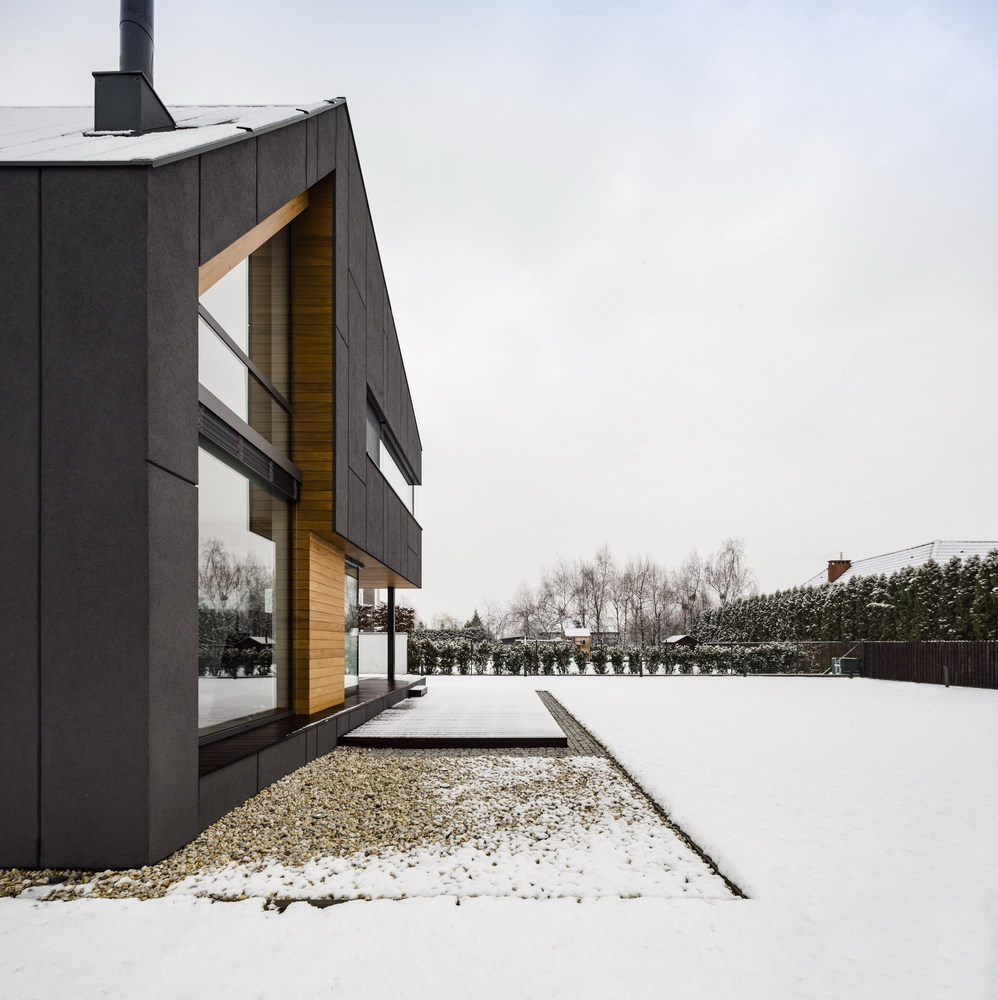
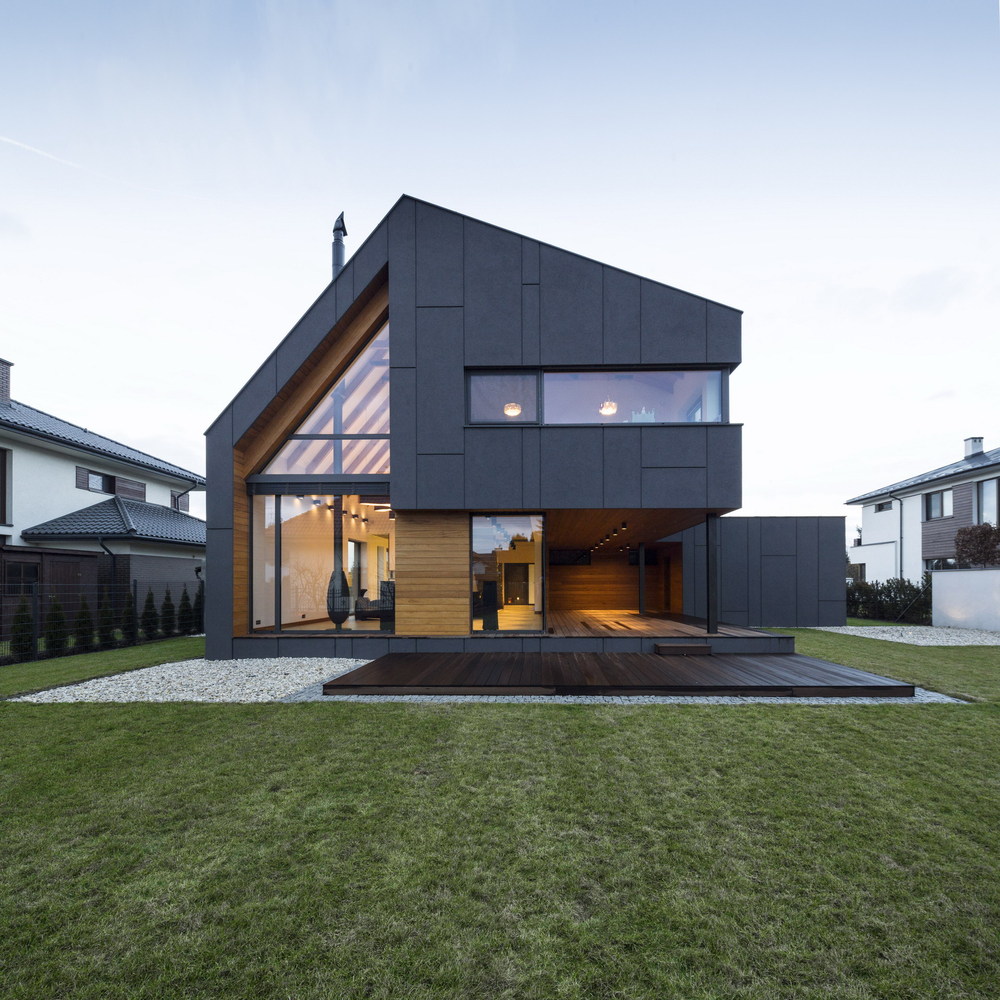
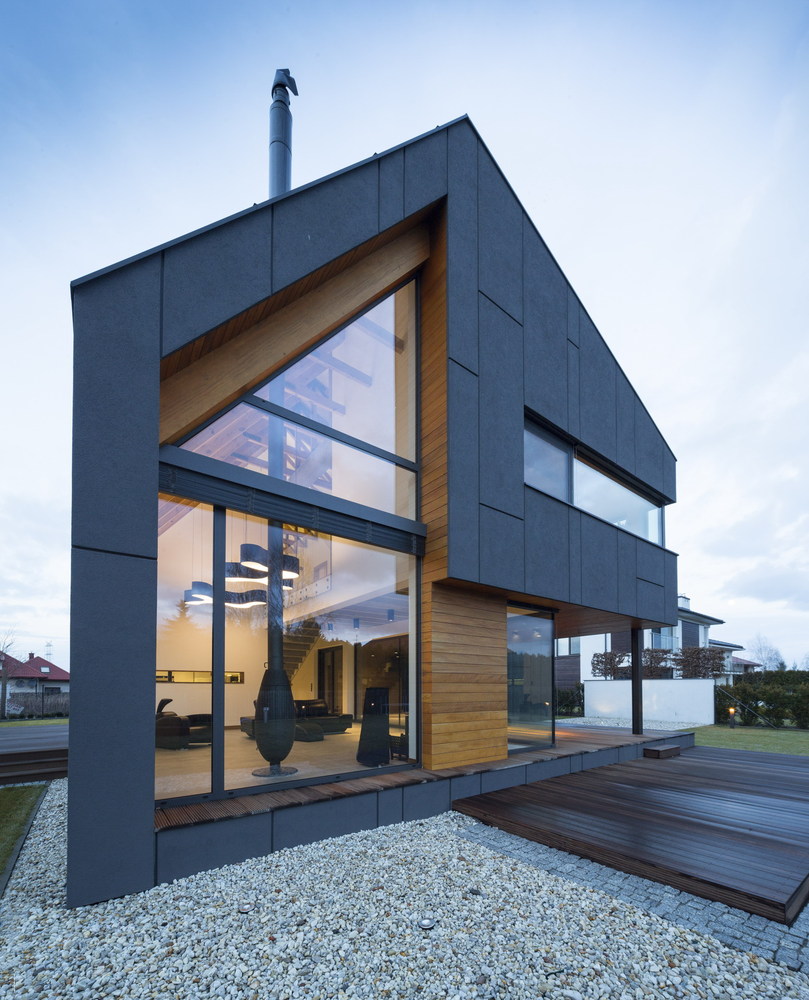
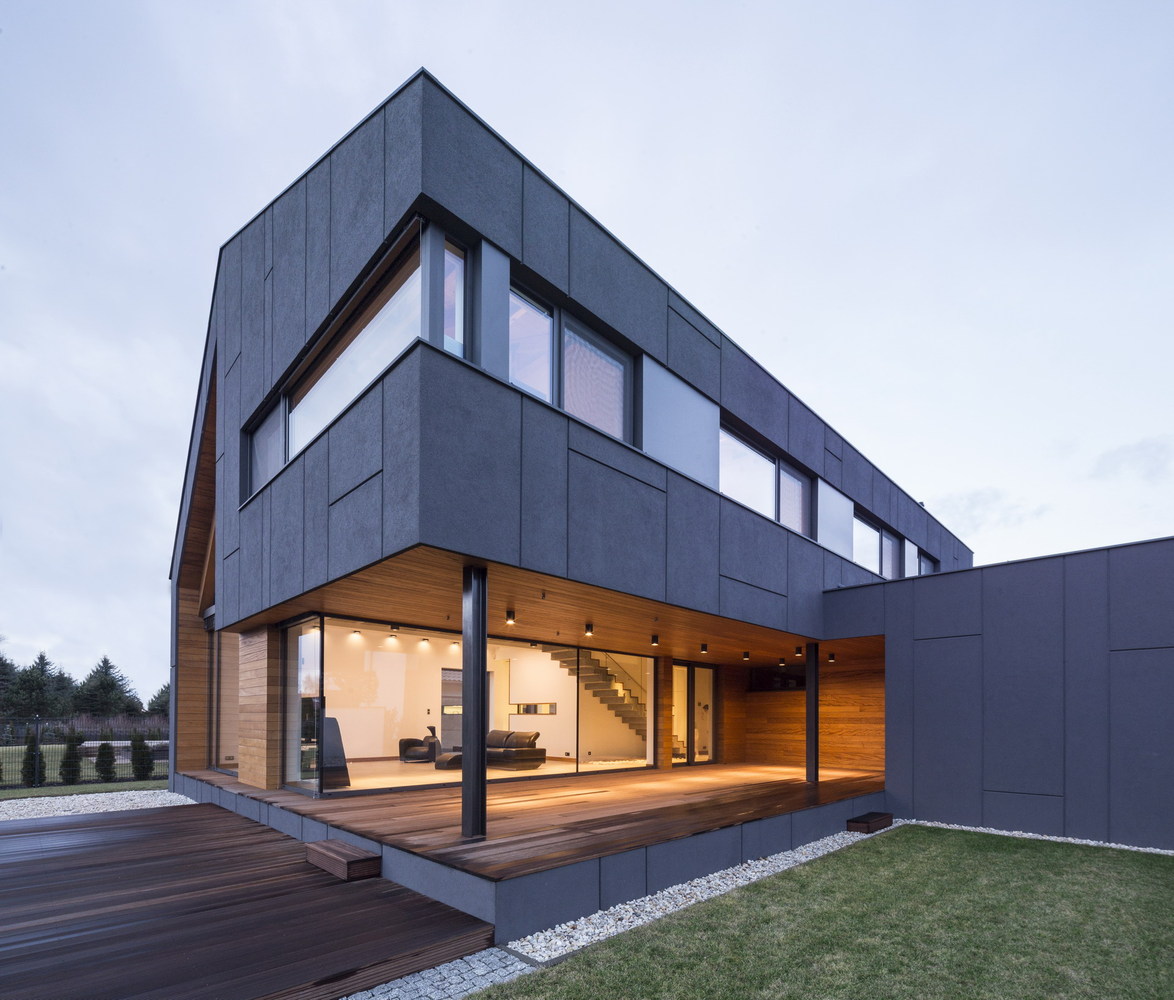
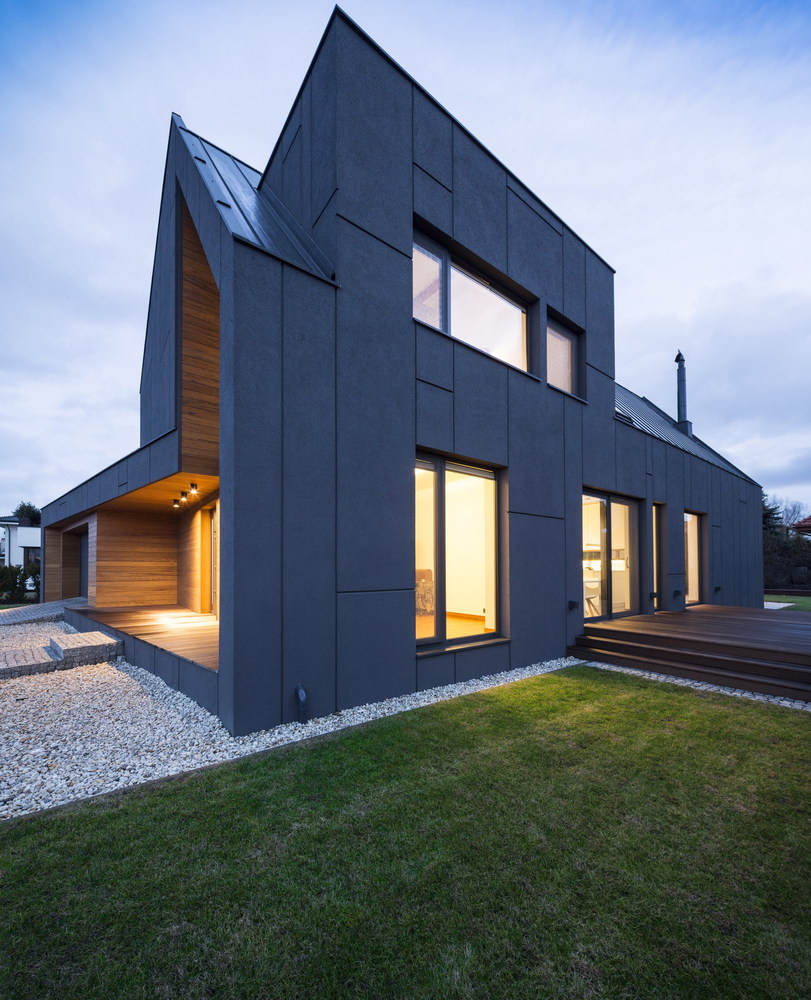
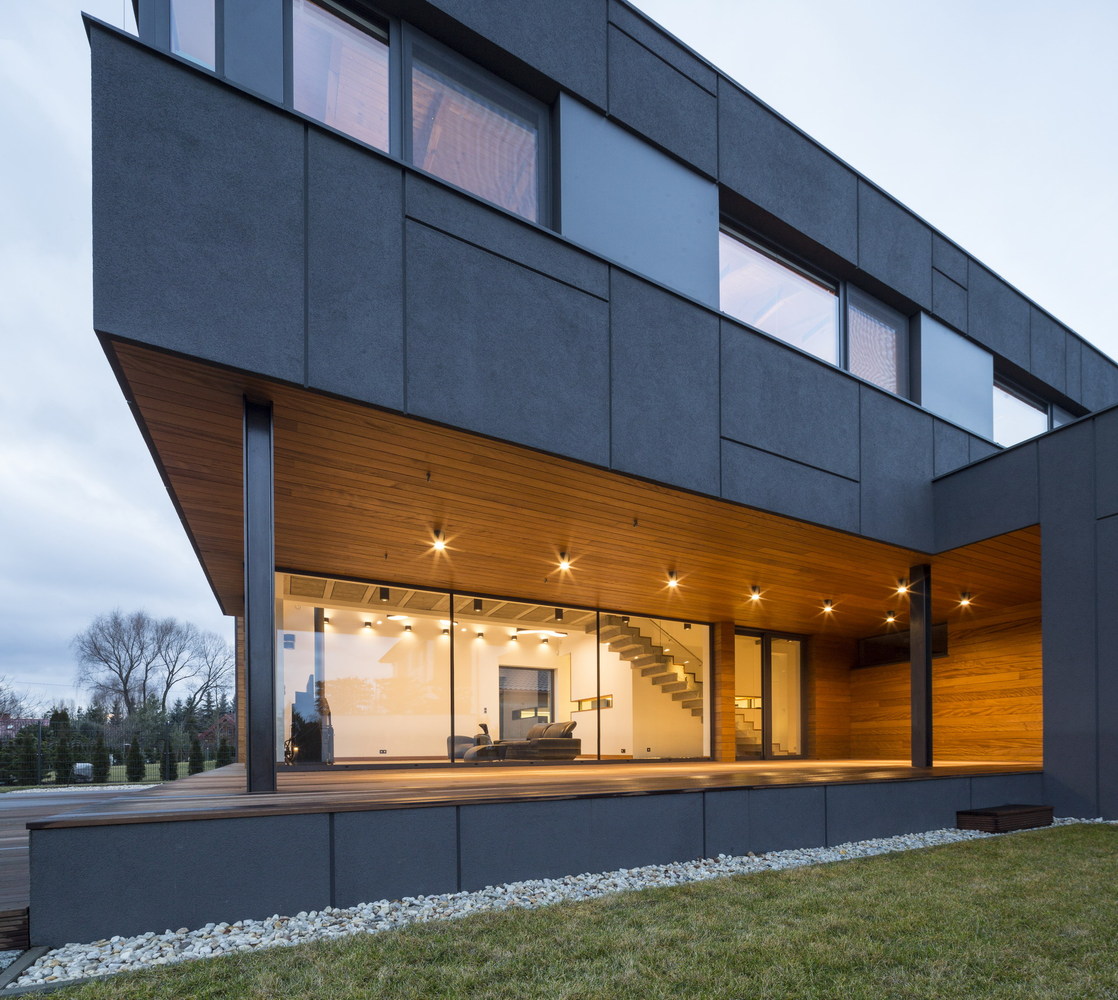
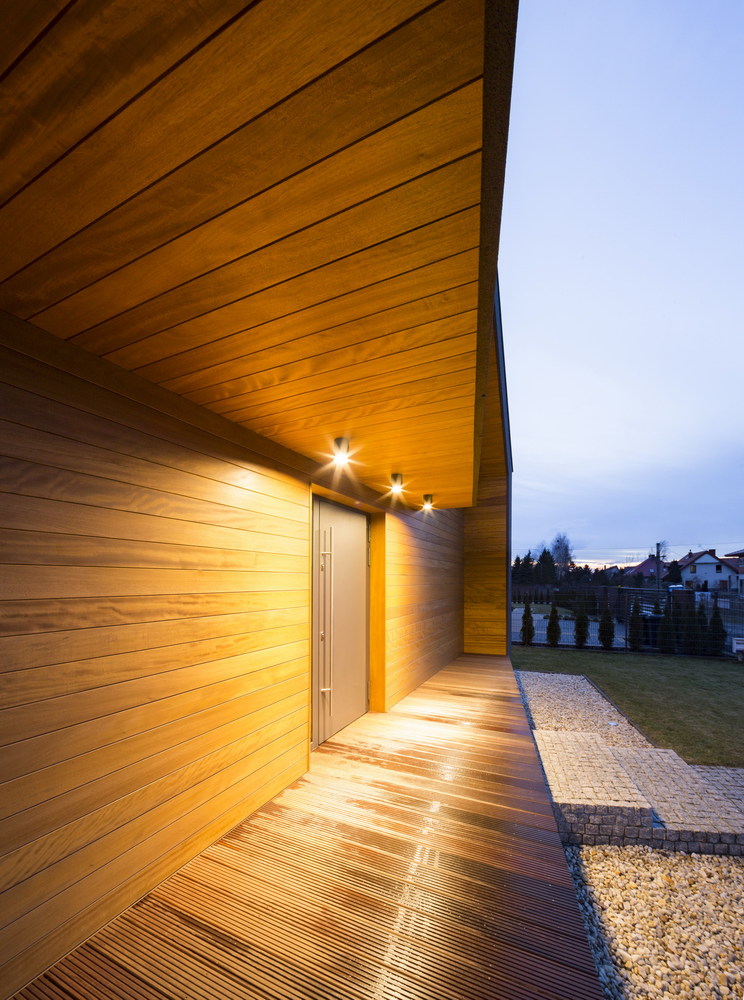
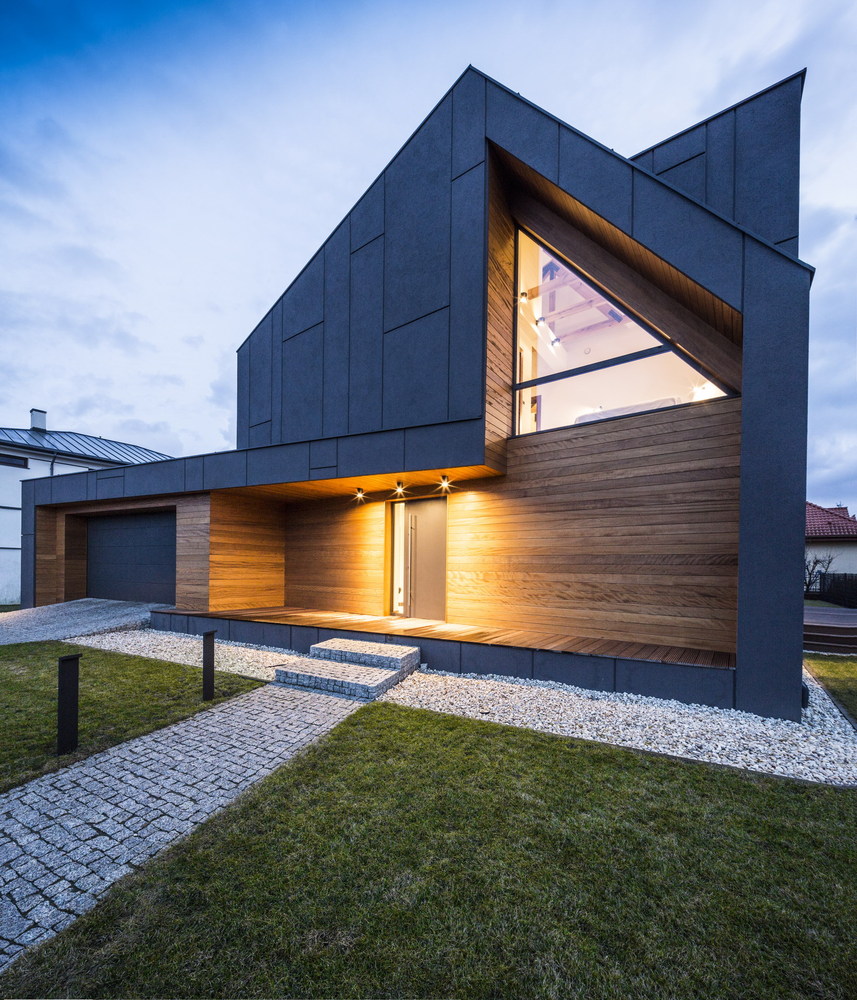
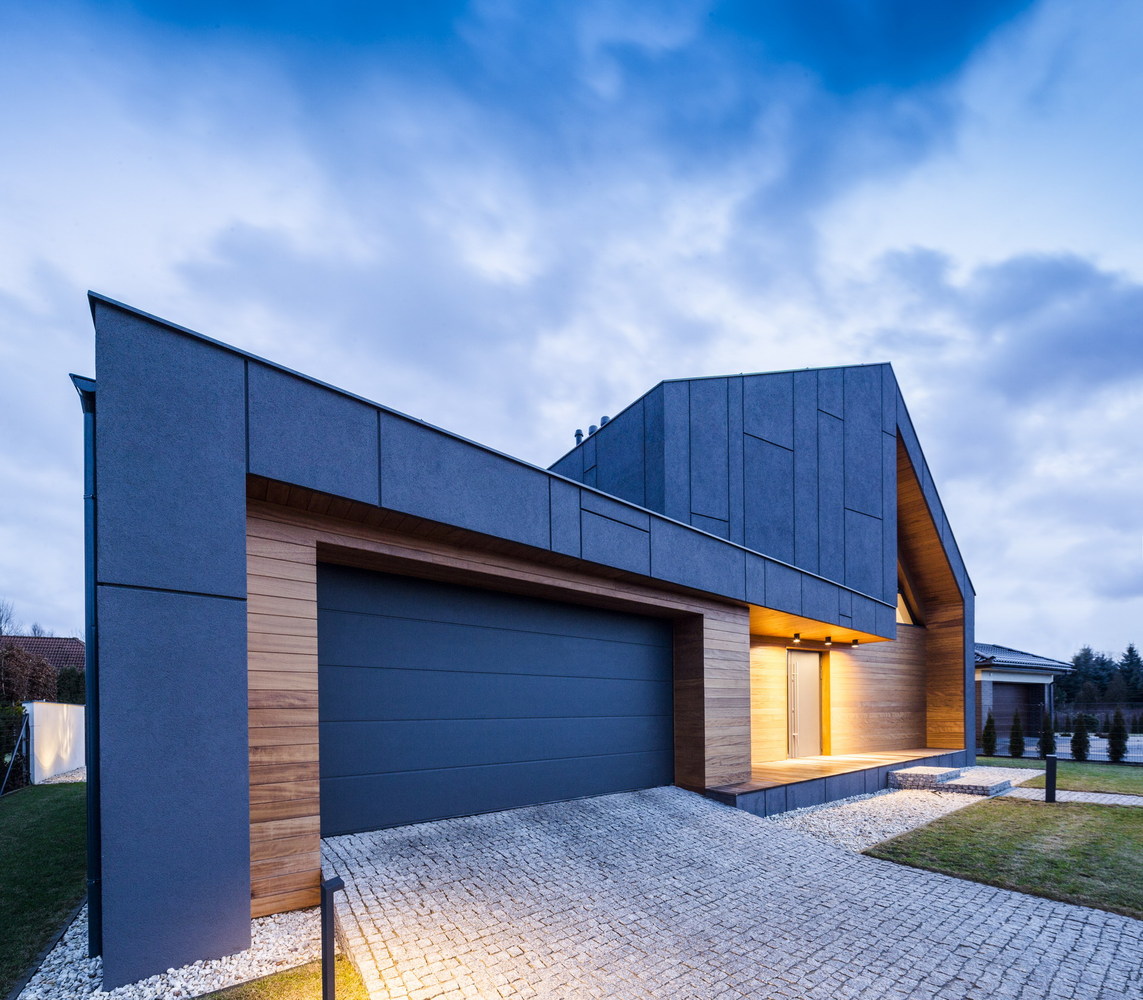
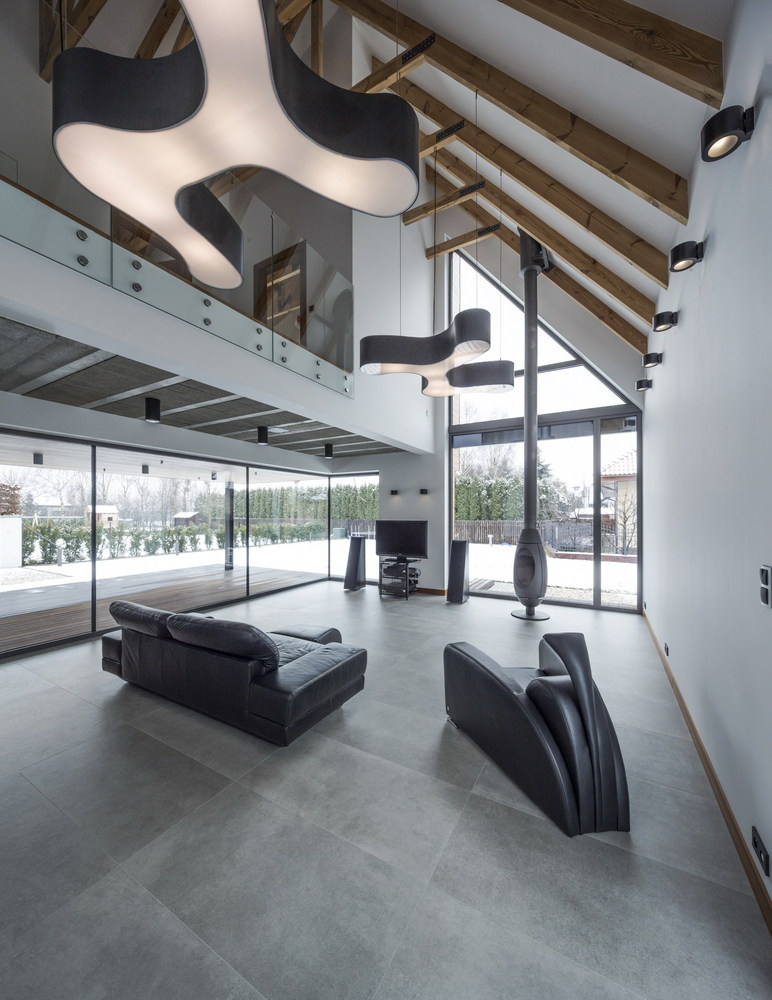
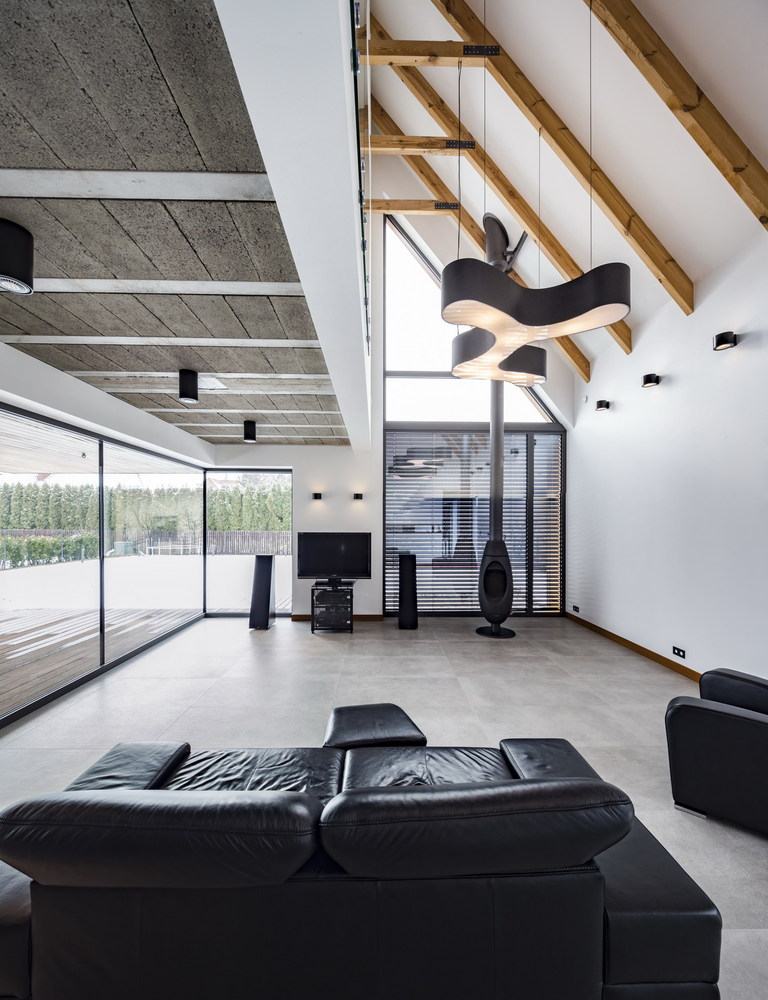
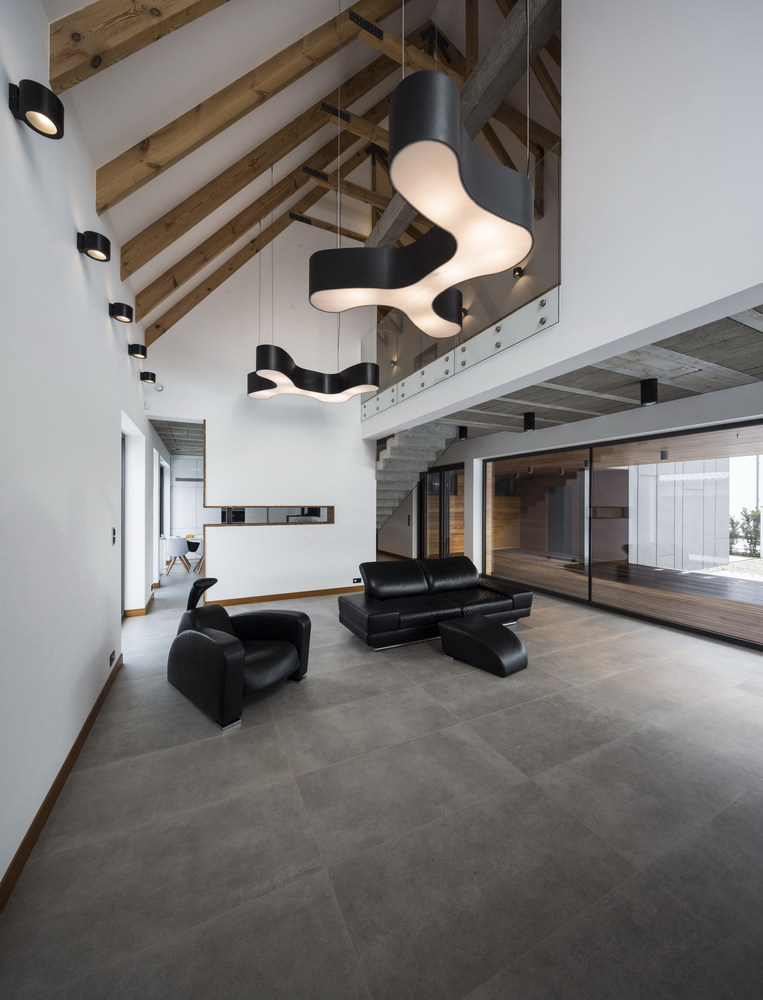
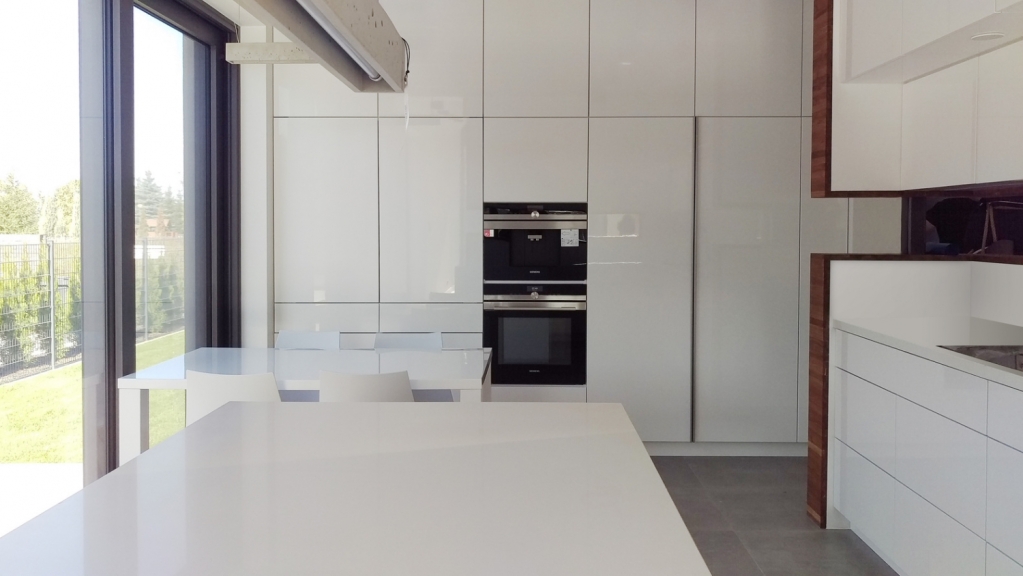
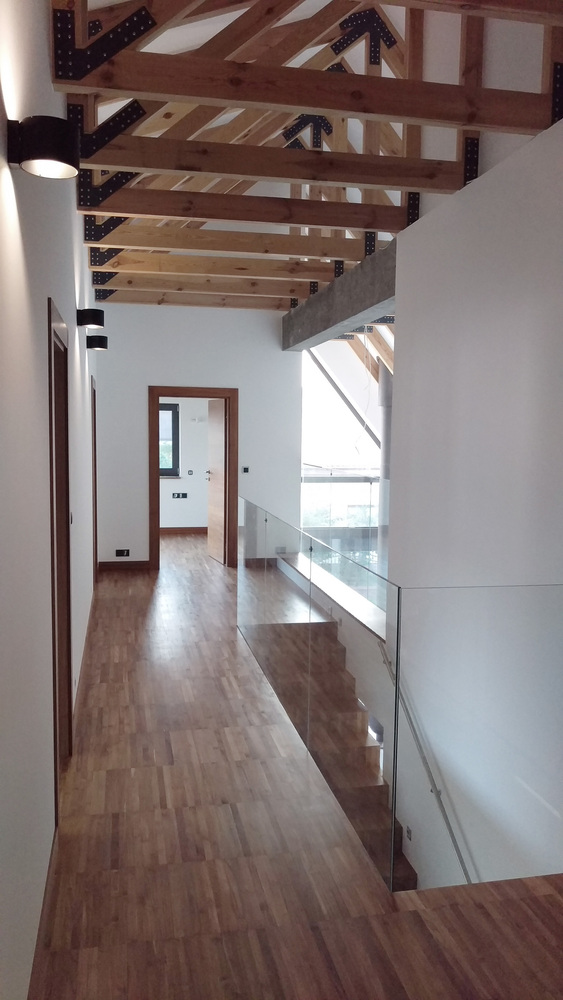
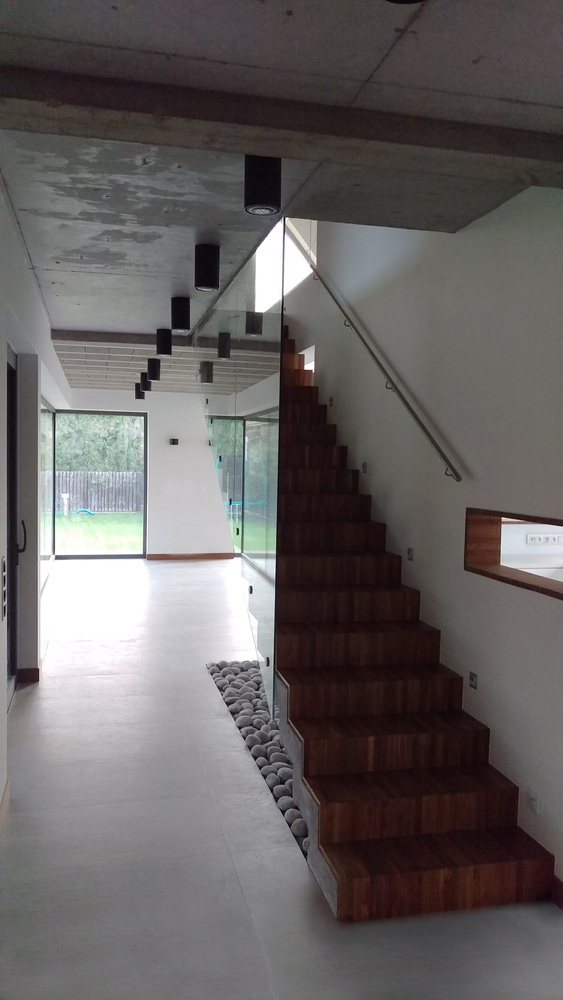
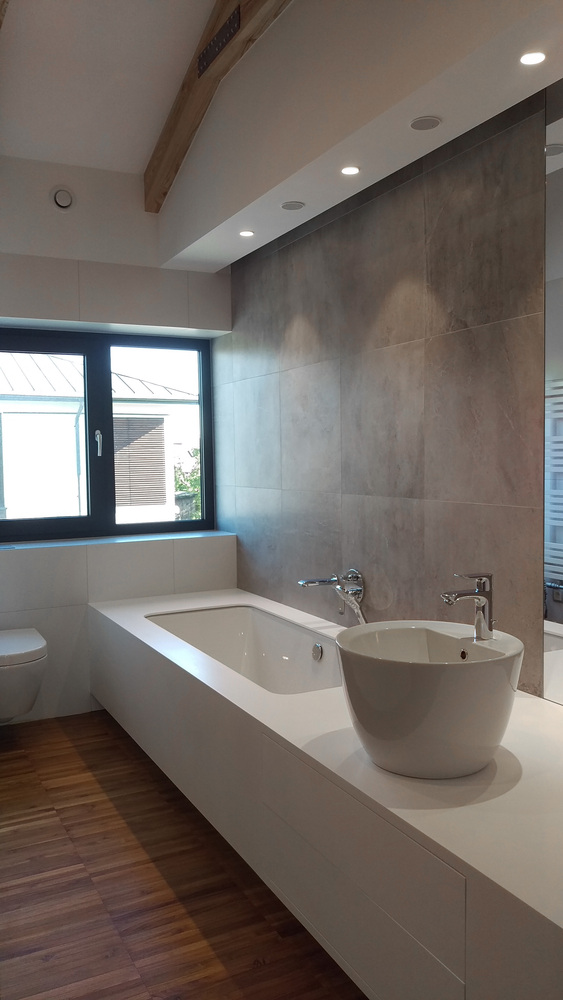
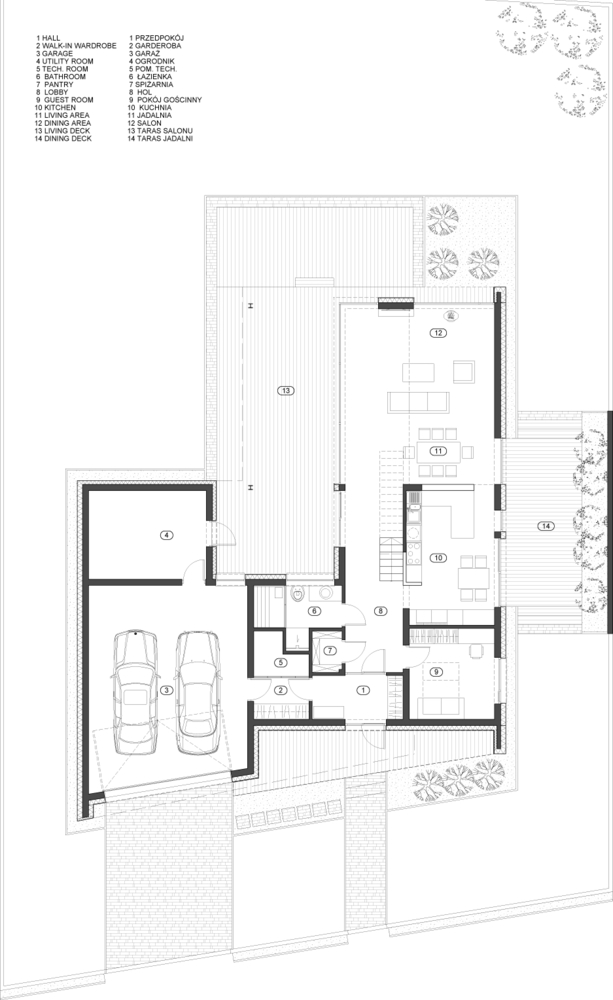
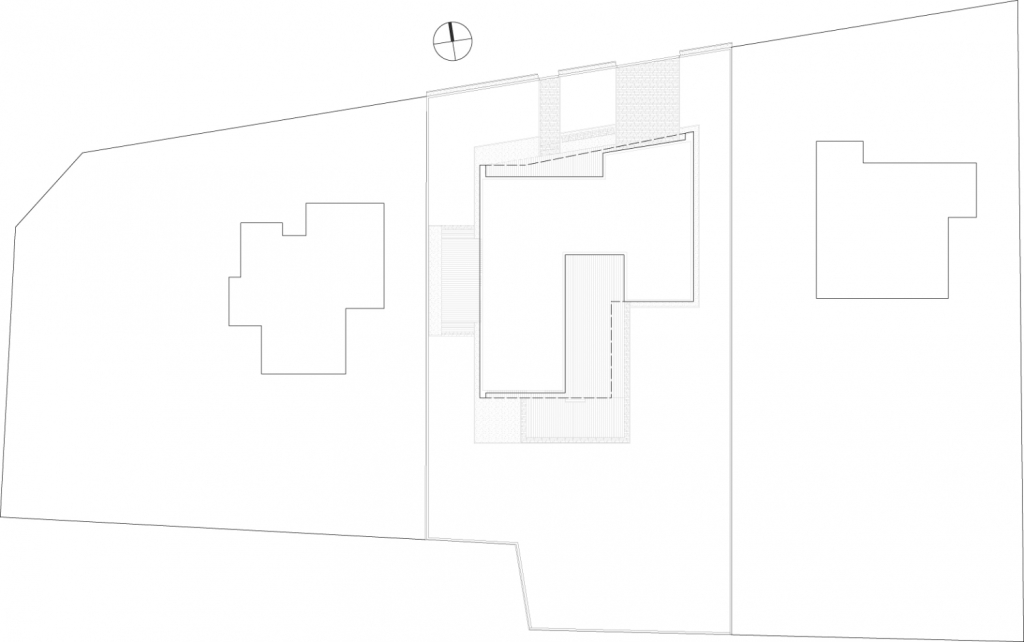
这栋住宅坐落在Zielonki Wies,Zielonki Wies是靠近波兰首都华沙的一个村庄,住宅是一栋由灰泥和钢板制成的单色调建筑体量,被带有一个软木芯的垂直线划分了开来。住宅的墙壁和一个屋顶一起形成了住宅的褐色石墨盔甲。建筑结构的动态开口都布满了玻璃和奥古曼的木材。当地的建筑规范要求住宅要有一个三角形的屋顶,这个三角形的屋顶成为了影响建筑体量结构外形设计的主要决定性因素。 在供住宅用的楼层顶部有一个不对称的三角形屋顶,一个两层楼的起居室则位于较低的楼层。降低屋檐的高度对减少生活空间的体积来说很有用。支持屋顶的三角形桁架延伸到了合并构造的两层楼高的空间中,在这里还可以看见一个人行桥,通过这个人行桥可以进入上部楼层。对灯具和一个高而瘦的铁壁炉的单独设计补足了两层楼高的生活空间。灯具轻轻的浮在头顶上,就像云朵一样,而壁炉将最大的、南部的玻璃一分为二了。 译者:蝈蝈 This house, located in Zielonki Wies (a village near Warsaw, the capital of Poland), consists of a monochromatic plaster-and- steel plate mass divided by vertical lines with a soft wooden core.Its dark graphite armor is formed by walls and a roof connected eavelessly. Dynamic openings in the structure are filled with glass and okoume wood timbering. The local building code required a gabled roof, which became the main determinant shaping the building’s construction. An asymmetric, gabled roof was designed which covers floors designated for residential purposes under its upper expanse and a two-story living room under the lower portion.Lowering the level of the eaves significantly reduced the otherwise large volume of the living area.Roof trusses dig into the resultant tectonic two-story space and a footbridge can be seen which provides access to the upper floor.Individually designed lamps and a tall, thin iron stove complement the two-story living space.The lamps levitate overhead like clouds and the fireplace divides the largest southern expanse of glass in half.
 关注公众号
关注公众号 川公网安备51010702000609号


 发表于 2026-6-3 19:36:39