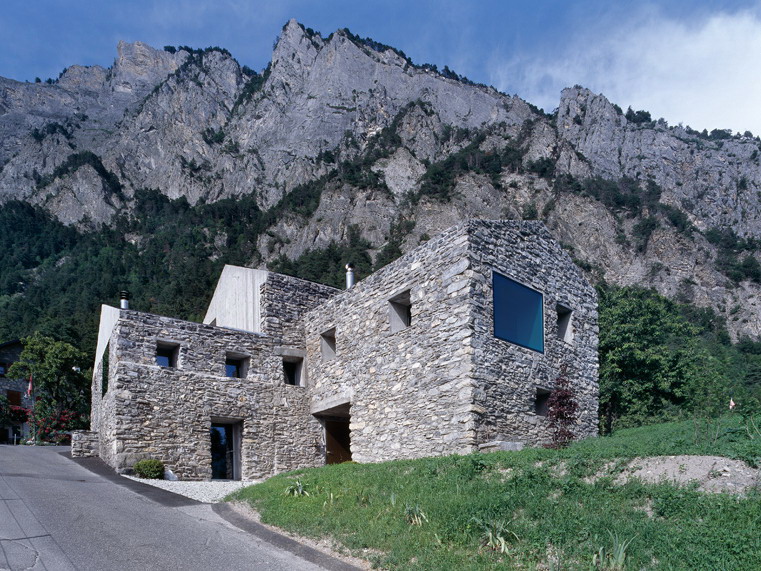
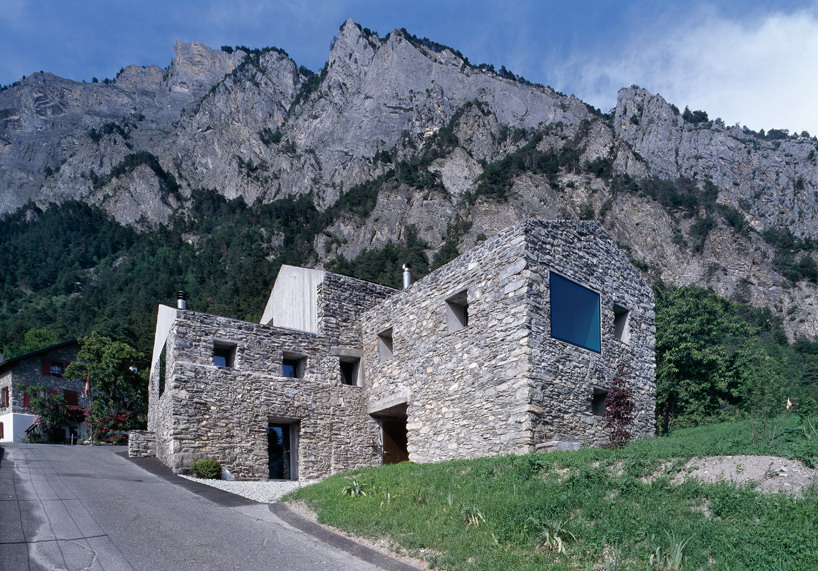
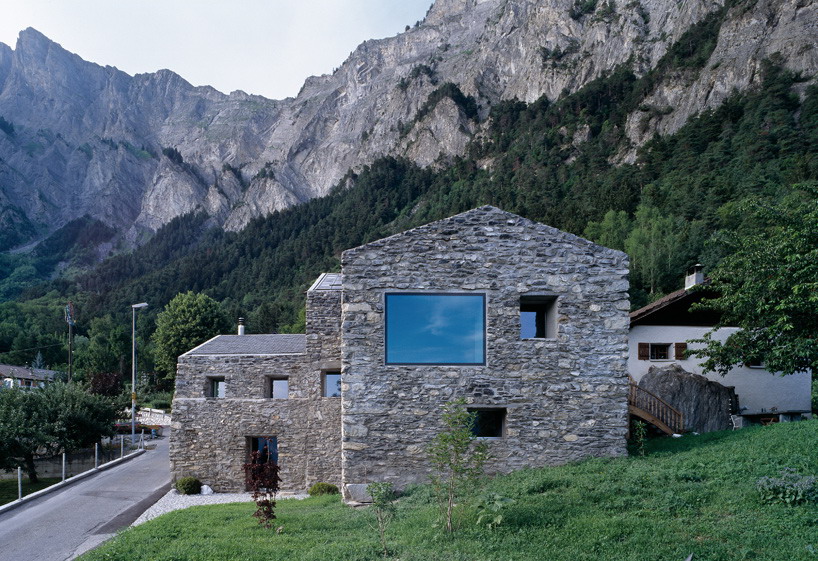
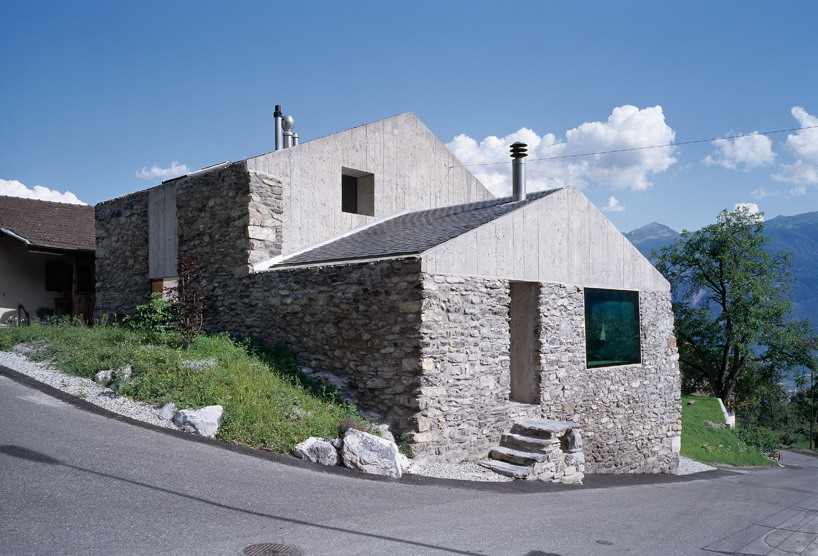
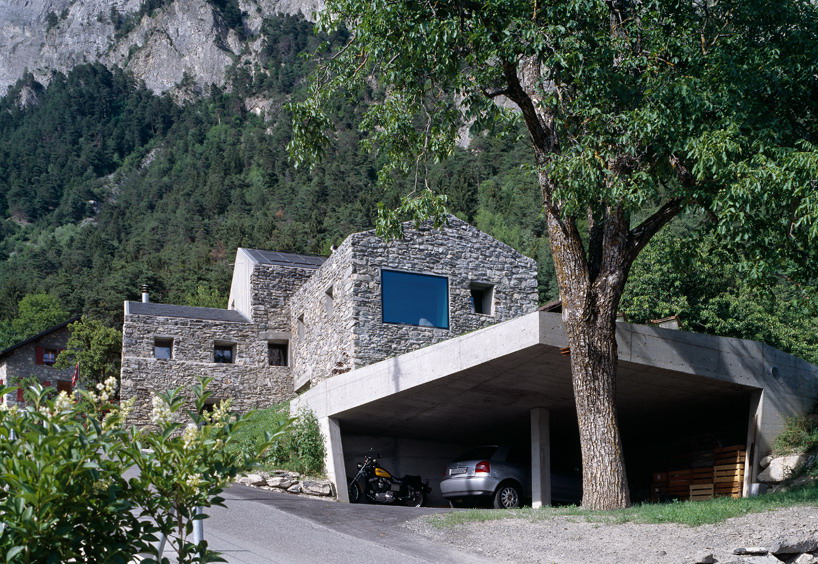
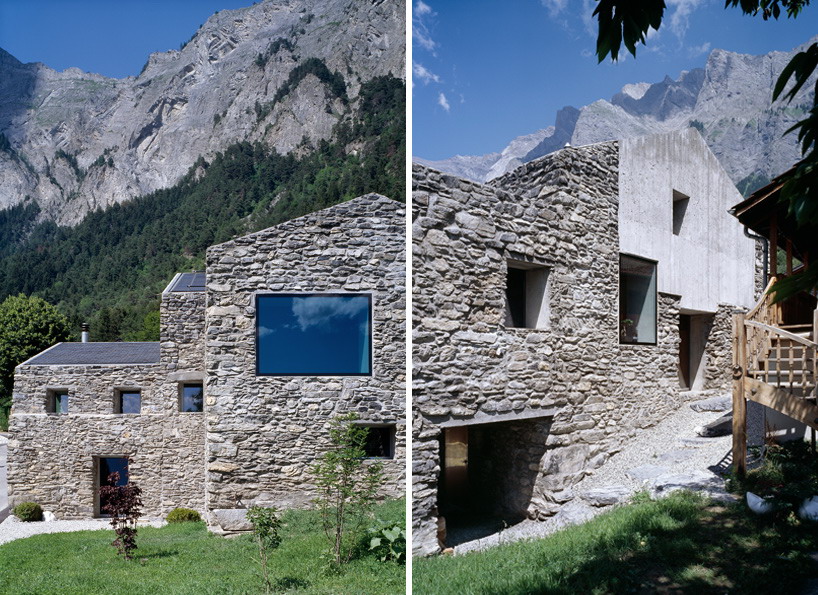
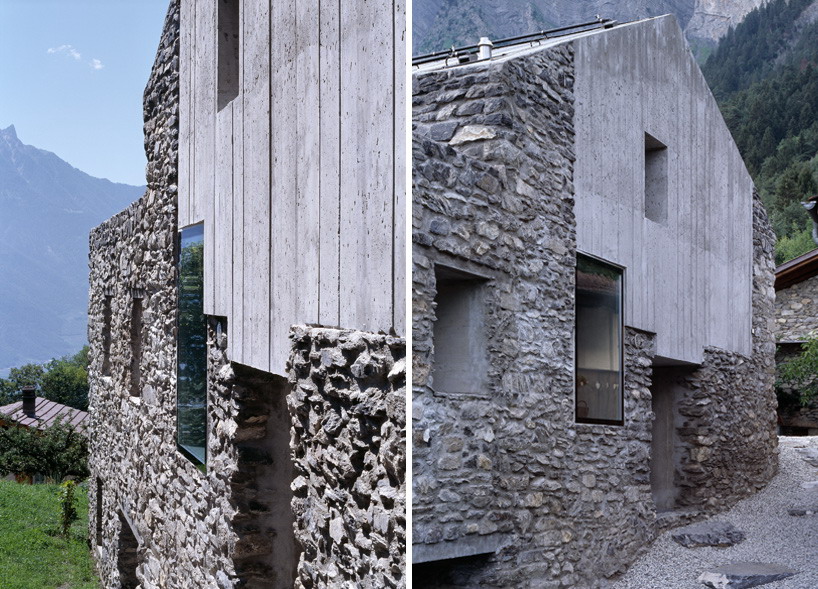
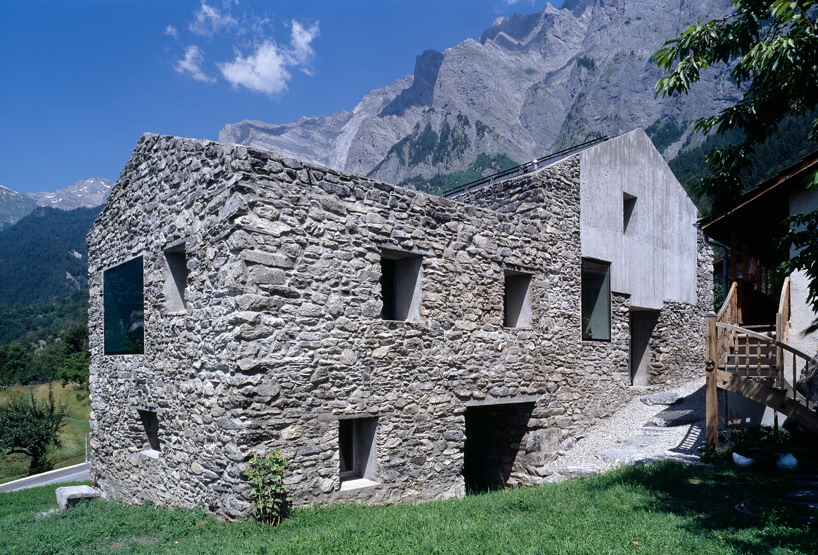
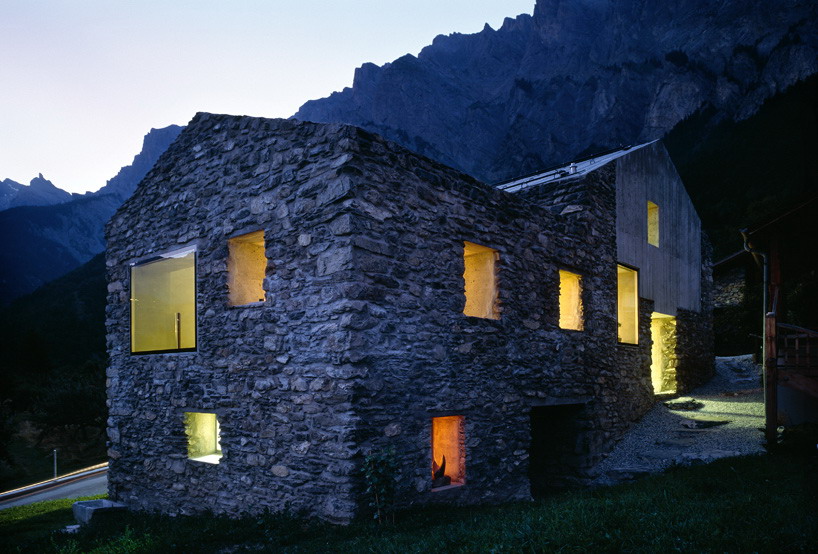
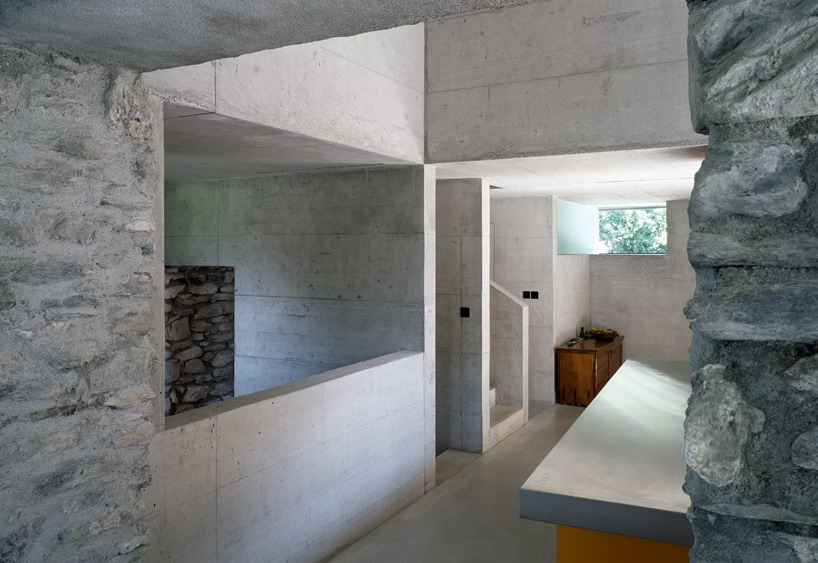
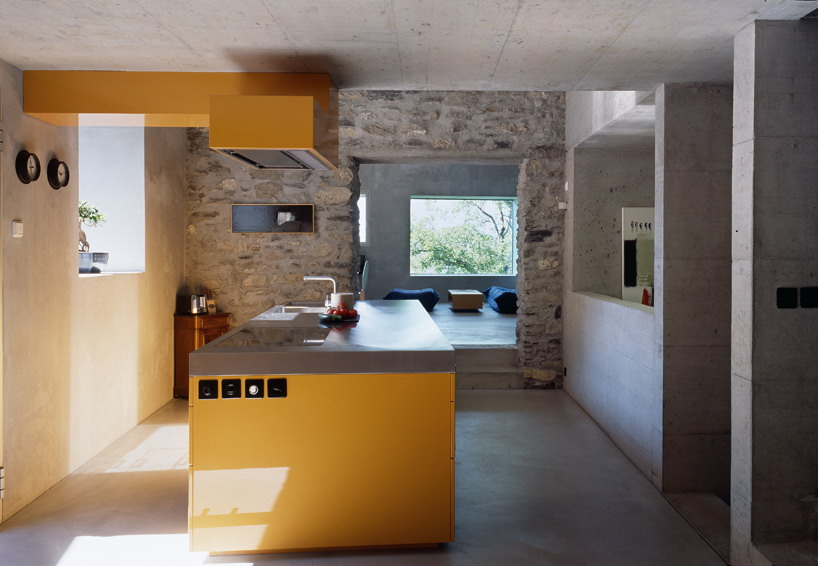
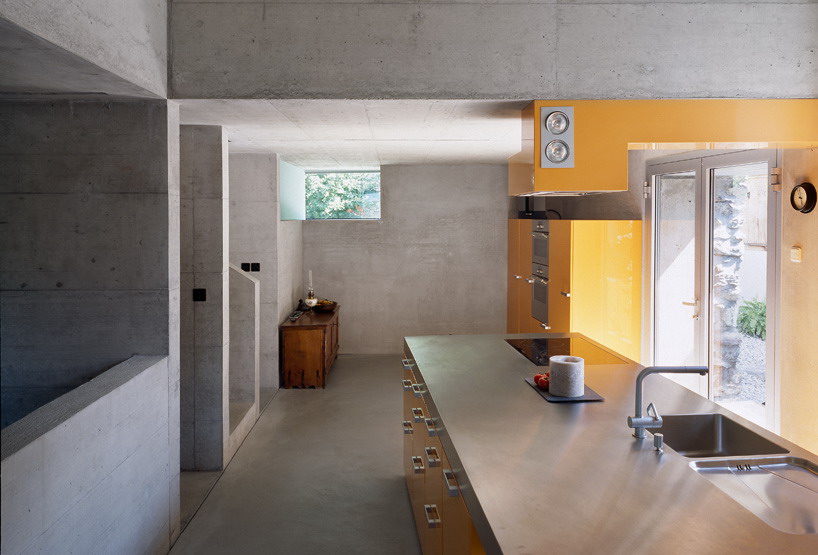
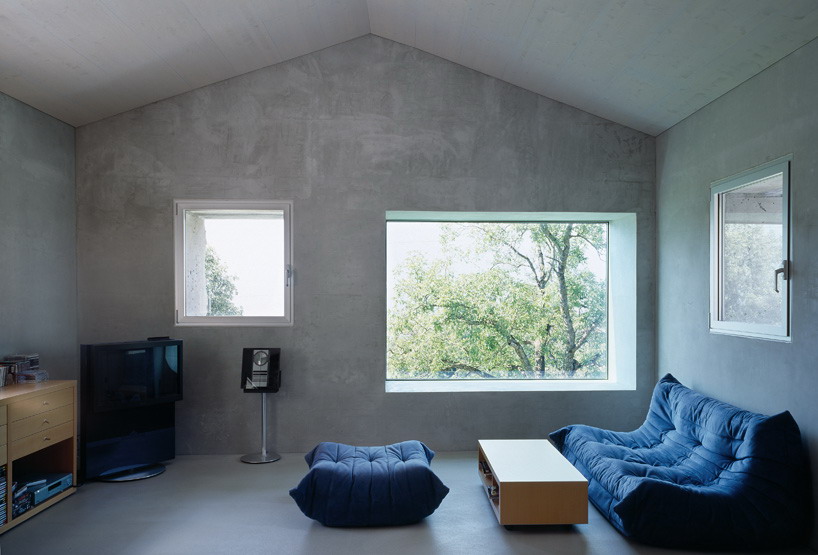
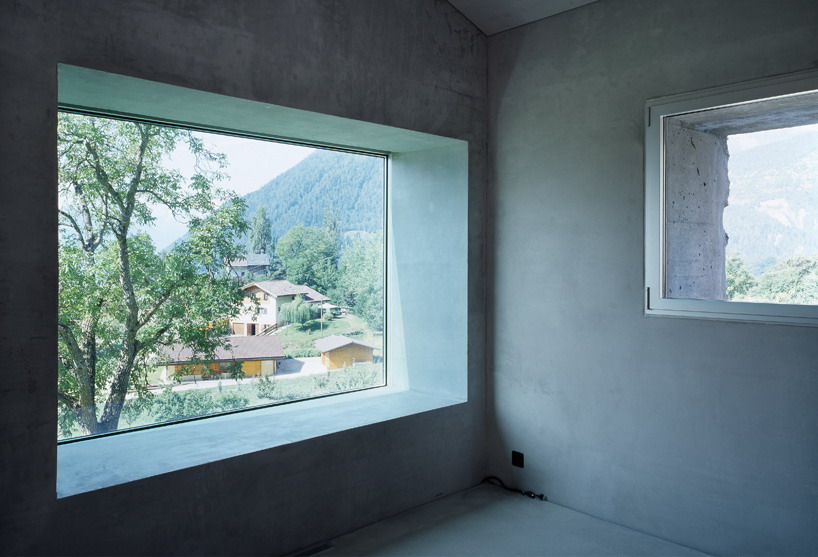
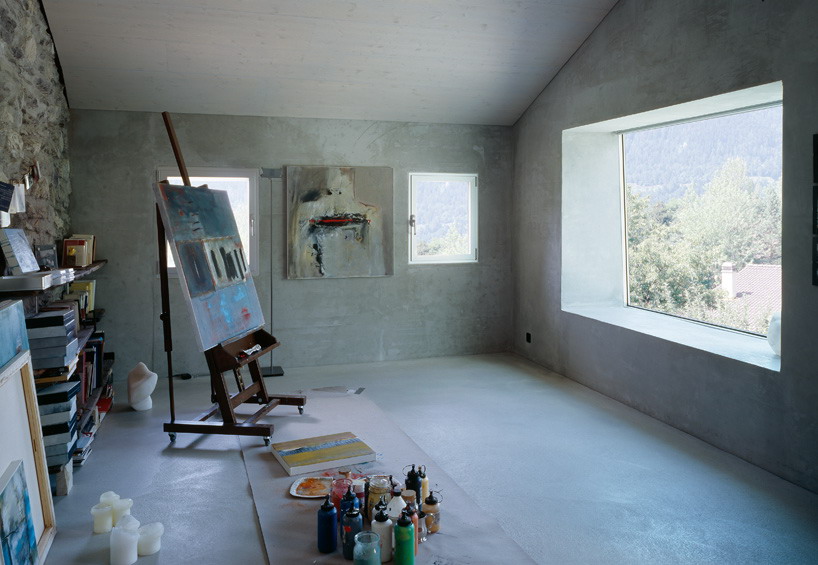
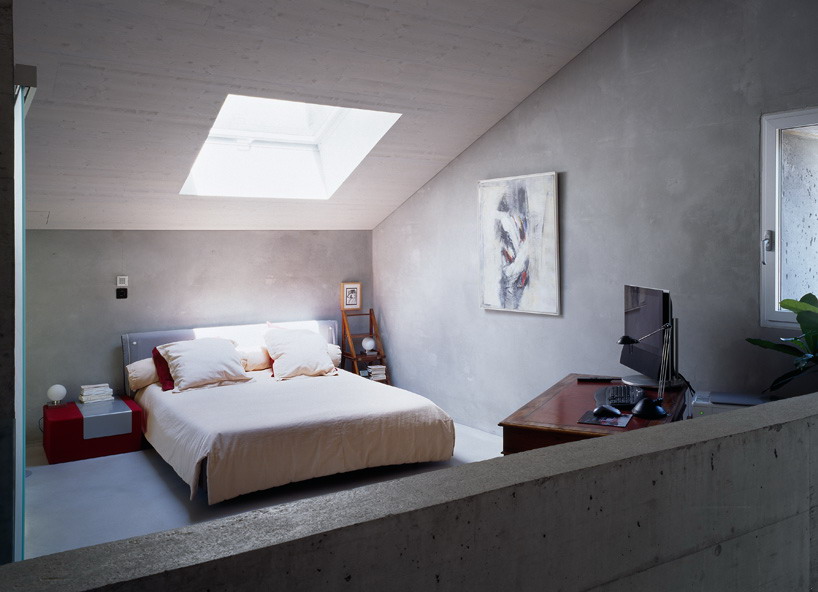
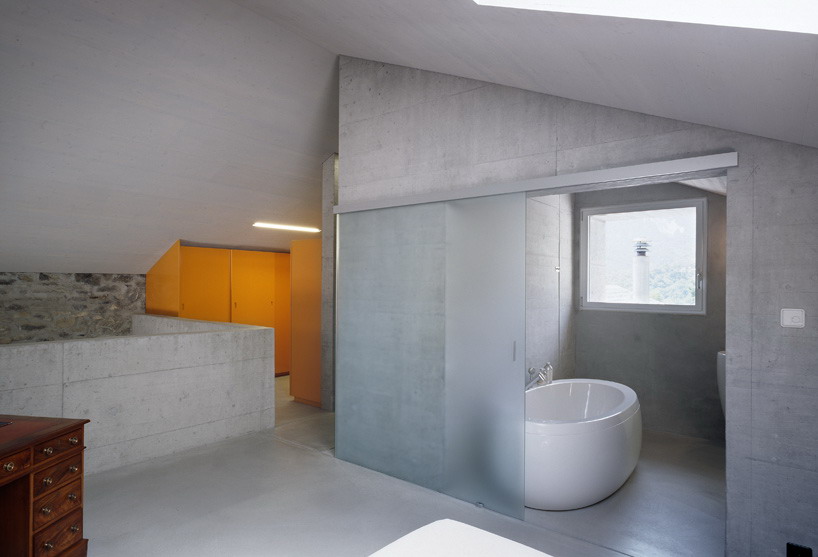
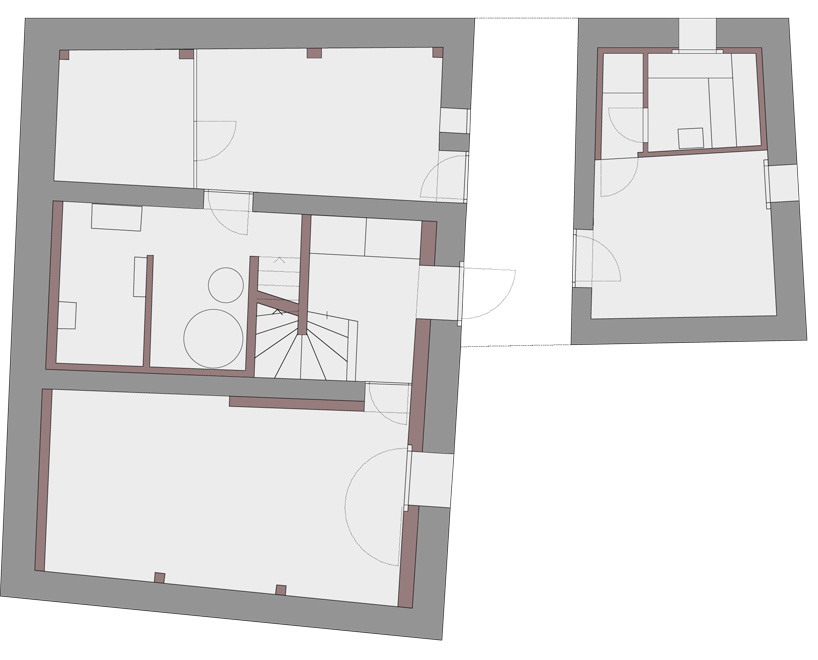
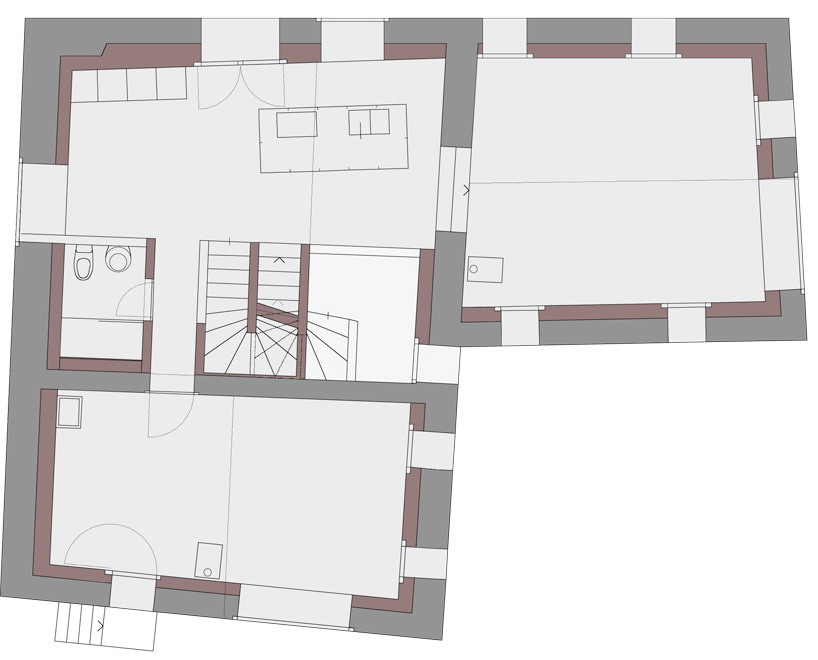
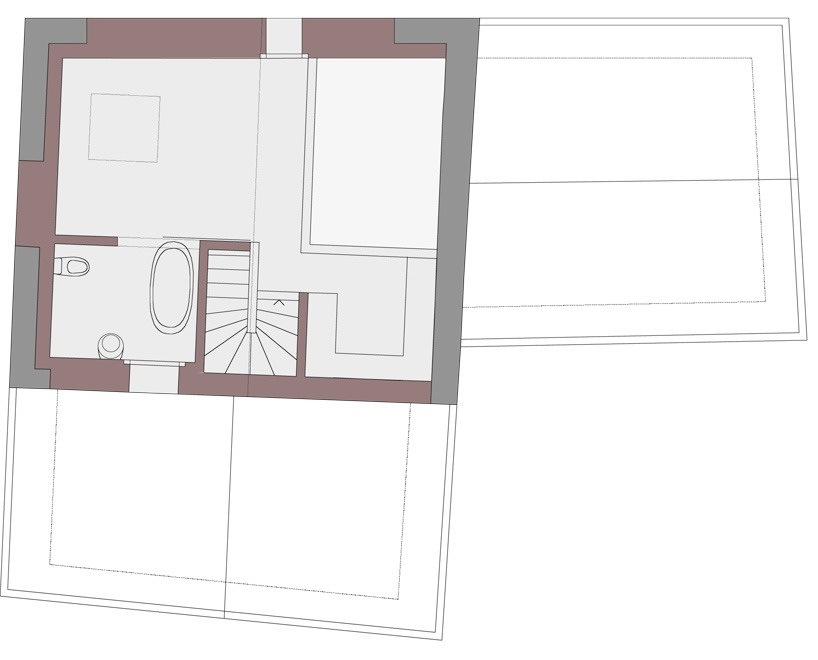
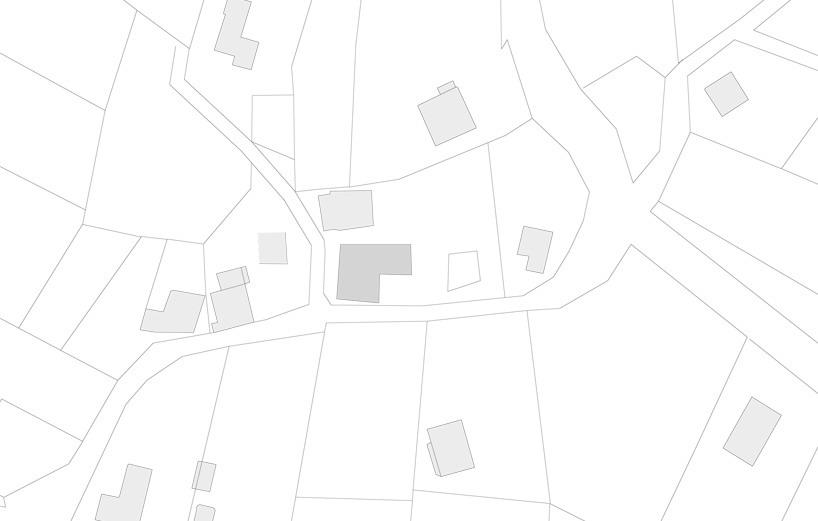
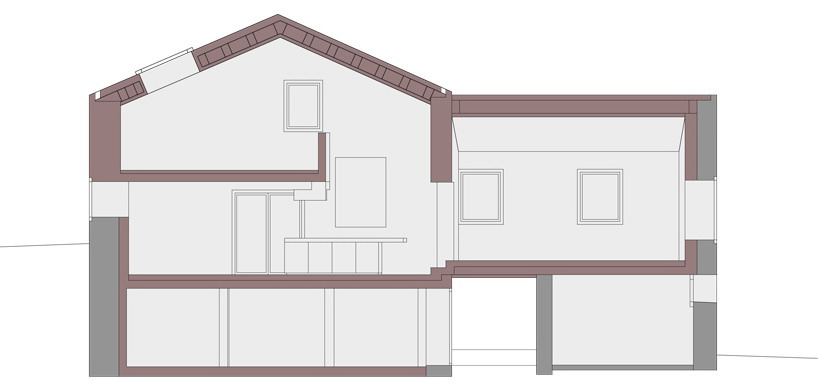
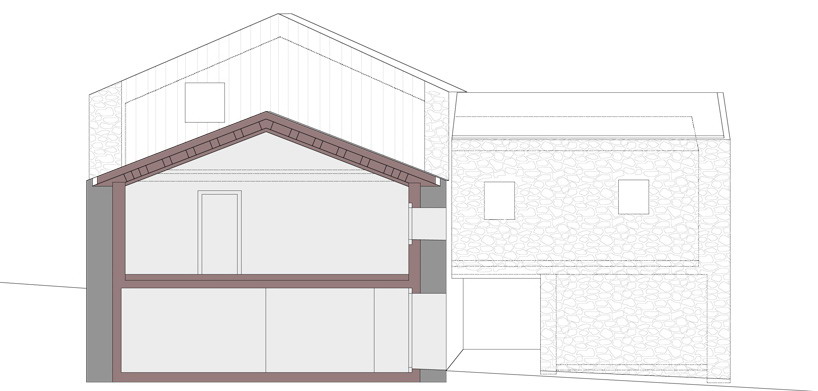
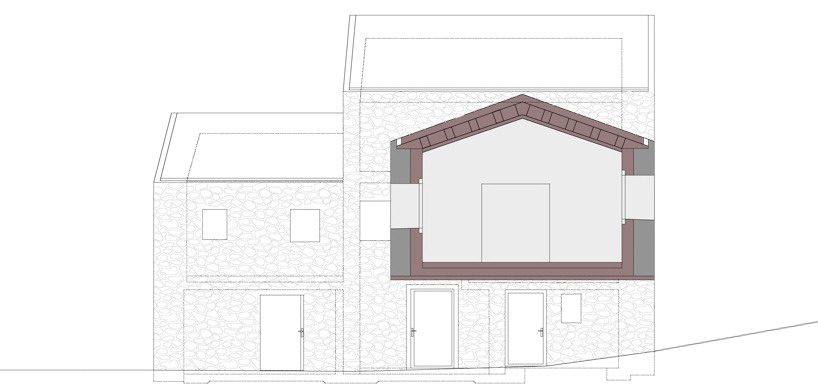
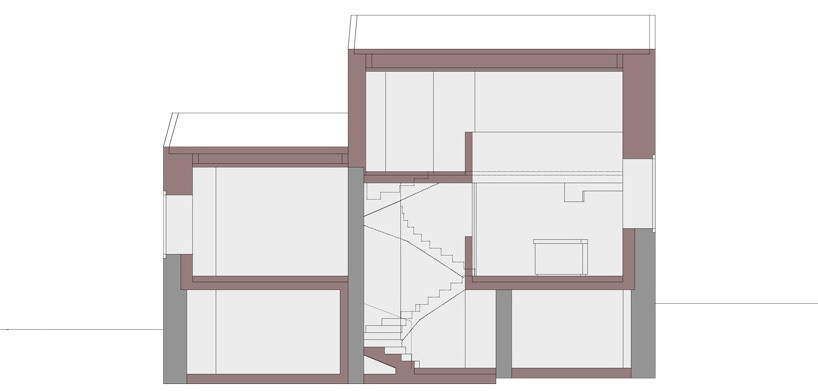
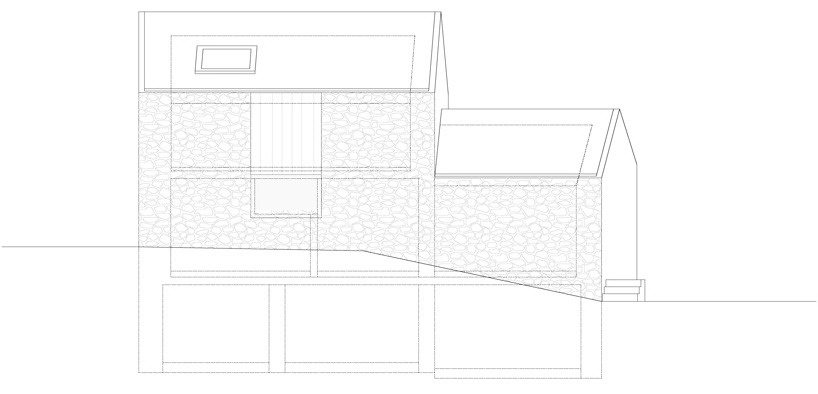
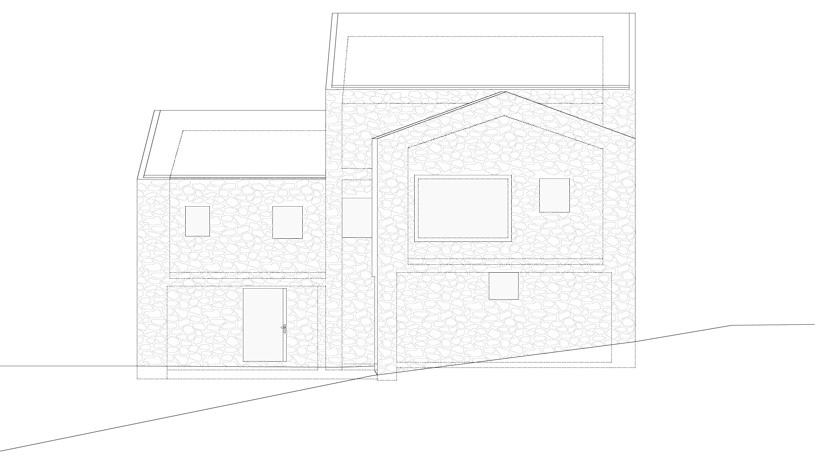
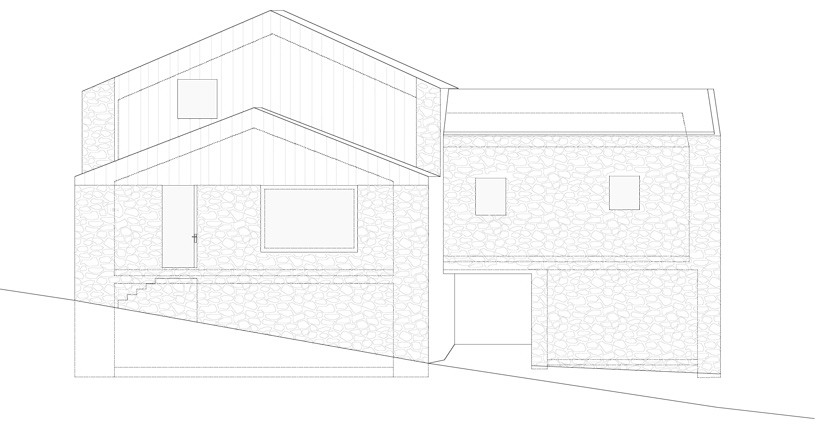
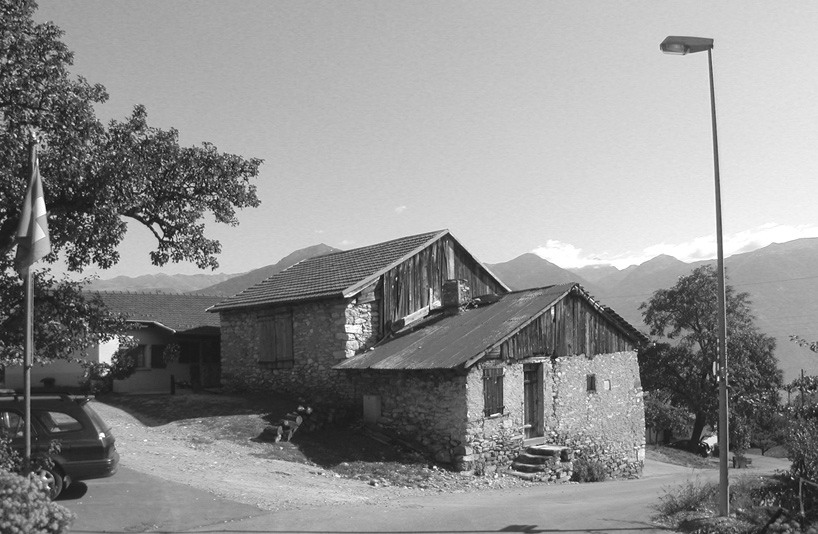
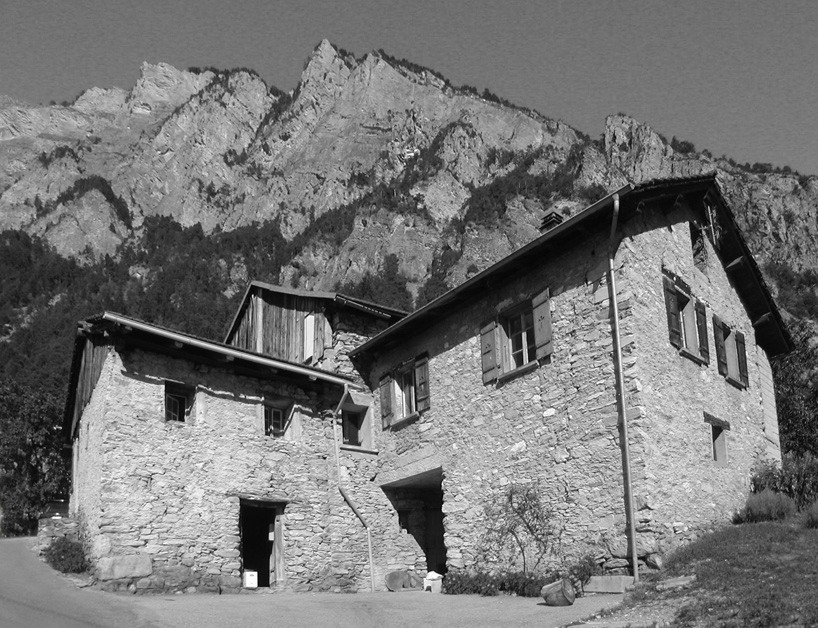
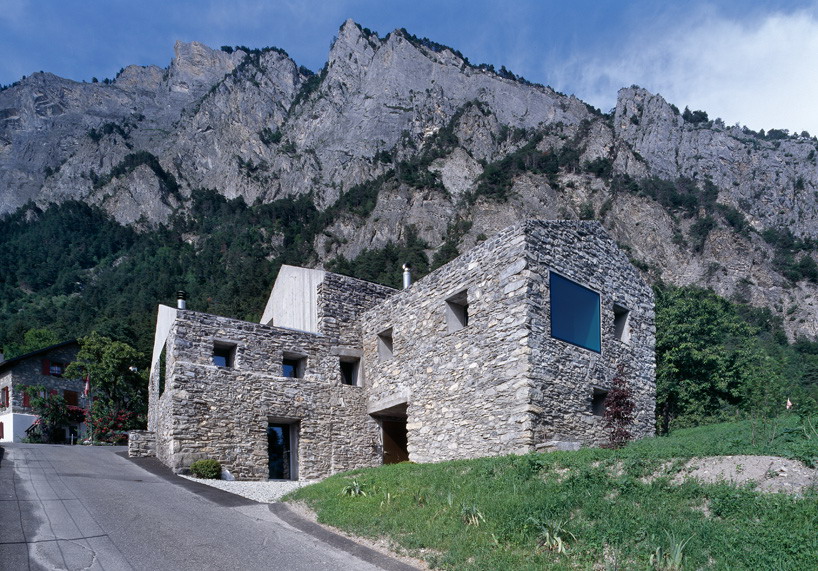
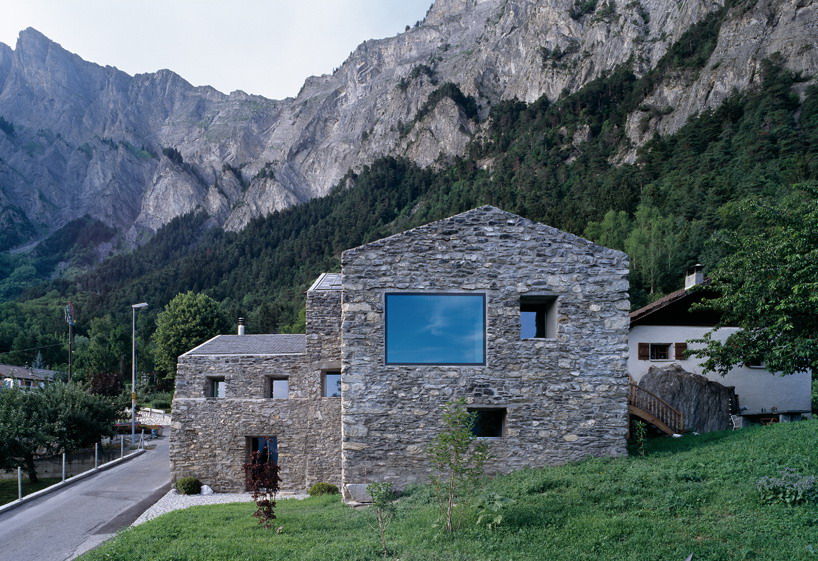
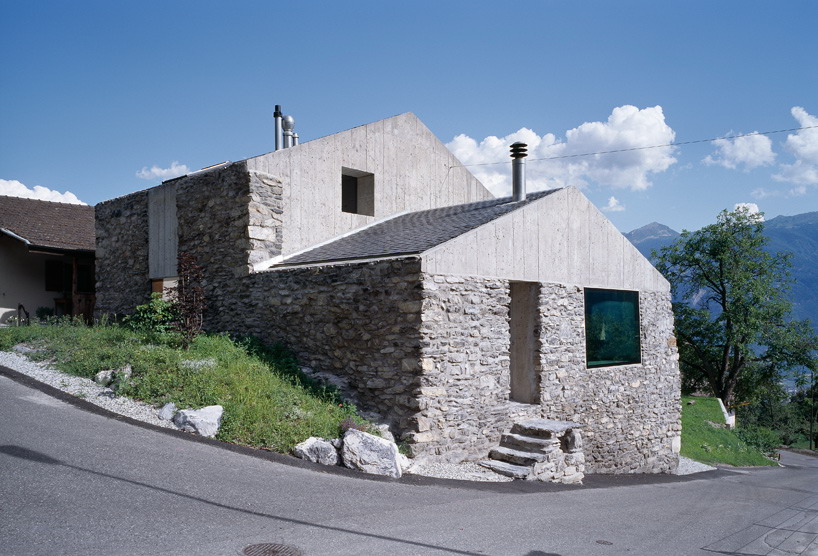
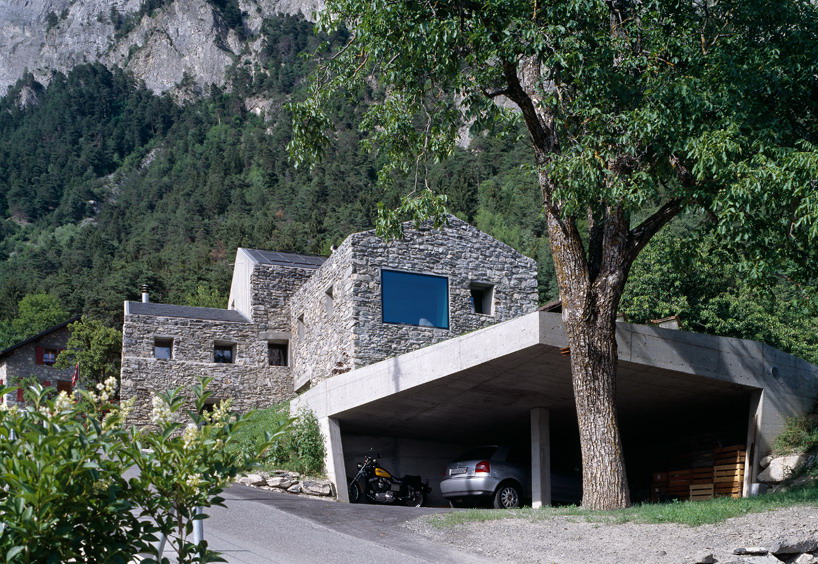
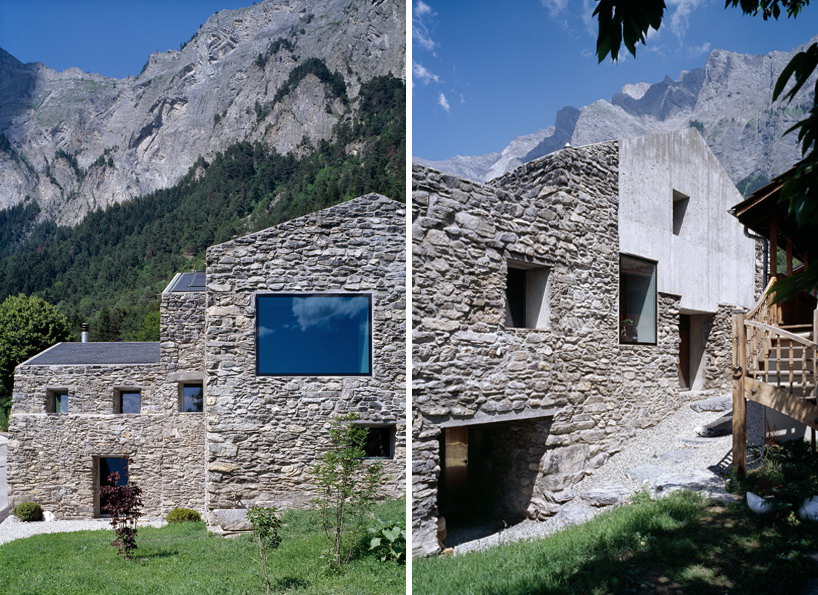
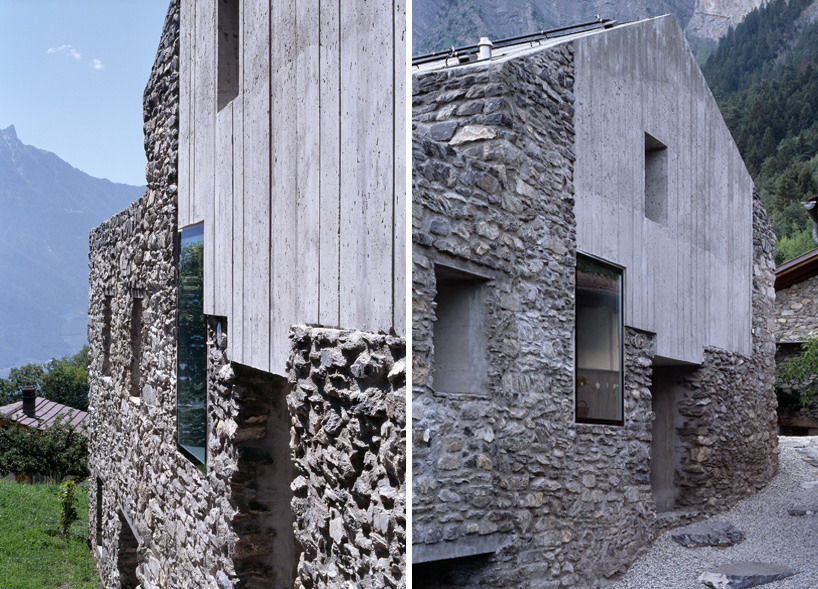
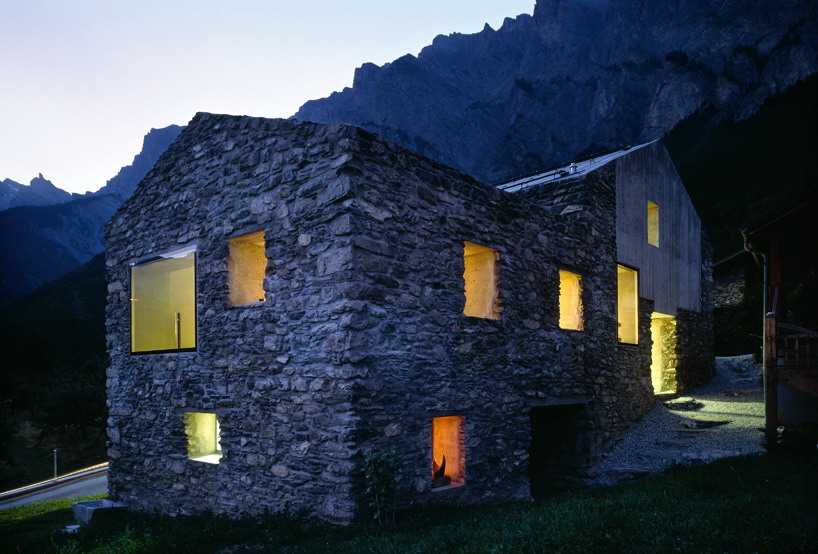
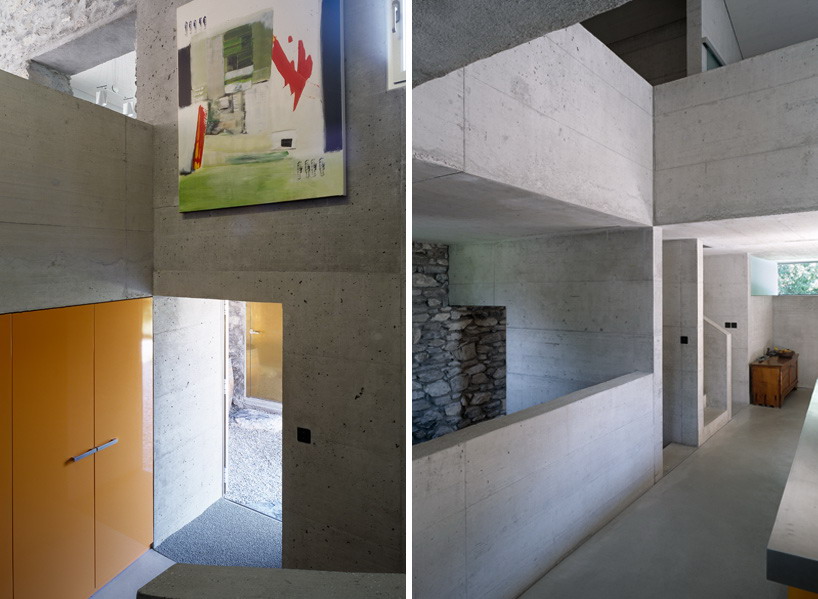
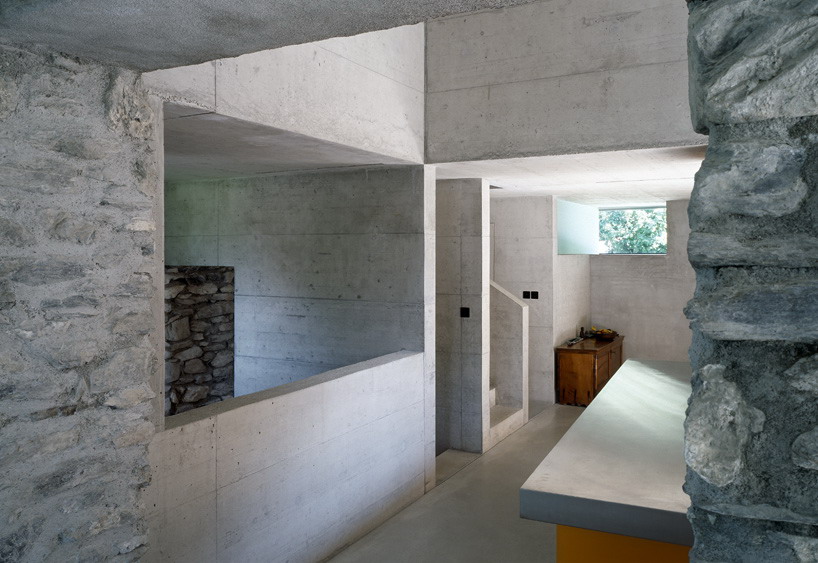
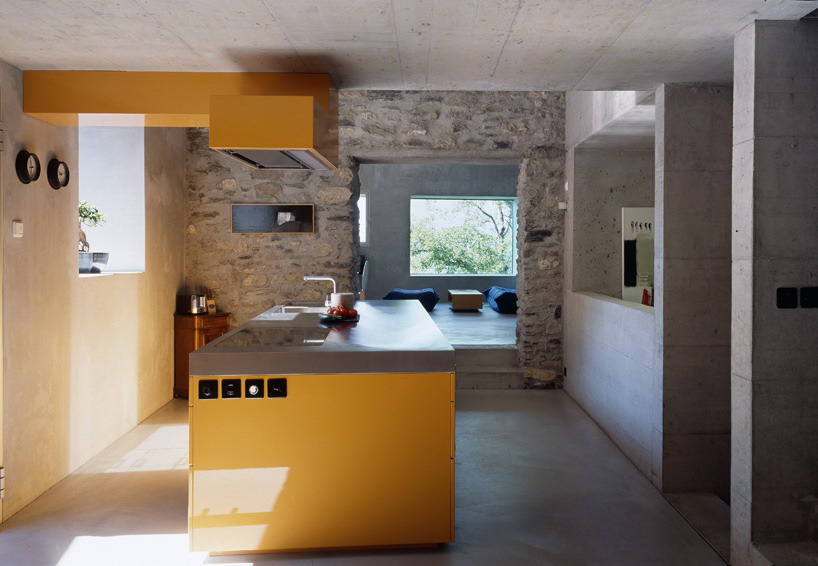
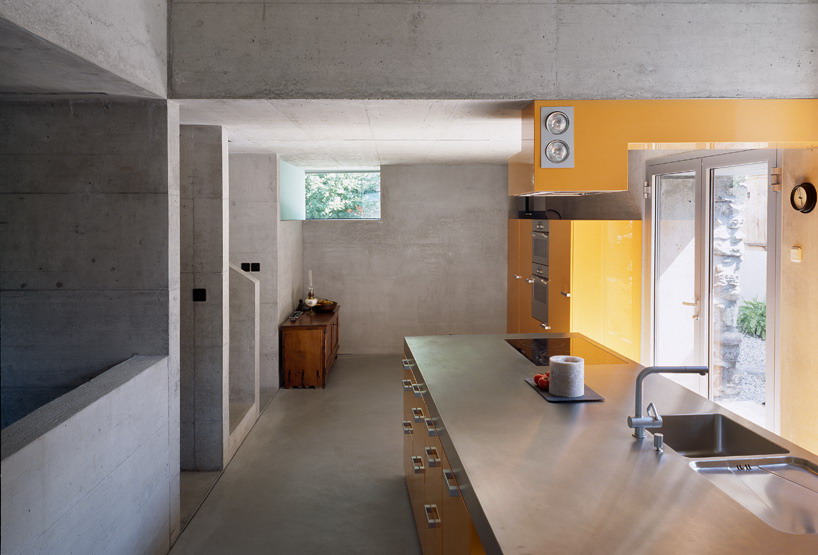
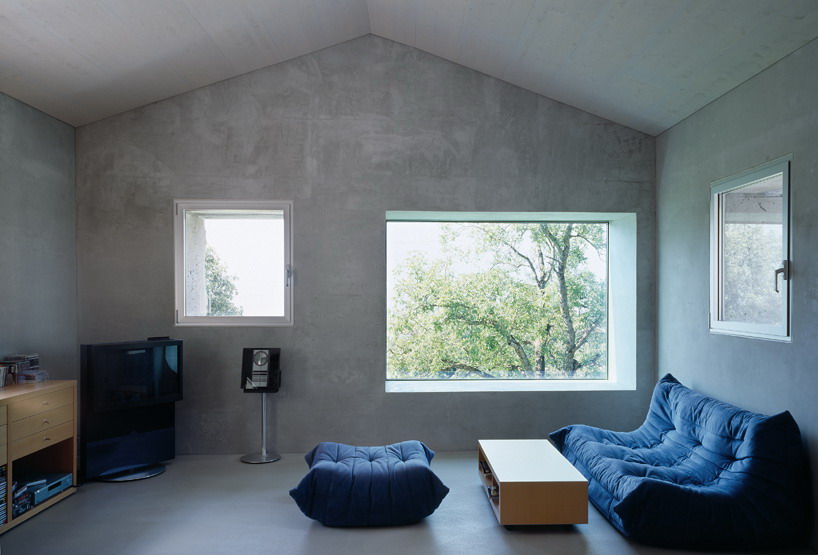
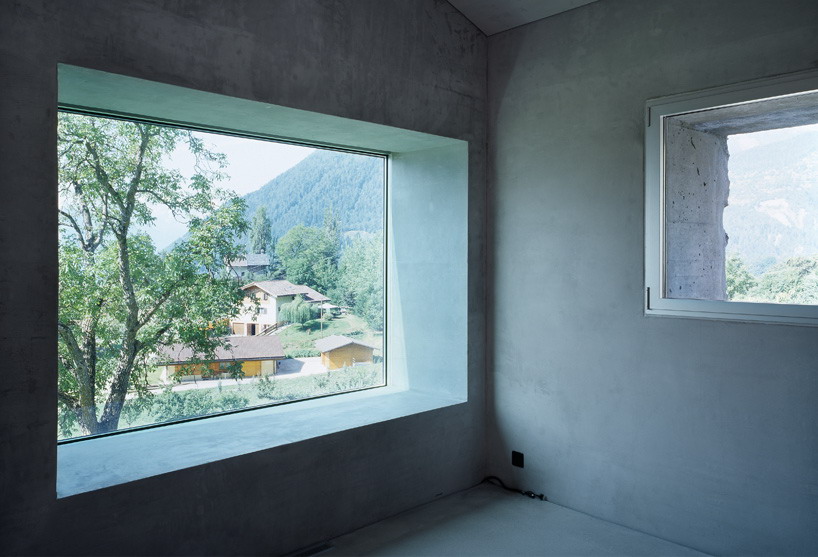
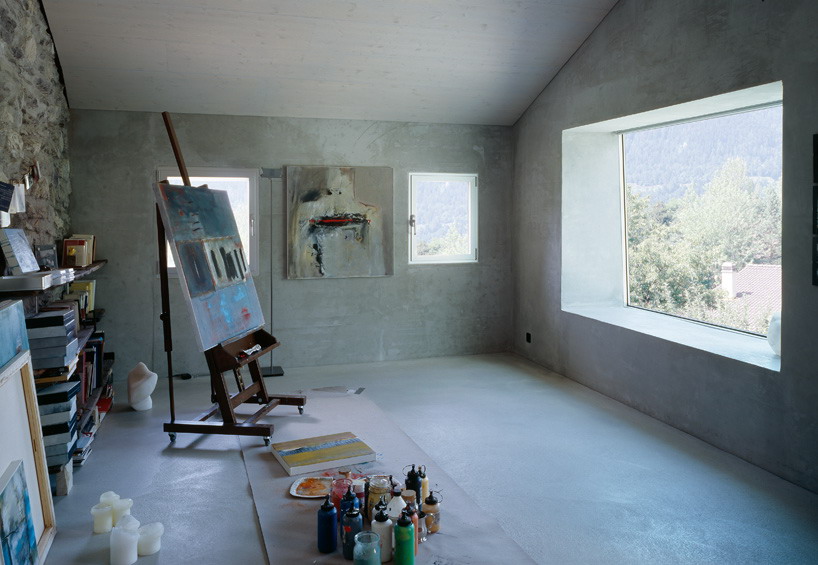
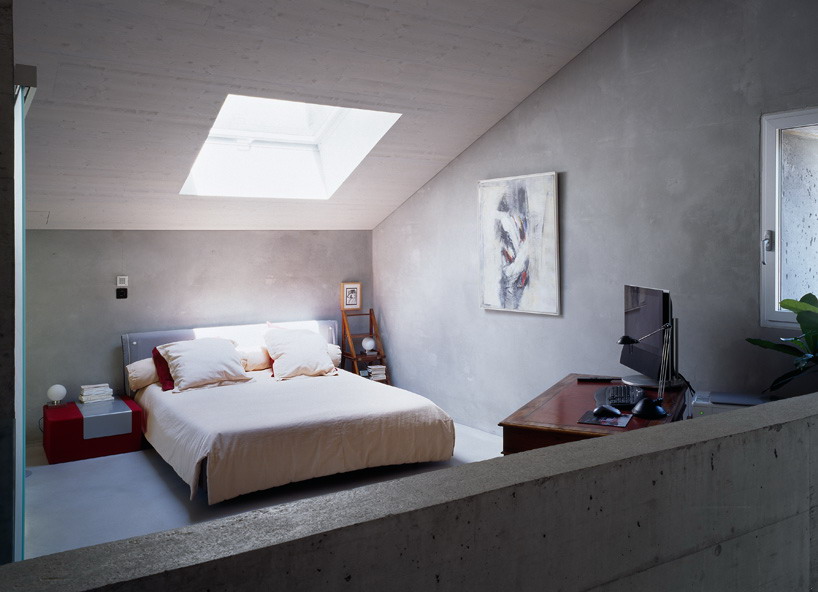
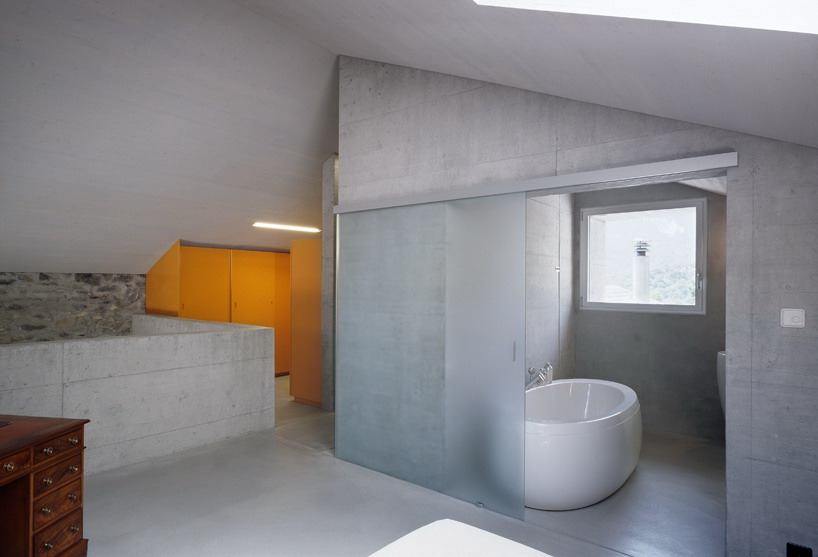
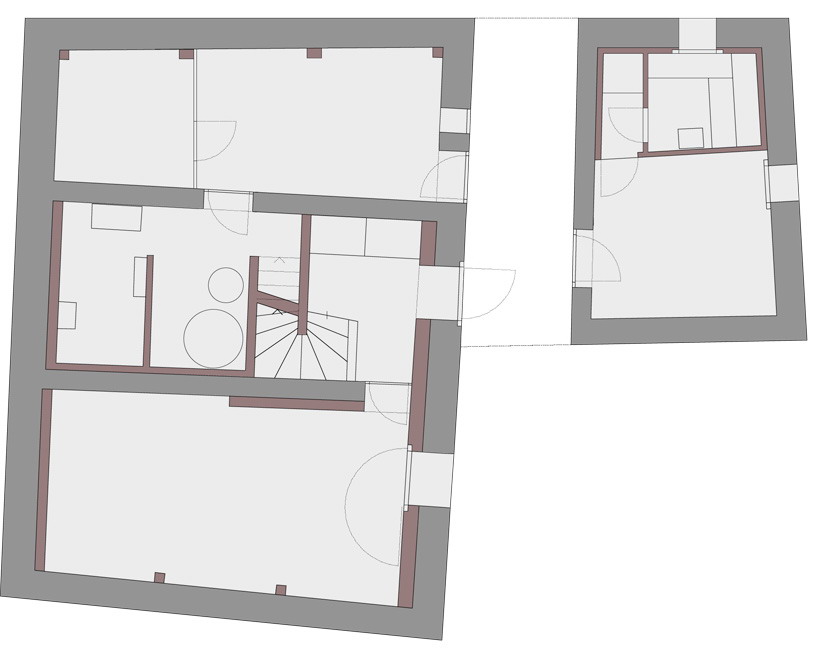
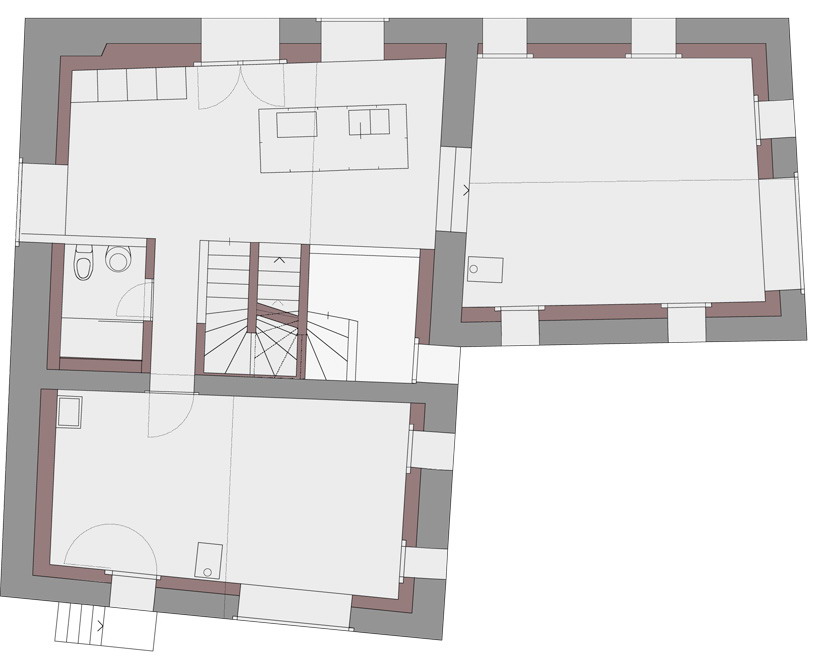
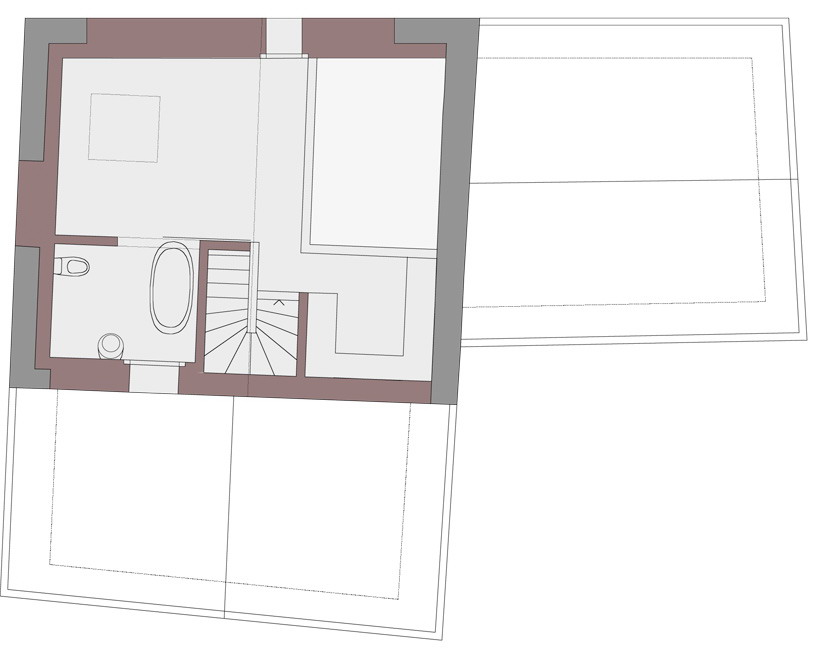
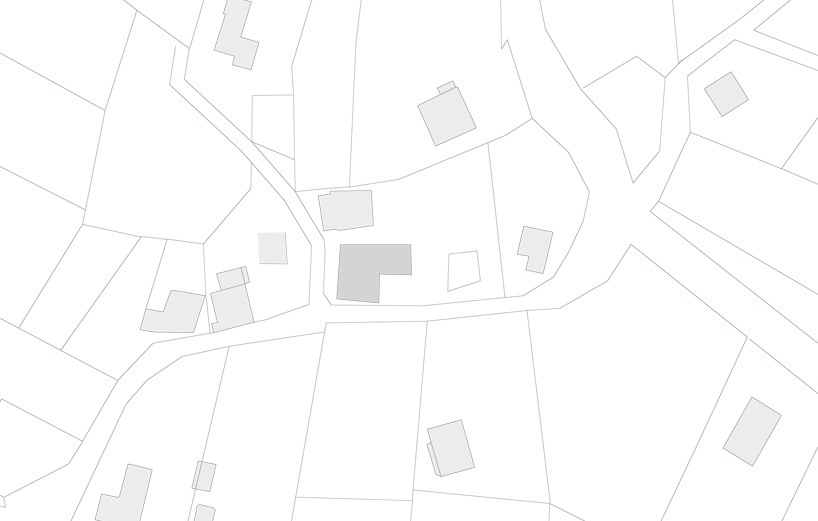
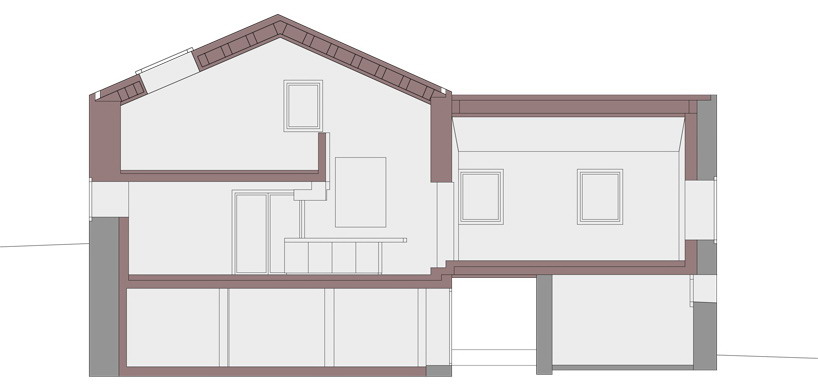
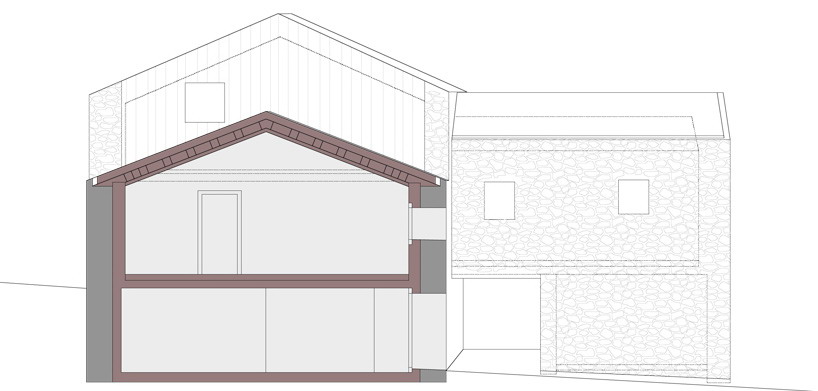
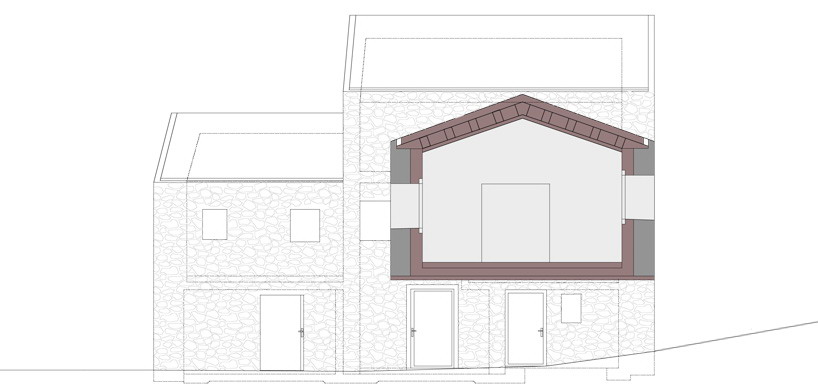
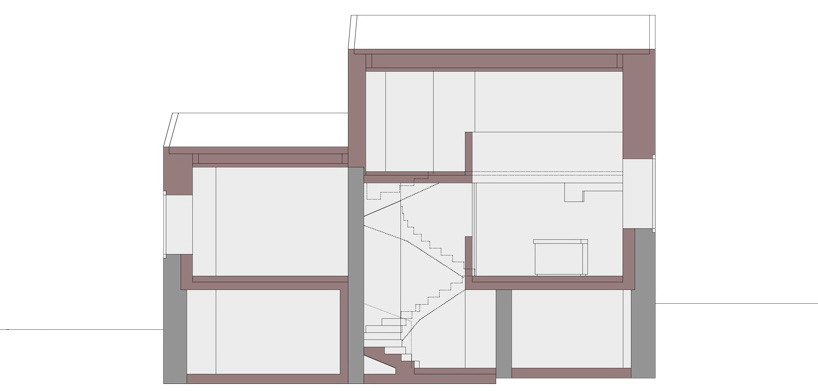
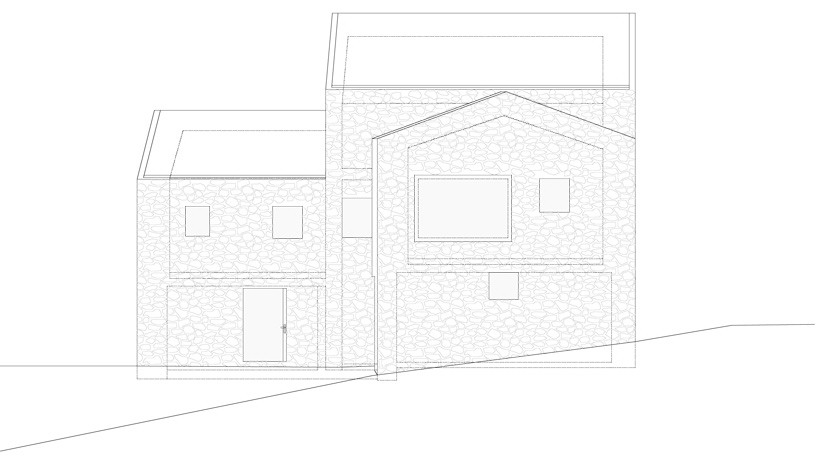
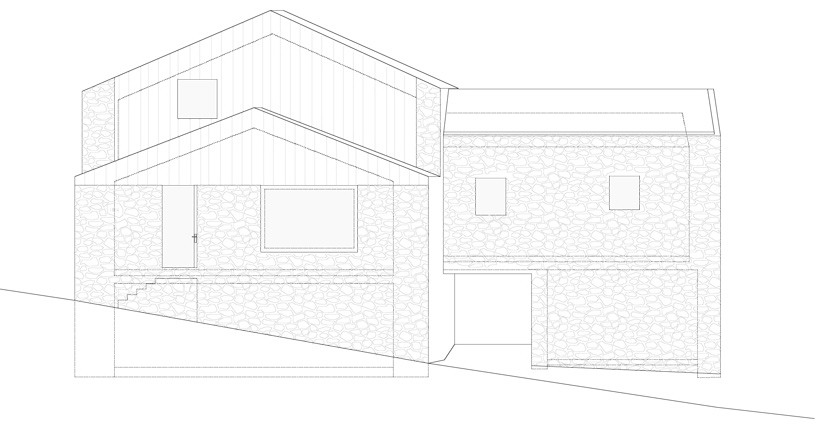
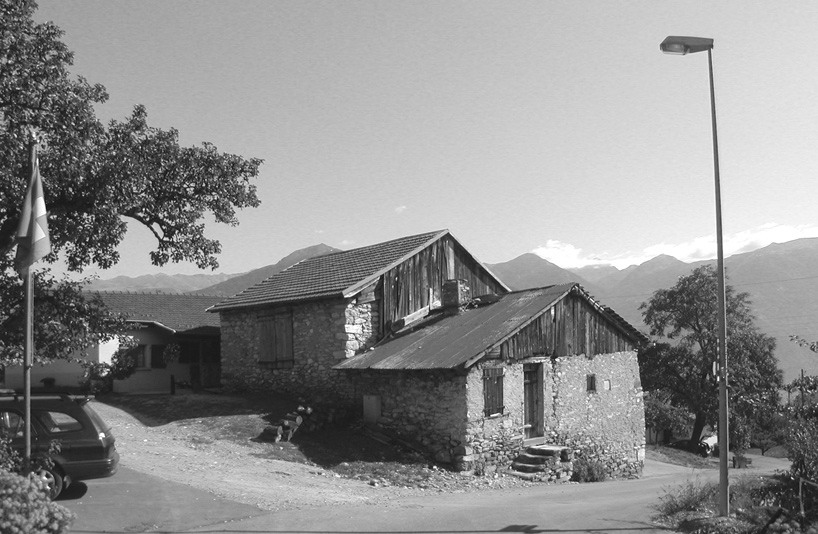
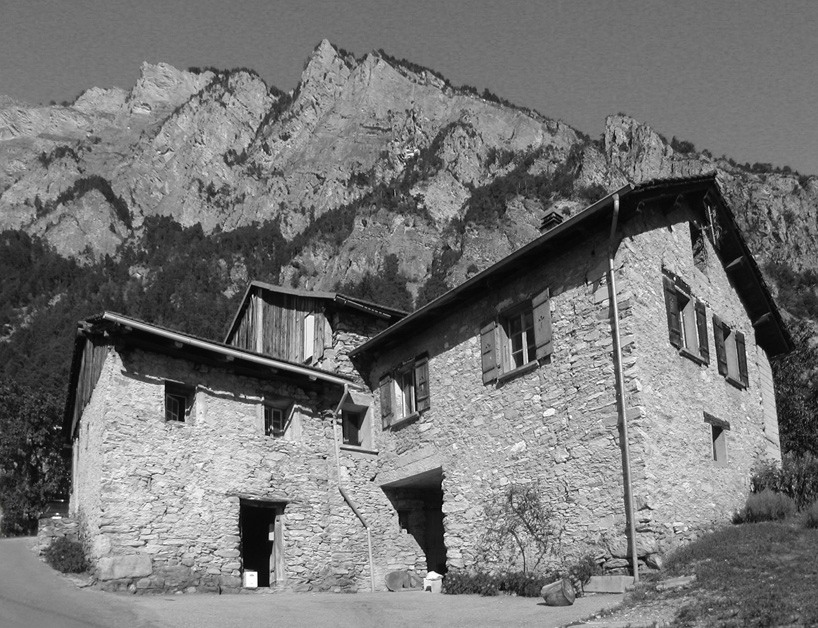
占地面积:172平方米 总建筑面积:380平方米 这是savioz fabrizzi 建筑事务所完成的瑞士chamoson的住宅改造项目。Chamoson是1814年建成的一个瑞士山区小镇。改造并没有破坏住宅的主体结构,而是保留了厚厚的石块砌体墙,把住宅的门、窗、内部空间以及屋顶做了改造。屋面上设有23平方米太阳能电池板,能为住宅提供全年35%的所需的能源。 originally erected in 1814 in the mountain town of chamoson, switzerland, the latest house renovation by swiss practice savioz fabrizzi architectes。marks the last major structural modification on a dwelling that has evolved throughout the decades all the while holding onto its unique history. the thick stone masonry walls reflect the sturdy construction of the era, born of the same rock that famously defines the jagged backdrop. the deep stone envelope also provides a natural coat of insulation and thermal mass, shading the interior spaces in the summer with inset windows and benefiting from a large thermal mass in the winter. the renovation preserves the soul of the residential edifice by leaving the exterior in as much of its original form as possible, replacing the deteriorating wooden planks that wrap the attic with a contemporary concrete shell that still matches the general color of the facade. the window wells also provide one of the first hints as to the interior, with thin cast frames that subtly provide structural support and match the contemporary needs of a smooth orthogonal language. new larger apertures are cut out of the walls with thermal glass placed flush against the outer facade to retain the memory of the replaced section. situated on a sloping site, the house is split into three levels, with an underpass signaling an original access way before the home was expanded to the third floor situated on the highest point of the property. the interior tells an entirely different story, with soft pristine concrete partitions and surfaces that playfully contrast with areas of the exposed rugged historical walls. light reflects off of the semi-polished exposed finishes highlighting the decisive touches of orange fixtures that add a lively dynamic. the rooftop serves as a base for the 23 square-meters of solar panels that throughout the year generate 35% of the needed heating energy. the result nests the contemporary home within a sort of primordial vessel at the base of the breathtaking mountains, expressing an agreeable union between the character of the past and the function of the future.
 关注公众号
关注公众号 川公网安备51010702000609号


 发表于 2026-6-8 14:43:36