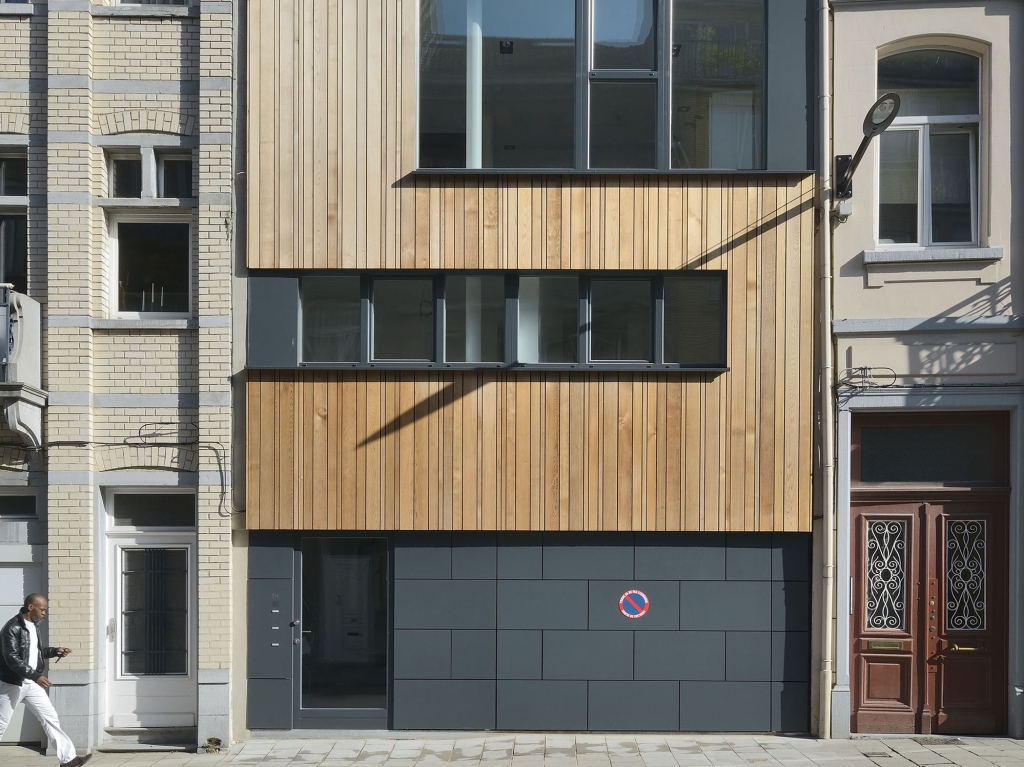
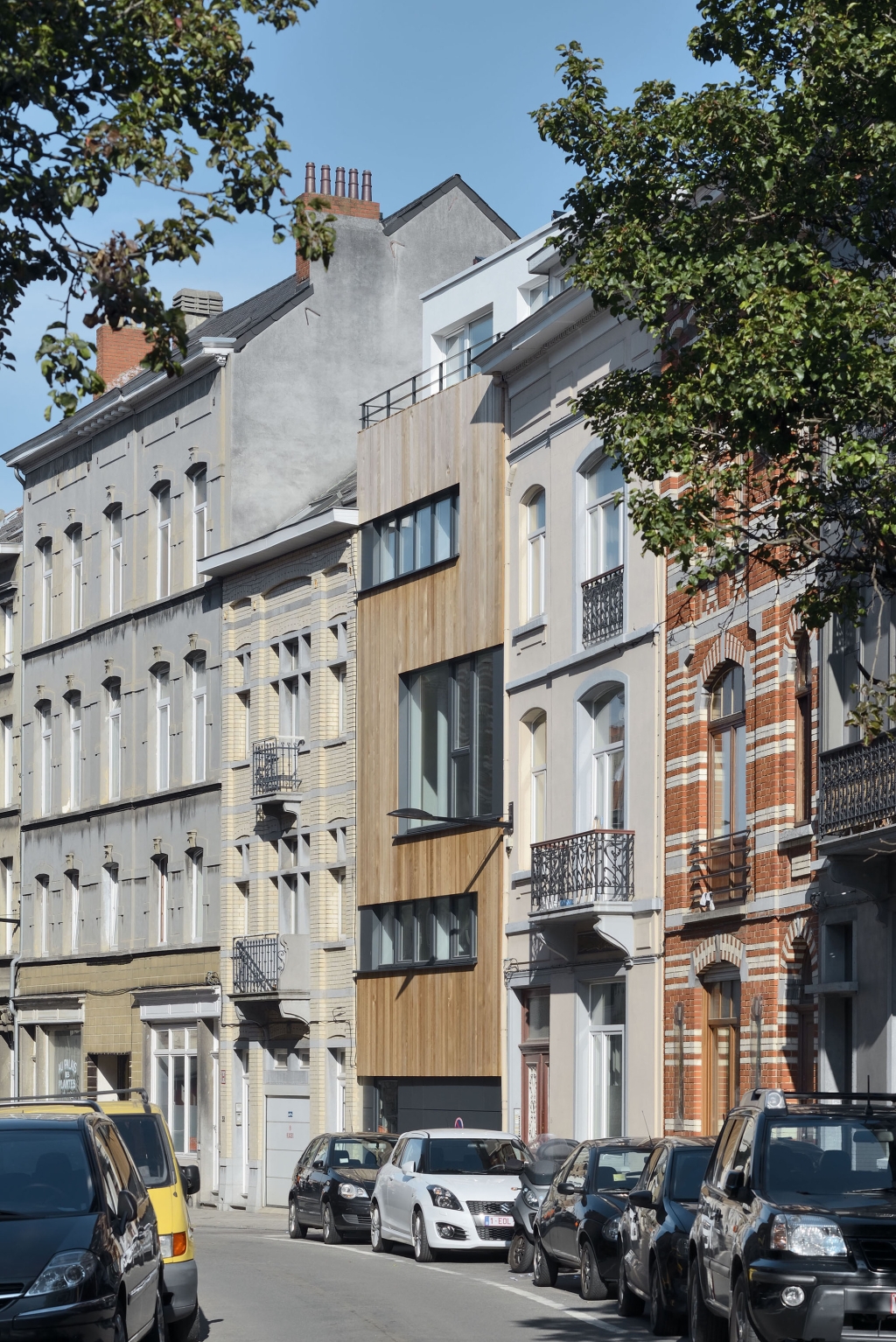
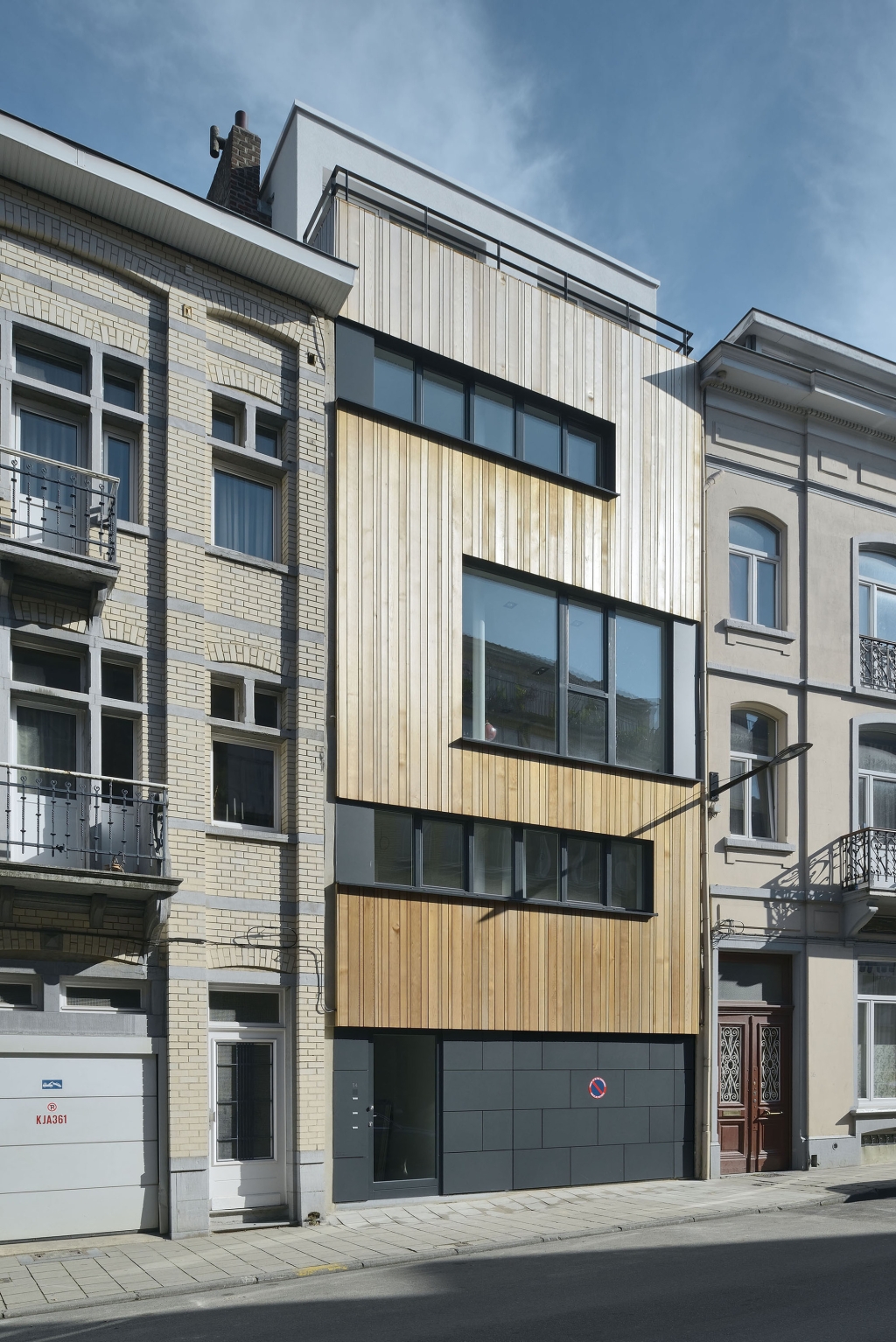
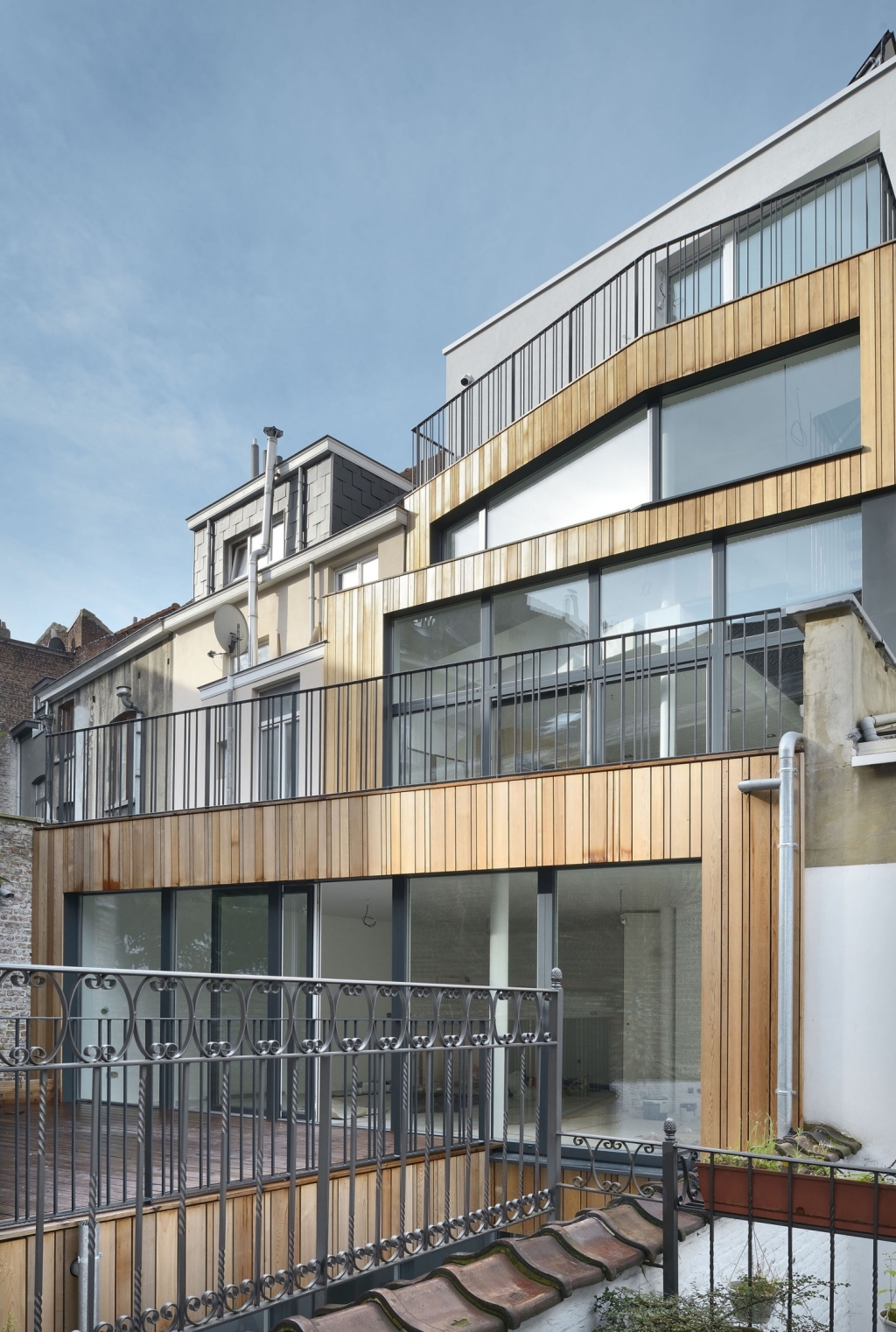
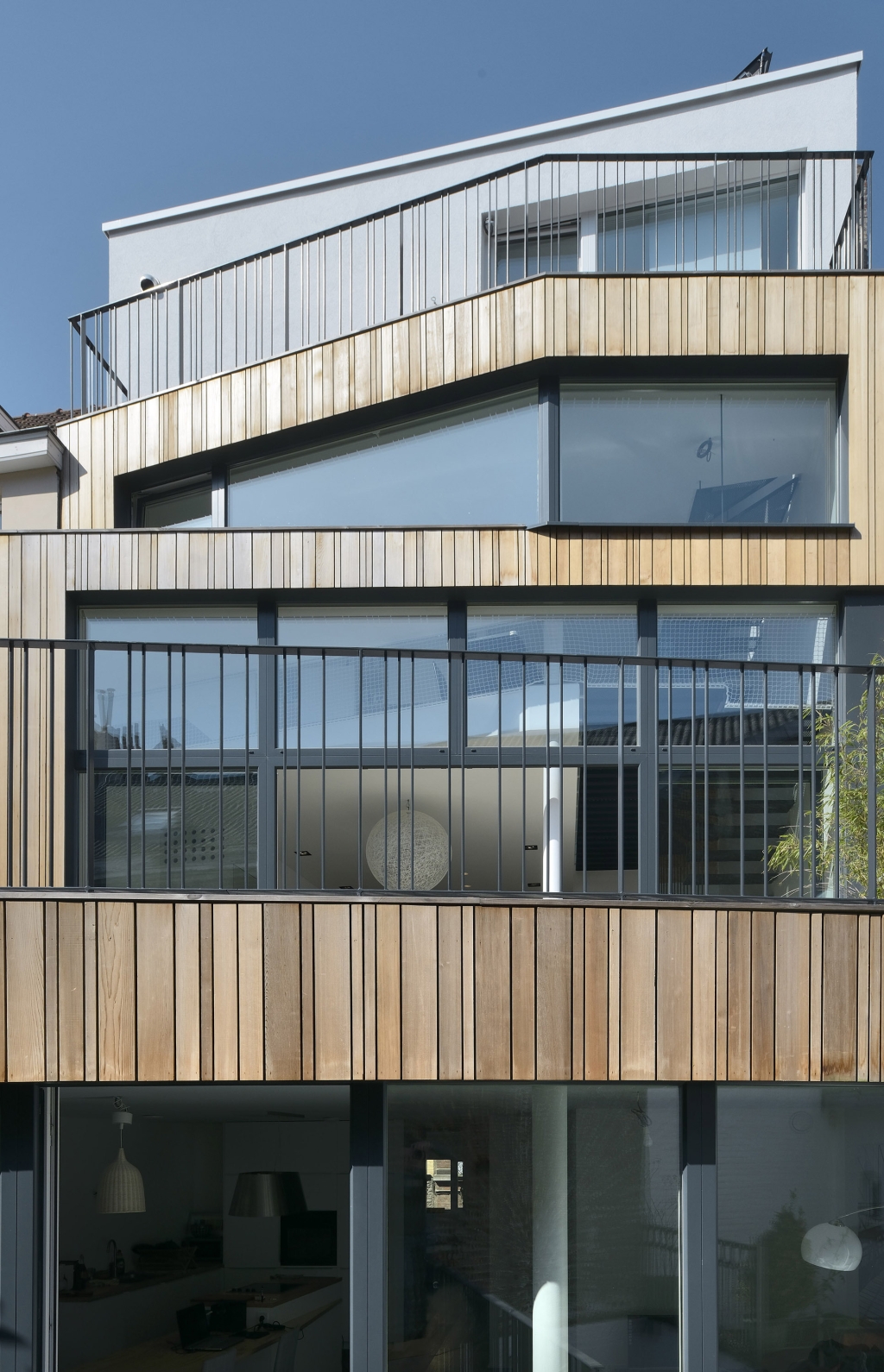
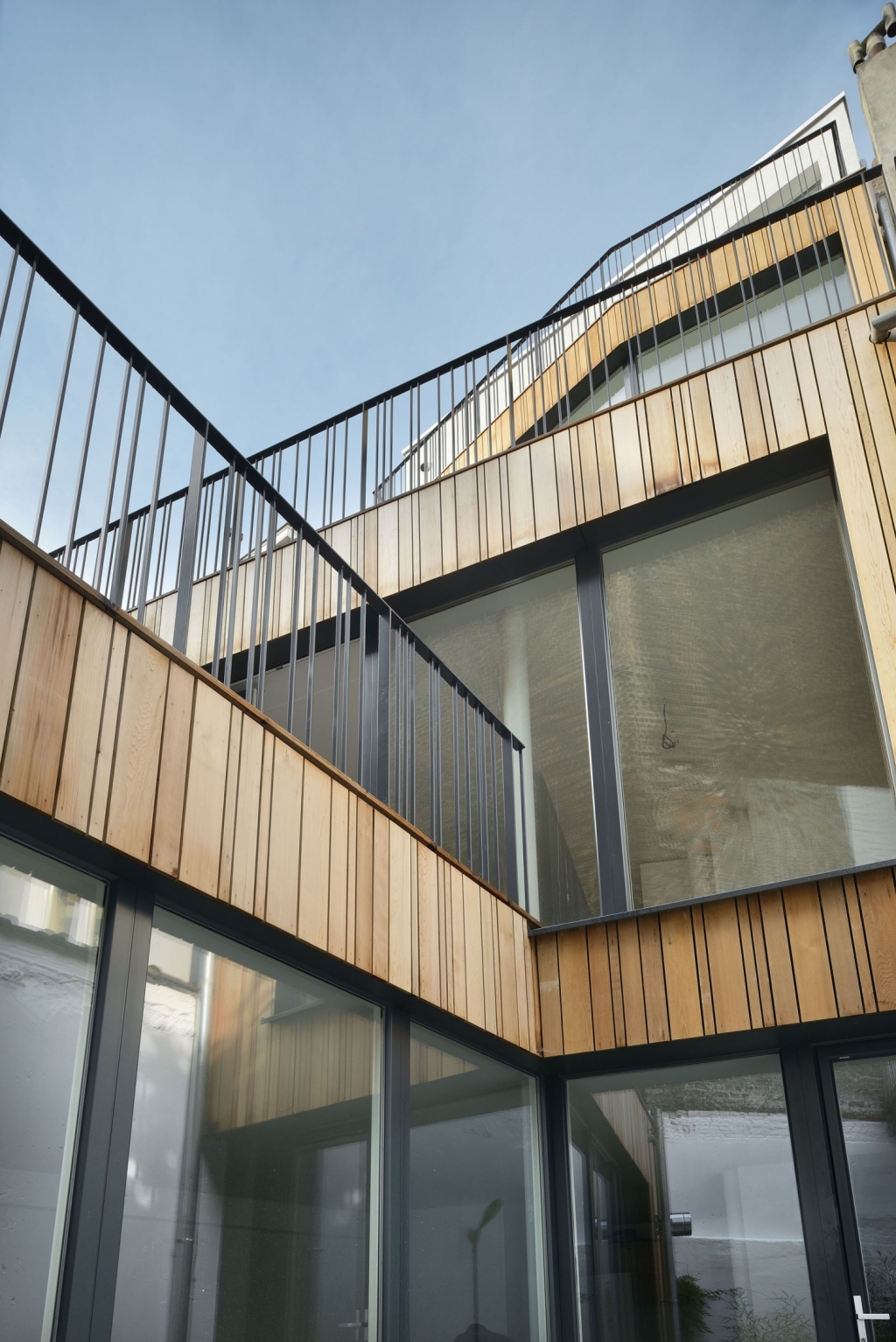
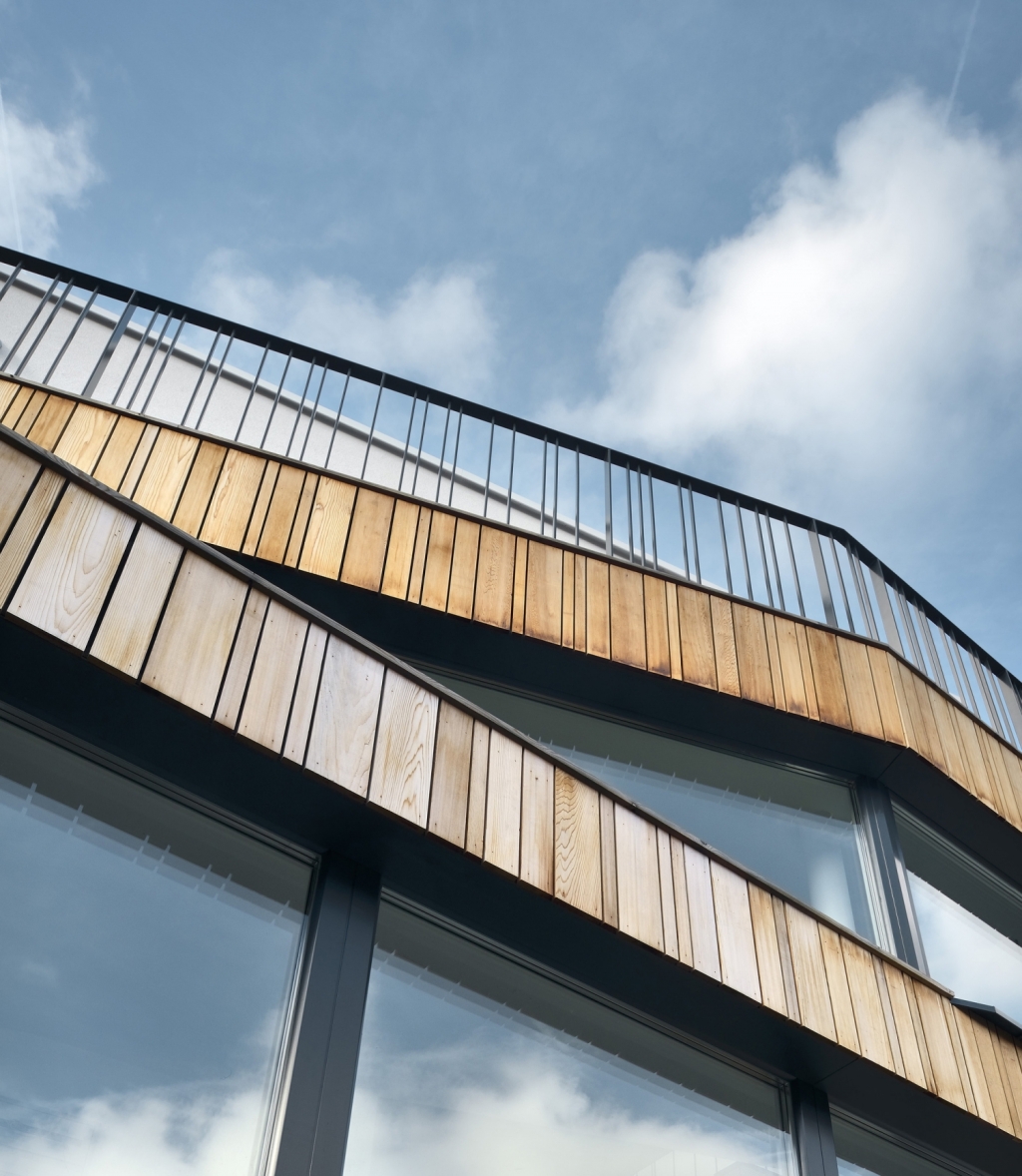
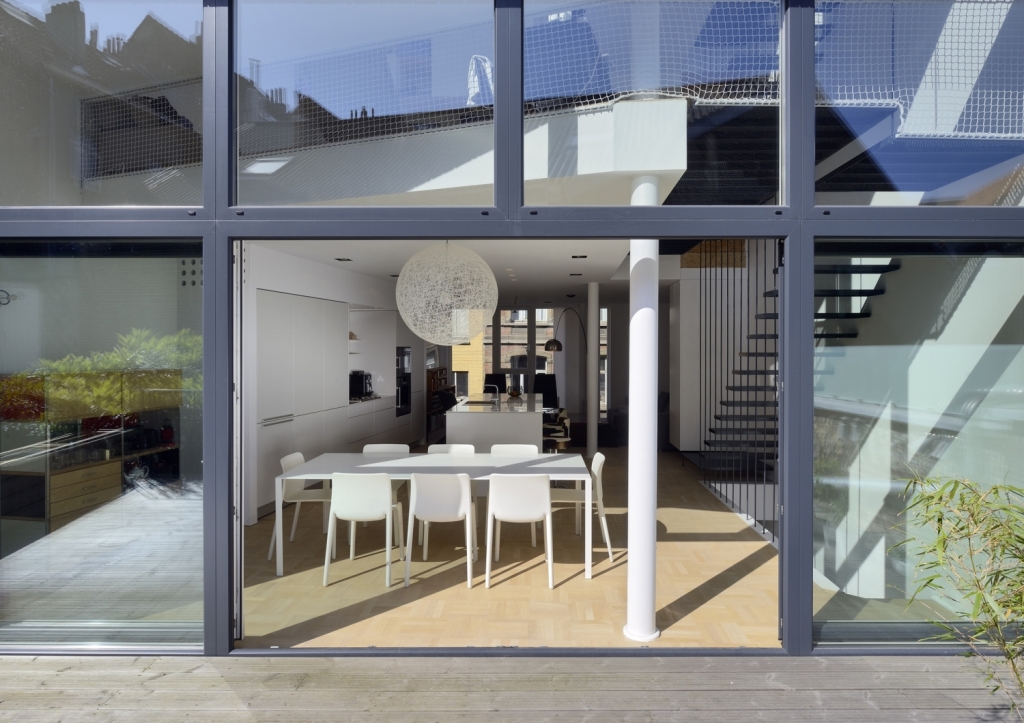
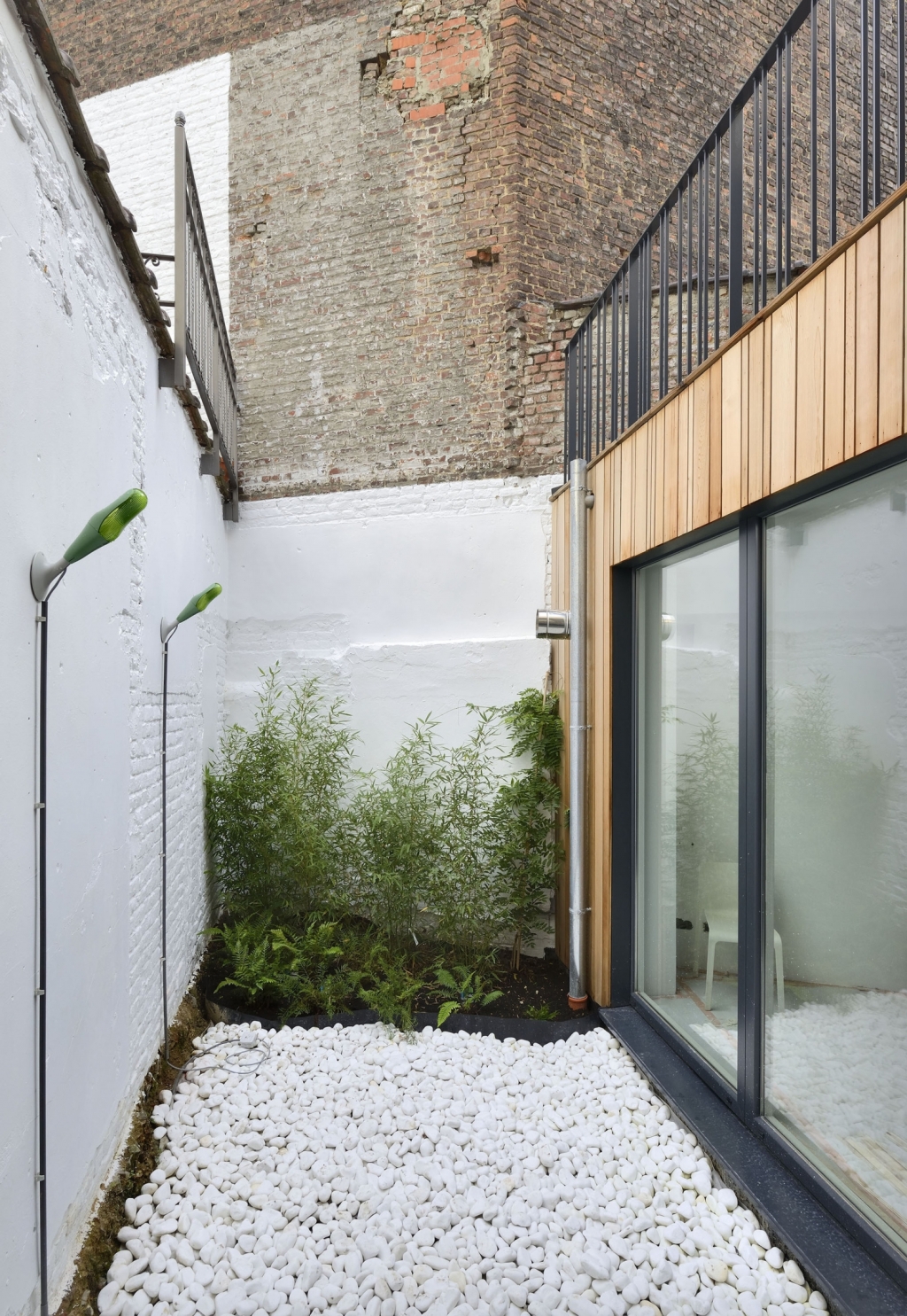
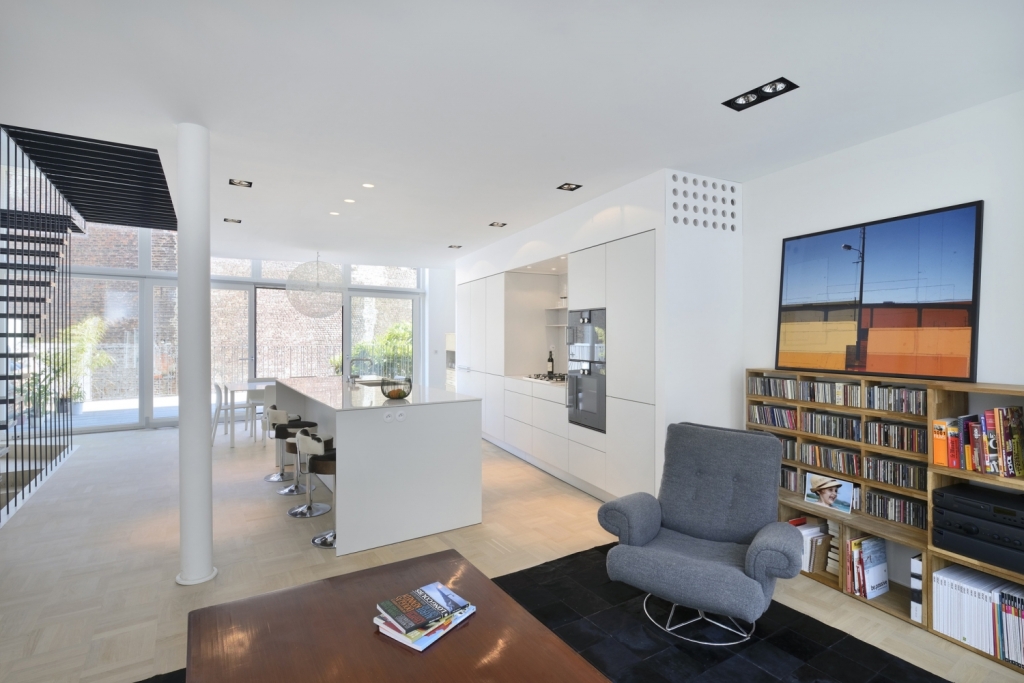
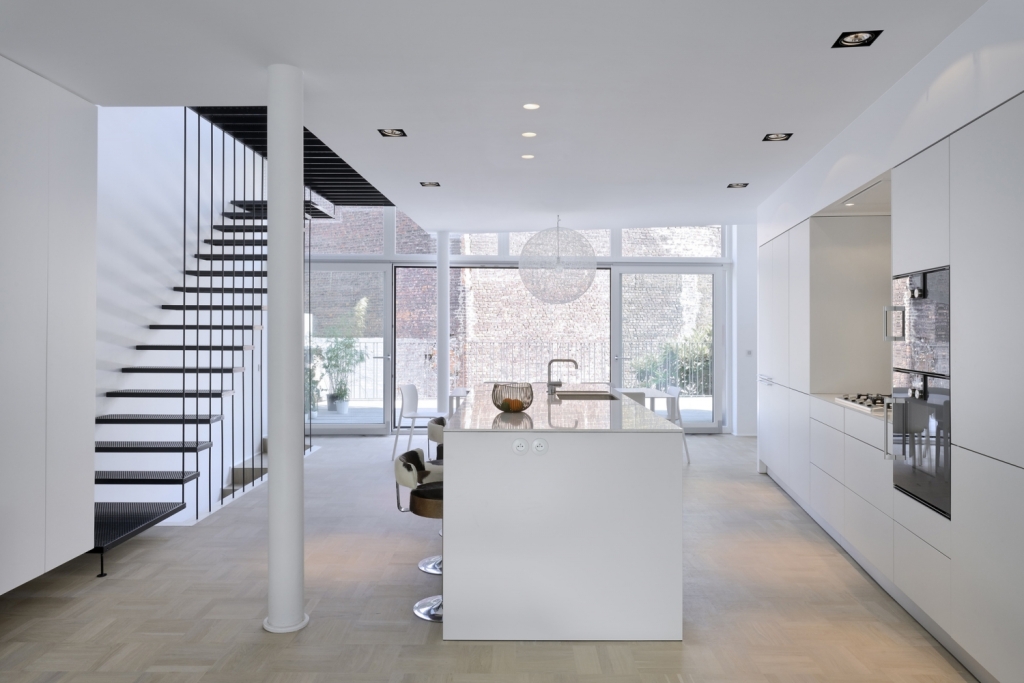
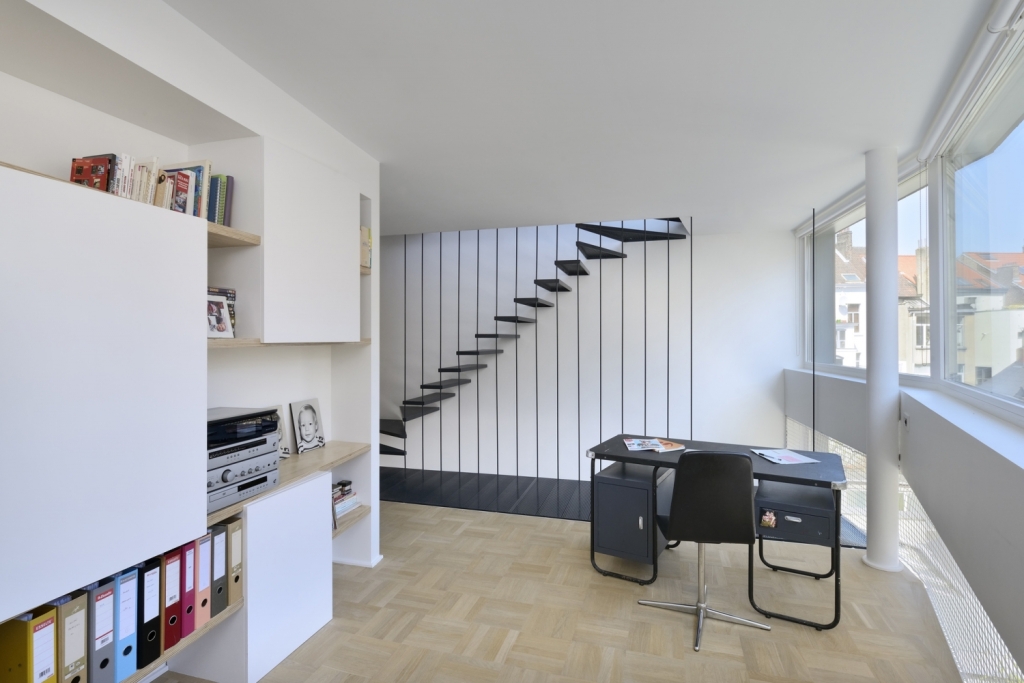
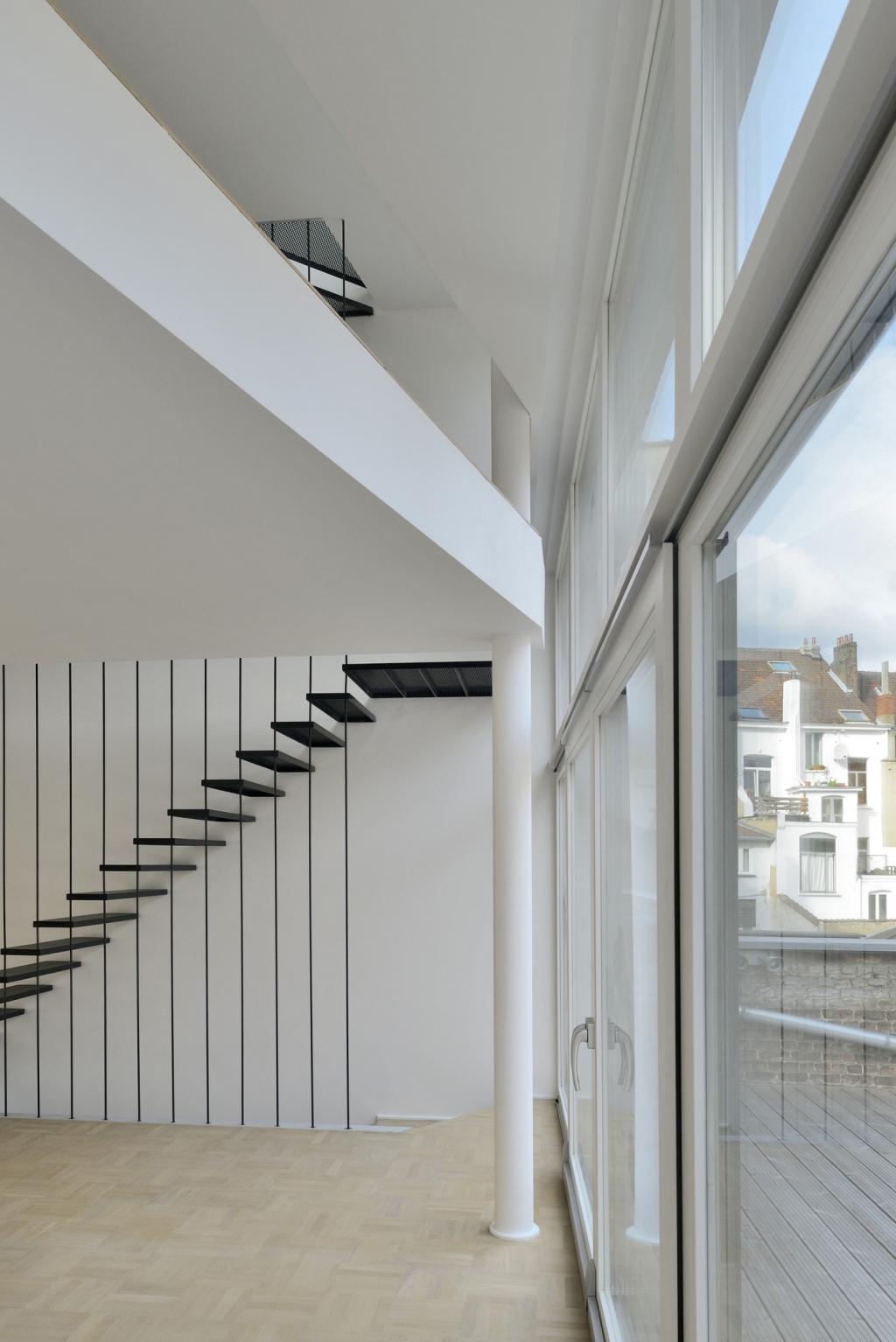
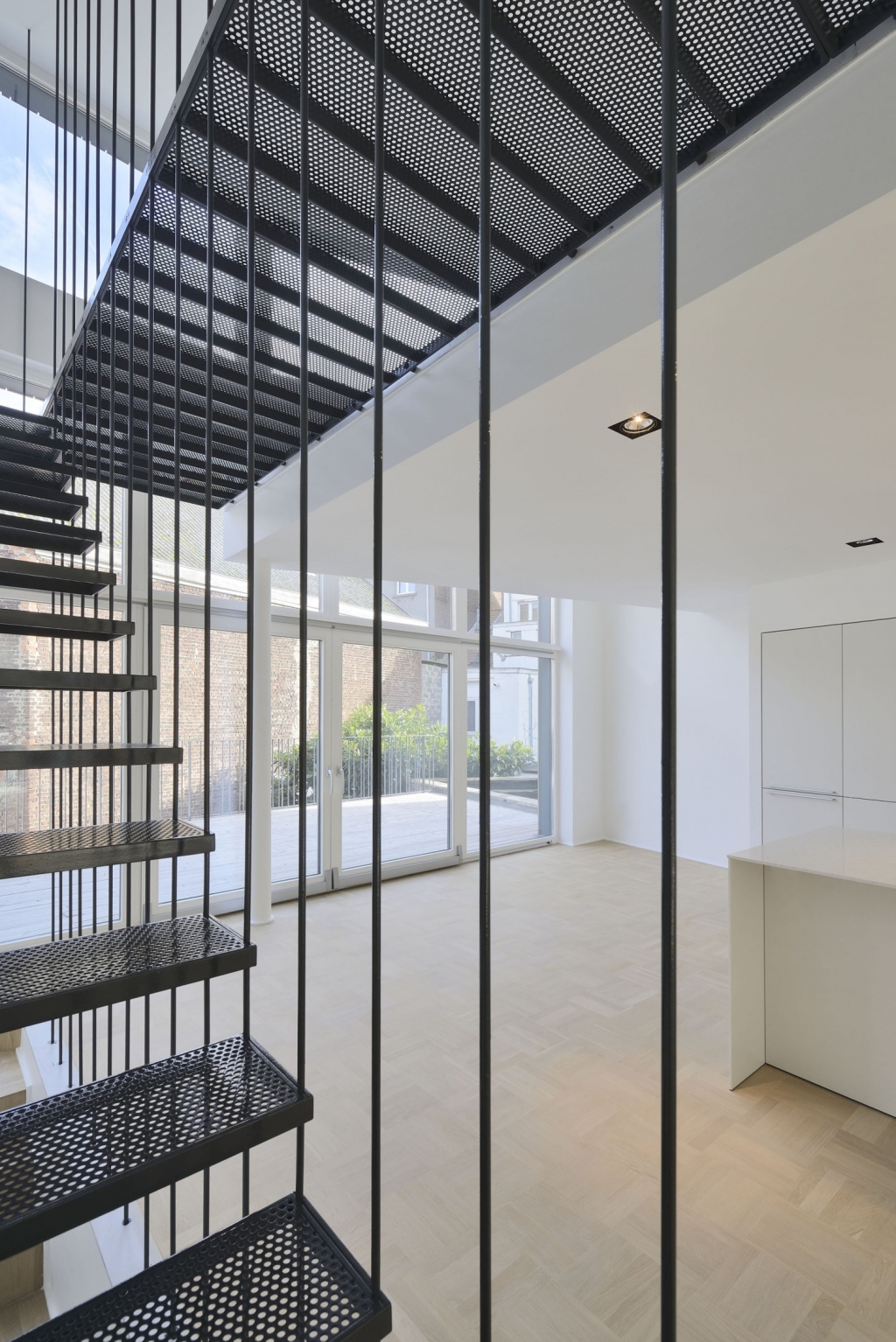
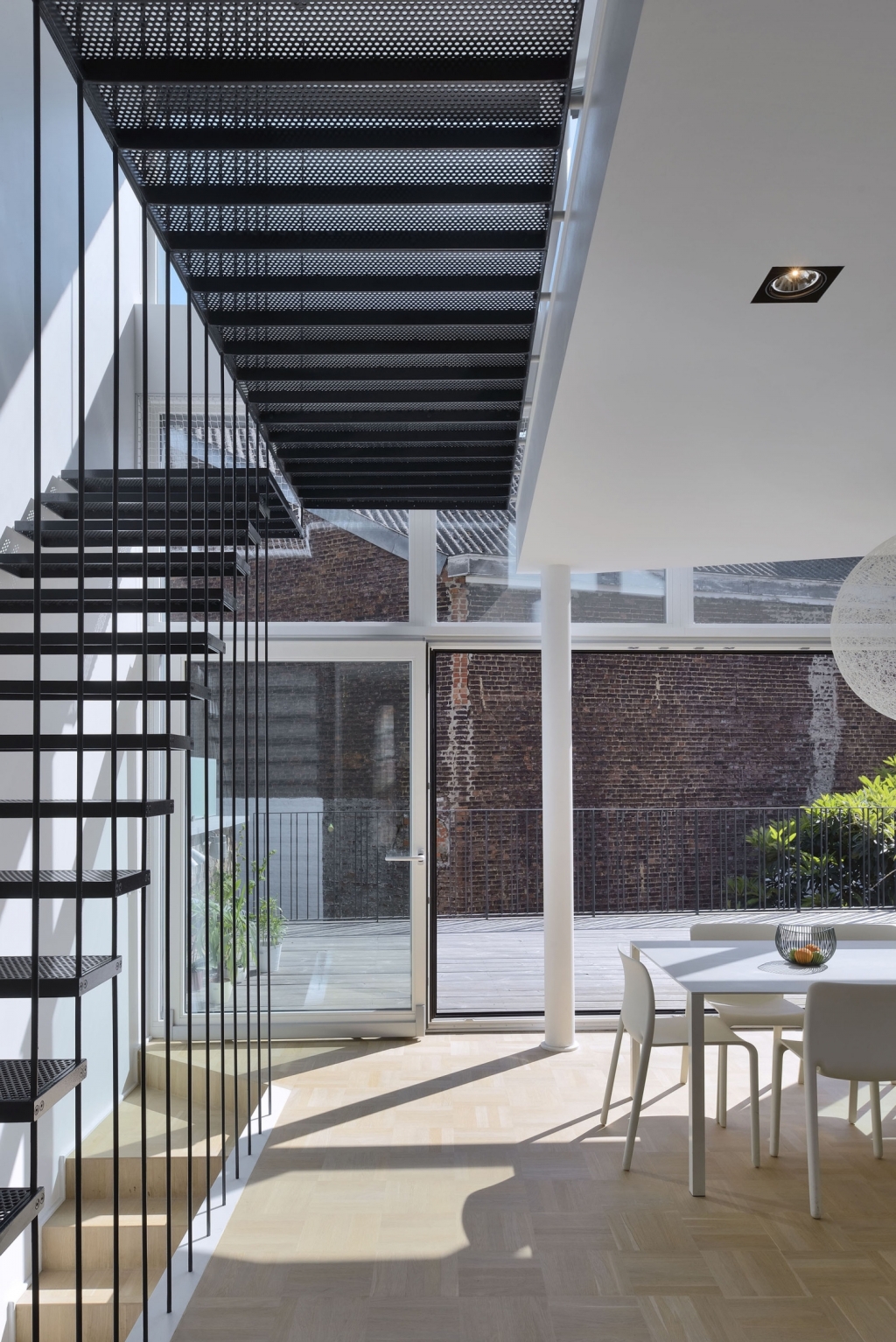
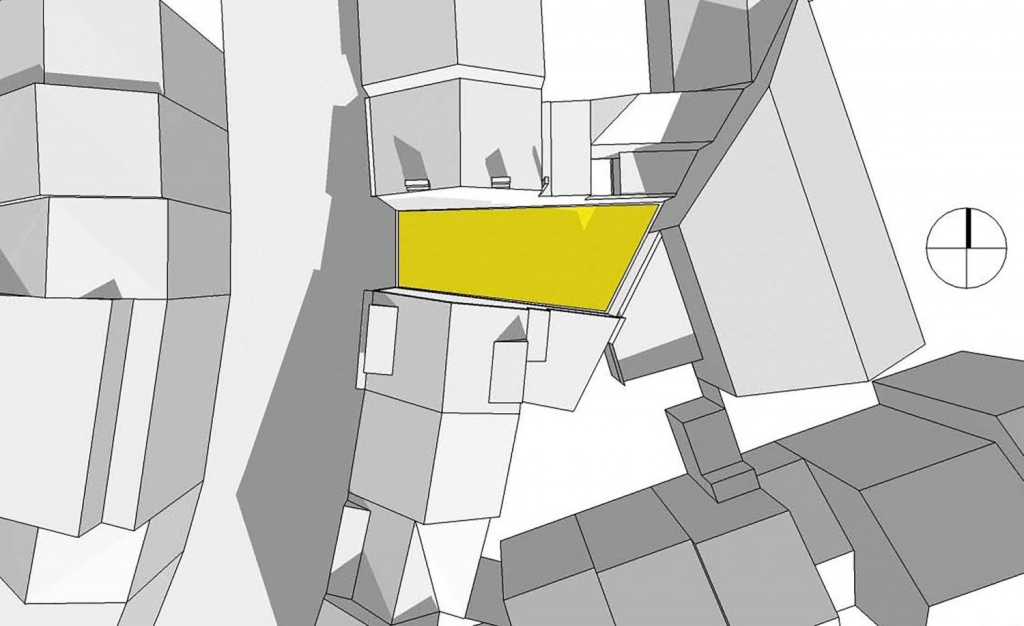
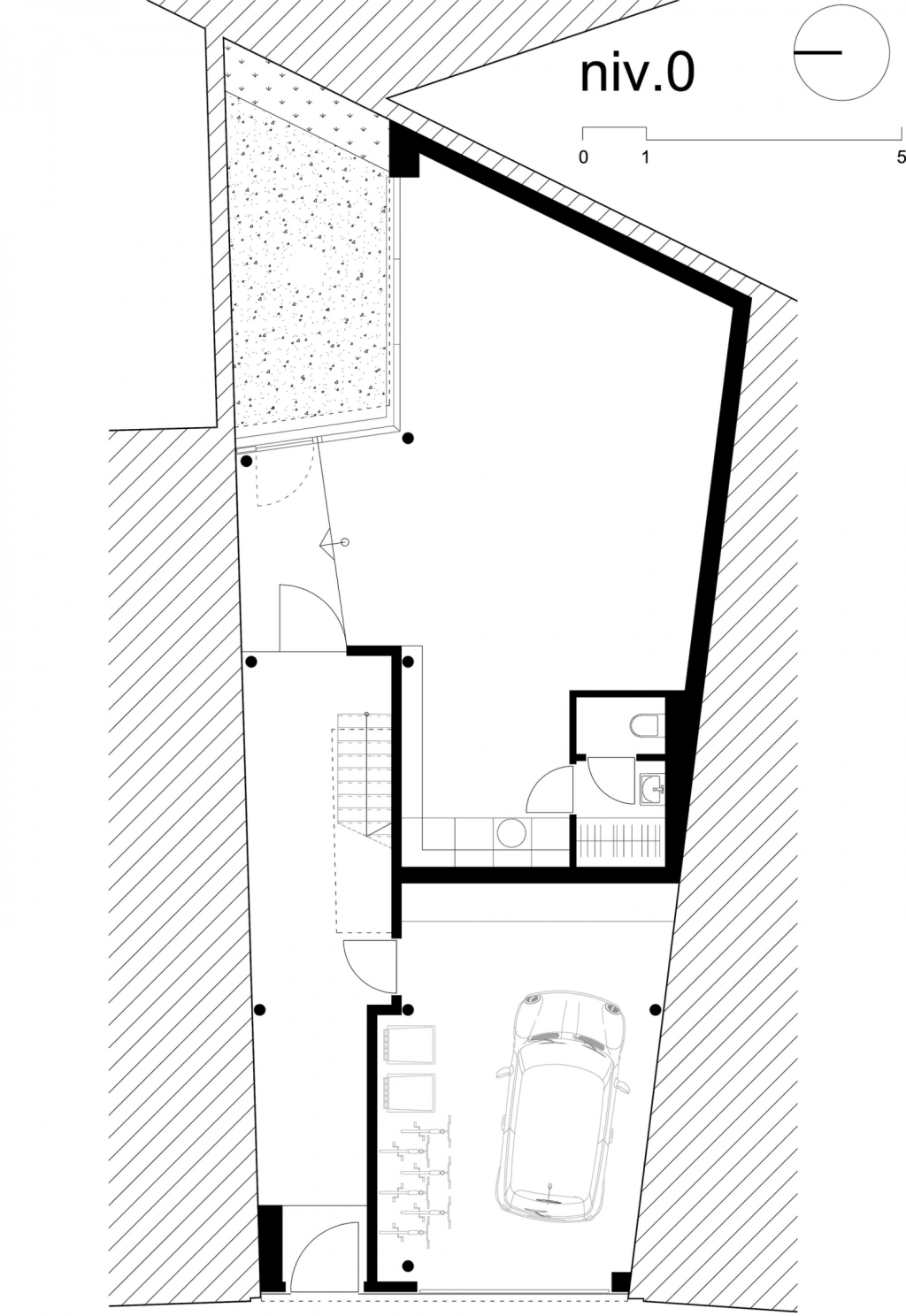
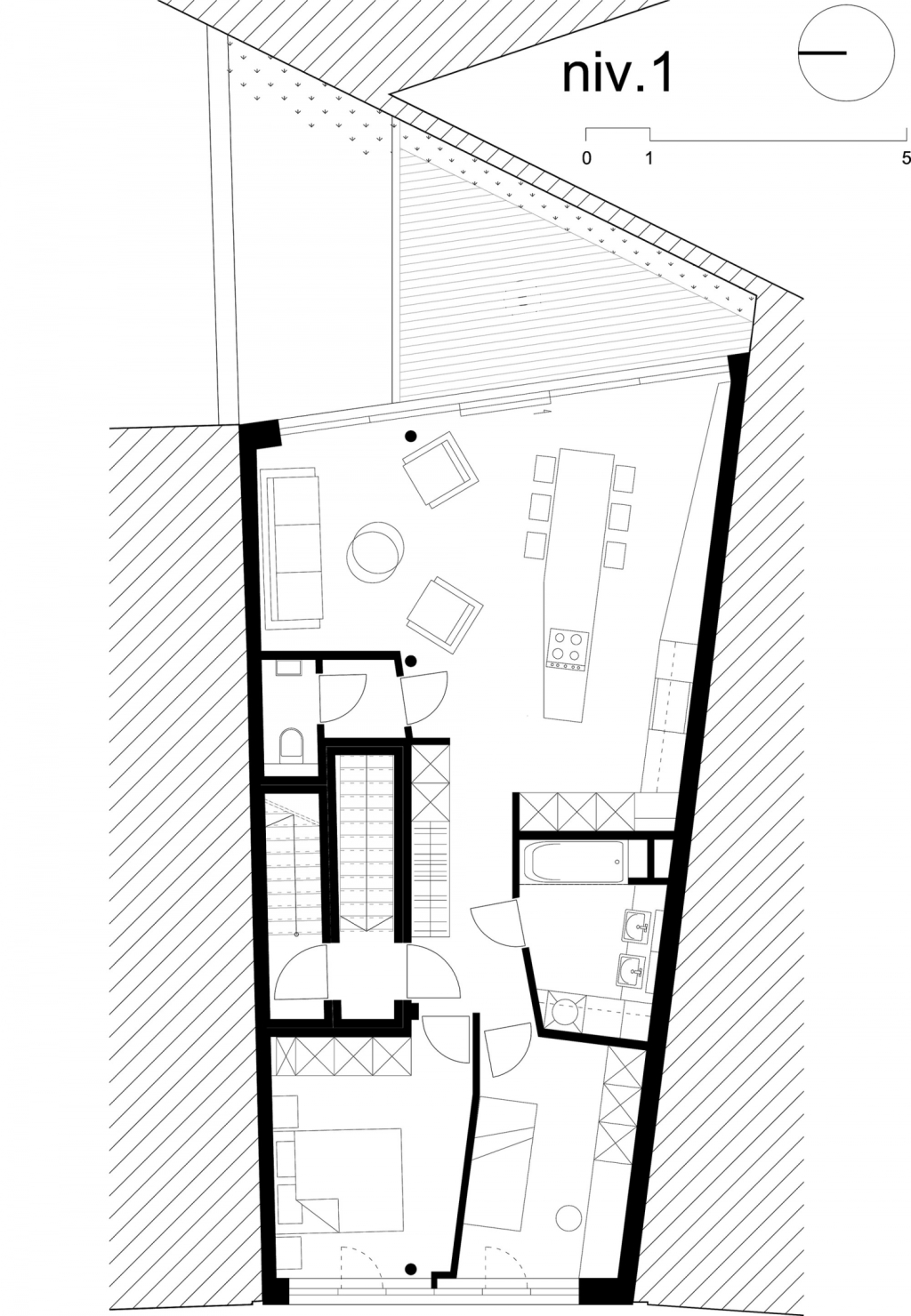
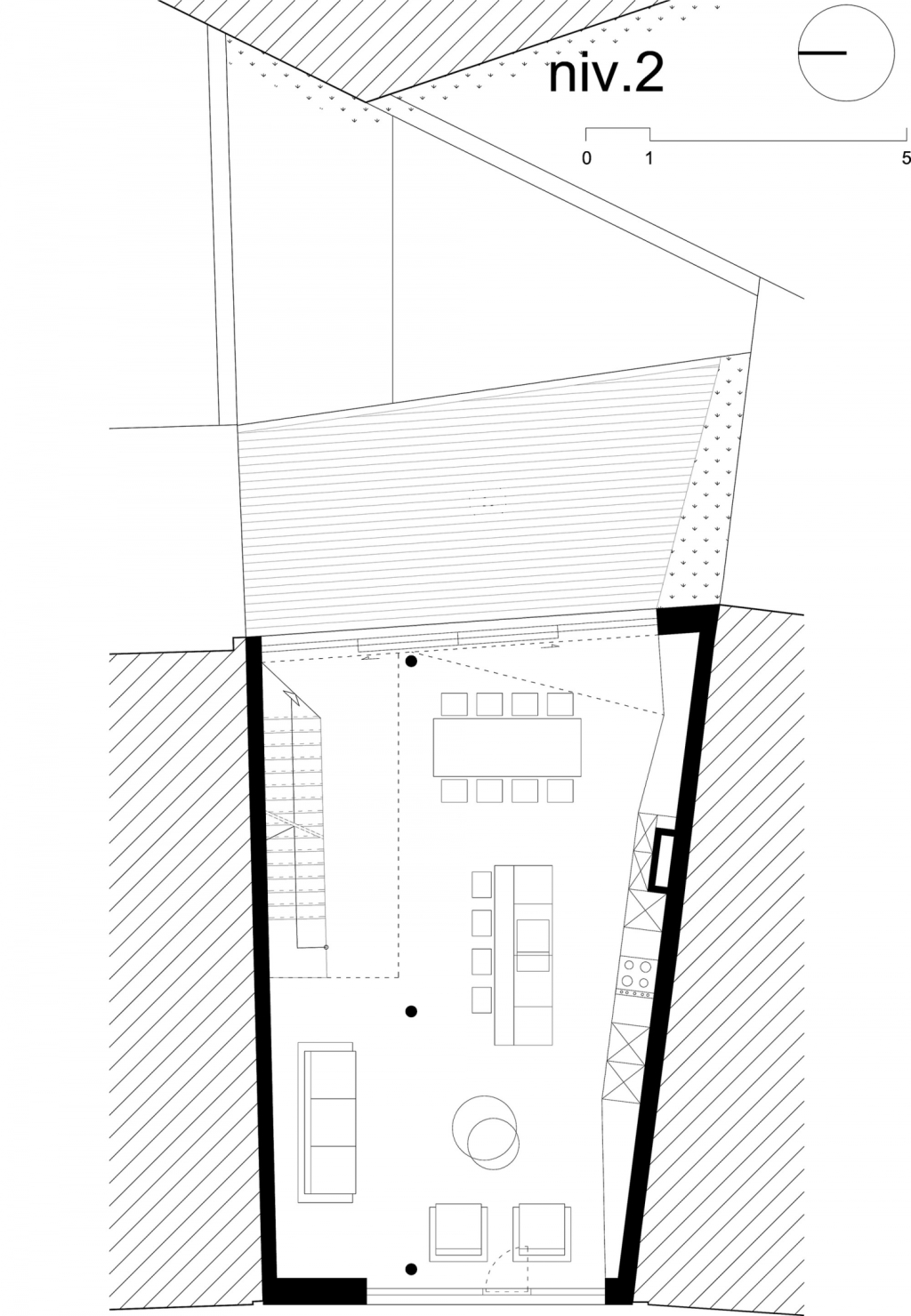
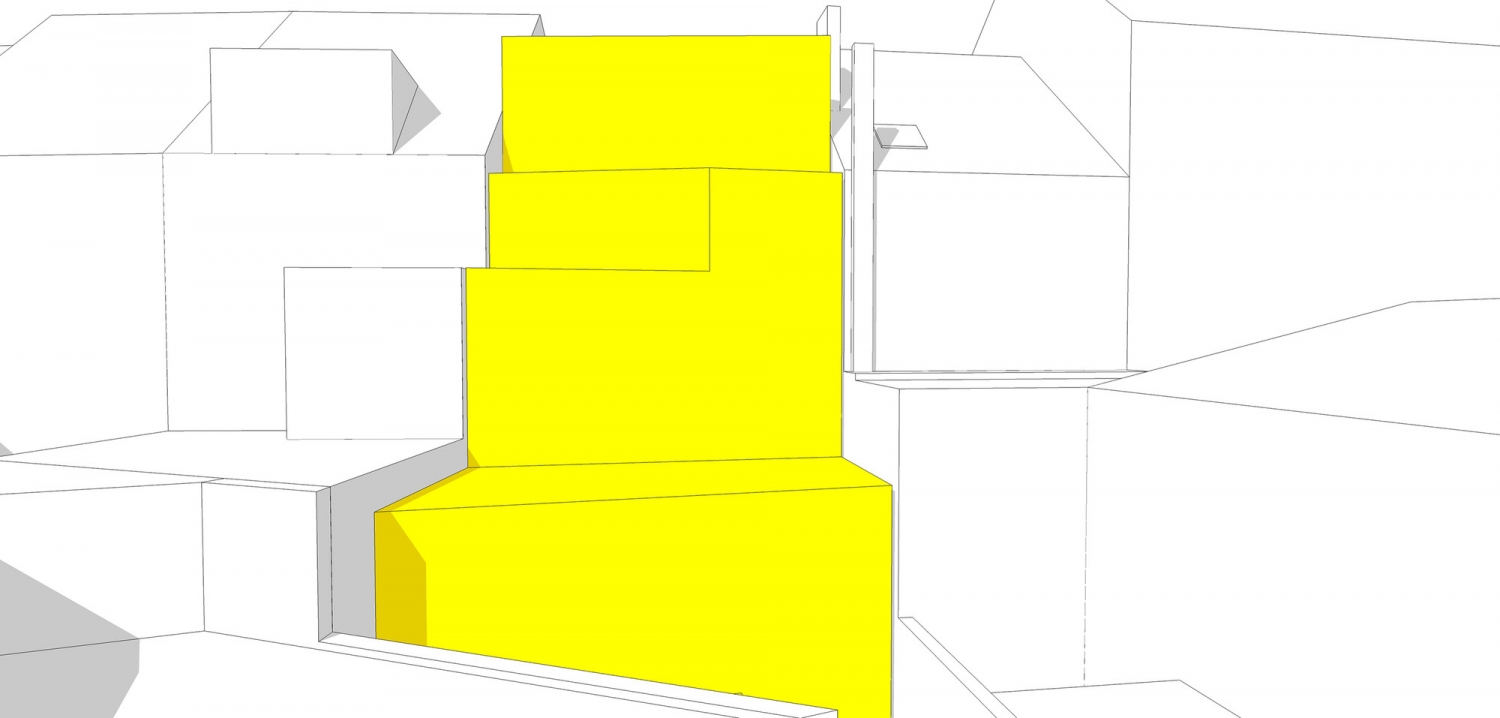
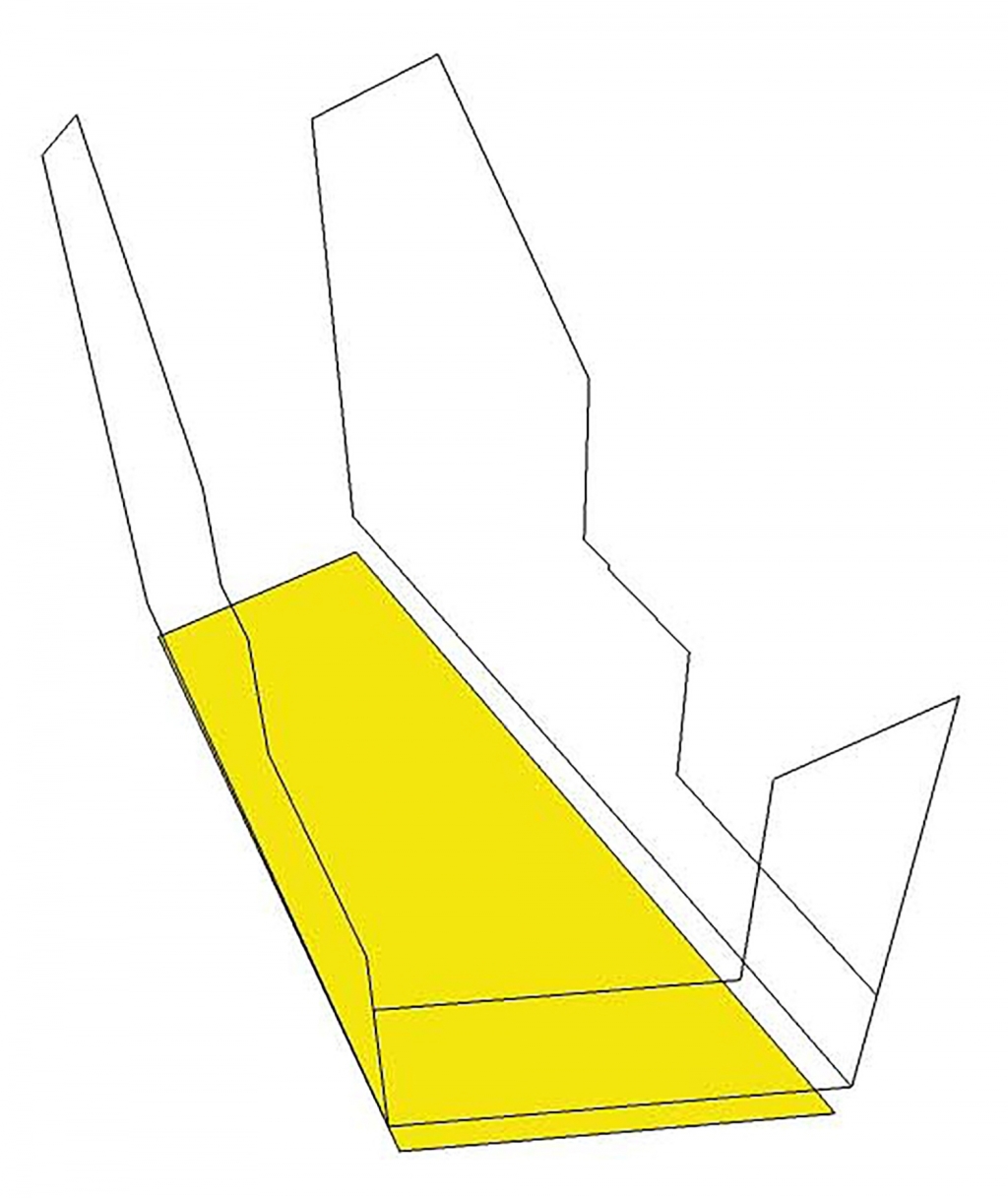
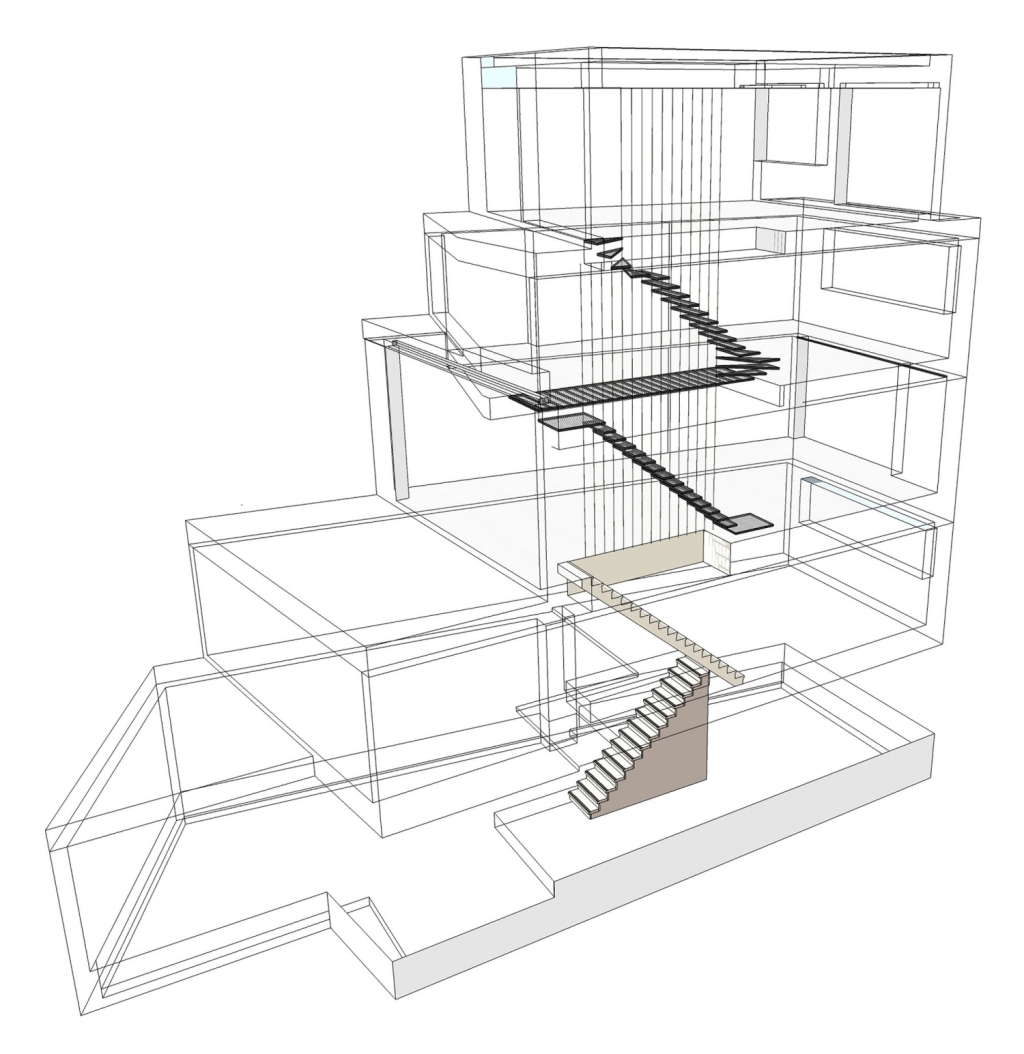
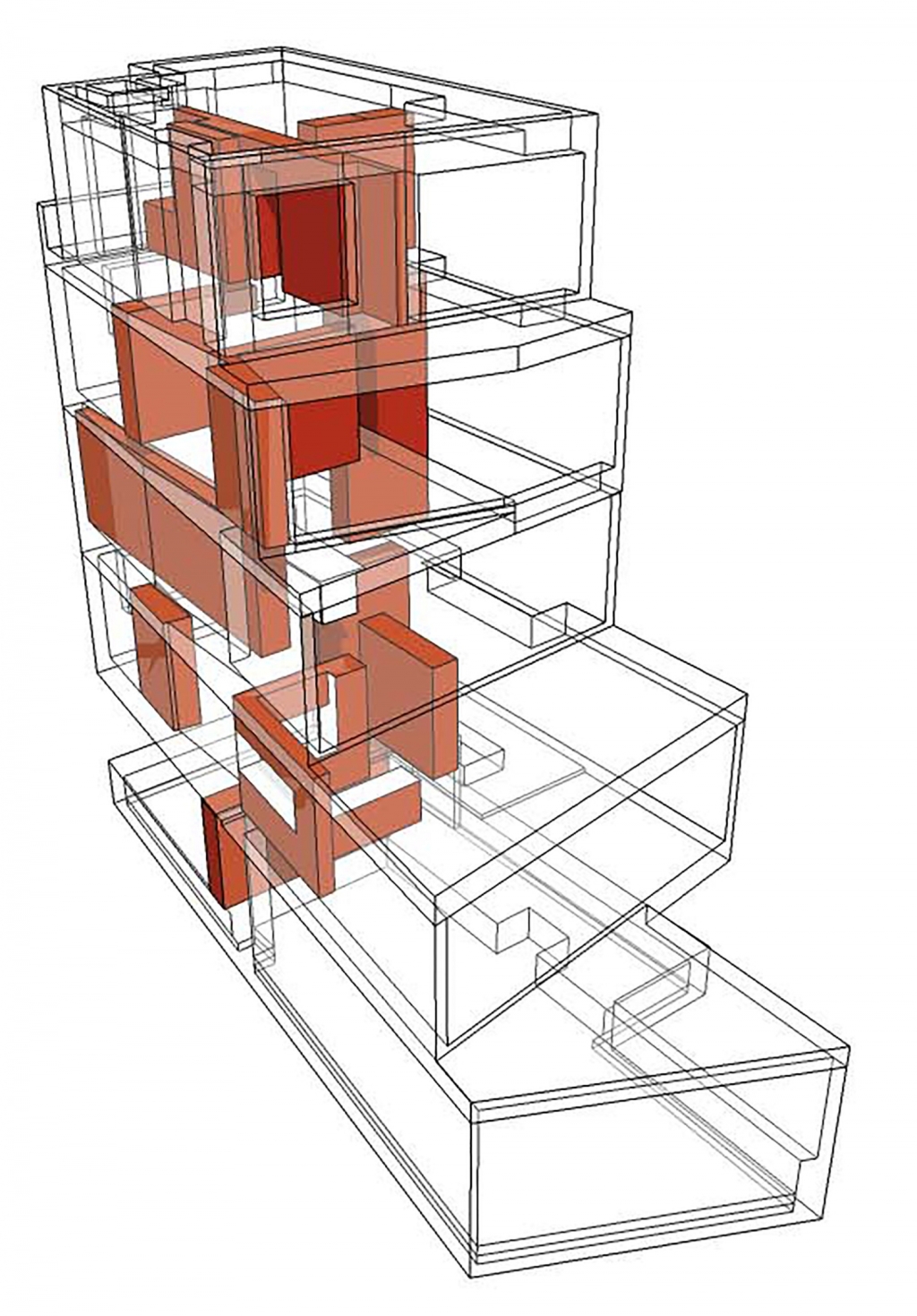
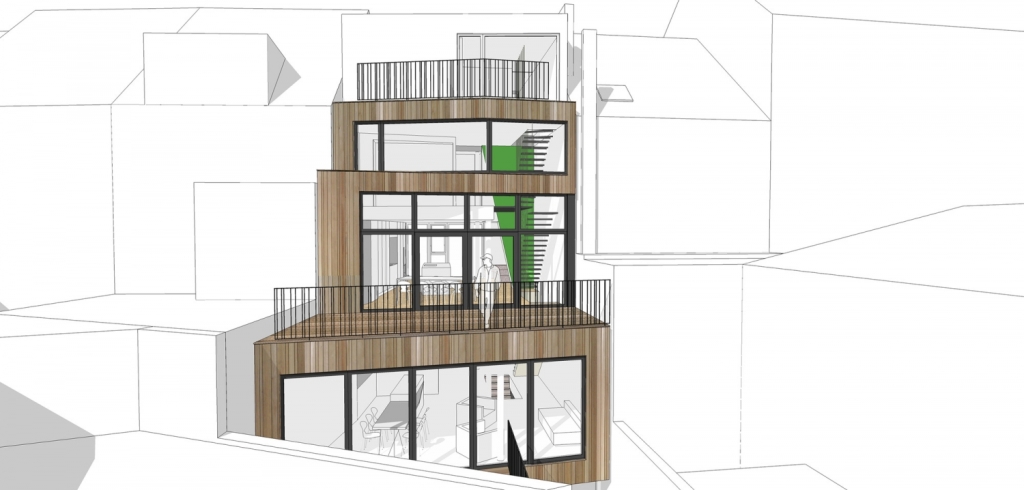
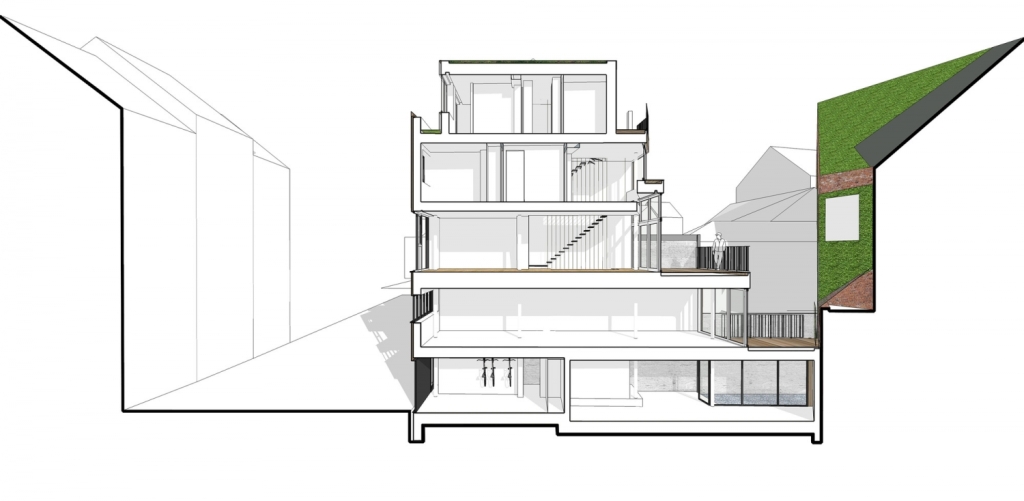
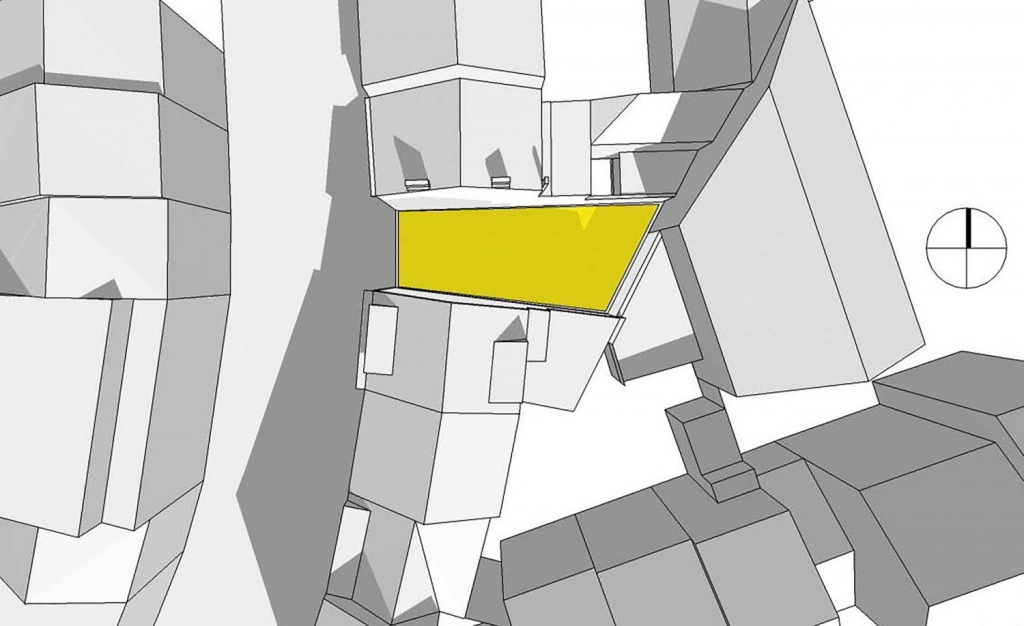
该项目基于生态经济的逻辑:社区较小的区域影响和较大的容积率,既增加了区域之间的交流,同时在距离上,为人们提供了更多的便利。狭小的地域和较弱的土地承载能力让轻木制结构成为建筑的选择。建筑正面外立面上,纵向蜿蜒的金属板装饰,他们是用边框和一排钢制竖柱支撑起来的。虽然没有结构内墙支撑也很容易复原大楼的表面。一楼的公共区域包括:公共空间,垃圾管理,自行车停放,DIY待租办公室和各类风格的住宅空间。阳光会通过墙上朝南方向的天井照进来。两间被动式节能屋位于光照条件更好的较高楼层,并排在隔壁大楼的侧面,使建筑拥有较好的视觉条件和采光条件。为了能够欣赏到下面丰富美丽的自然景观,设计师们仔细安排了窗户的朝向。拥有三层高度的宽敞客厅,占据了主要的开放空间。 译者:蝈蝈 The project is based on an eco-nomy-logy: low territorial impact, densification in a neighborhood offering numerous assets in terms of mobility and in a various urban tissue. The cramped parcel and the modest carrying capacity of the soil made us choose a light wooden structure. The floor plates are carried by the sidewalls and one row of intermediate steel columns and beams, positioned in the length direction of the building. Working without structural inner walls will allow an easy adaptation and reconversion of the surfaces.The ground floor is logically occupied by the public functions: communal spaces, garbage management, bicycles, DIY, an office to rent or a polyvalent space for the residents, lighted by a patio longing the south-oriented adjoining wall. Two passive housings are located on the better lighted higher floors, ranked on each other following the profiles of the neighbor buildings, respecting their views and sun exposure. The living rooms are placed in order to enjoy the full width of the parcel, taking profit of the enlargement behind. The triplexes living room crosses the building and occupies a completely open space.
 关注公众号
关注公众号 川公网安备51010702000609号

 发表于 2026-6-18 12:39:12