|
|
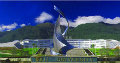
建筑选址于城市大门具有战略意义。边缘由一条高速路,机场路和一条东南向的铁路限定。主要由花岗岩组成的山成了选址的背景同时亚咯巴海湾为其带来的极其漂亮的日落景象成了建筑主要的景观走廊的依据。尽管选址附近的区域目前处于落后状态,但亚喀巴政府已经将此区域总体规划,到2020年,混合发展模式将为此区域带来飞跃。
设计概念说明:
我们都生活在一种真实快节奏的现实与与生俱来的安定,幸福和交流的平衡之中。这个方案的主要灵感来源就是这种平衡艺术,表现在客运站与站场的统一与平衡之中,客运站与站场既表现出了各自的个性又相互和谐。客运站拥有交通枢杻动感和流动性的特点的同时站场为充满生气的亚喀巴提供了一个舞台。这个设计在形态上吸取了背景山的起伏与水的流动性,在有效连接山和水,起到过渡效果的同时它的地标性也回应了作为城市入口的需要。 project in Detail Aqaba Bus Terminal & Plaza Category Future Projects - Competition entries
Location Aqaba, Jordan
Architect maisam architects and engineers
WAF Entry2009
Award World Architecture Festival 2009 - Shortlisted
Aqaba Bus Terminal & Plaza
Aqaba, Jordan
Competition Entry 2007
位置:亚喀巴,约旦
The proposed site is strategically located at the arrival point to the city. Its edges are defined by the Desert Highway linking Aqaba to Amman, the Airport road connecting the site to the King Hussein International Airport and the railroad running along South-East edge of the site.
The geographic portrait of the site is framed by the mountains and the Bay of Aqaba with the Granite Mountains creating a backdrop on one side and with the Aqaba Bay providing stunning sunset views whilst defining the site’s major view corridor.
Although the immediate area surrounding the site is currently under-developed, the visionary ASEZA Master Plan sets a mixed use development pattern for that area thereby defining the site’s urban context for the year 2020.
Design Concept:
We live in a time where a balance between the new reality of our accelerated lives and innate human qualities of happiness, celebration, interaction and exchange forms the very crux of our existence. This art of balance is the main concept driver behind the design approach; which is expressed in the integration of all the elements of a transportation terminal within the elements of a plaza, thus making the terminal and the plaza each truthful to itself and yet in harmony with one another. The terminal incorporates the dynamism of movement and flow inherent to a transportation hub and the plaza provides a vibrant stage for the celebration of life in Aqaba.
The design responds strongly to the need for a landmark at the city’s portal becoming a welcoming statement of arrival both from air and from land.
The design remains true to its context by borrowing from the sheer mass of the mountains and the expanse of the water body. The design’s sculptural quality straddles the site with a powerful surge of architectural energy that seems to manifest itself from the very earth of Aqaba. The mountain formations seem to constantly extend towards the edge of the water body, this phenomenon is captured in the shape of the terminal building which in turn commands uninterrupted views towards the sunset and waters of the Aqaba Bay.
The vision behind the Master plan for Aqaba calls for a vibrant urban setting which is reflected in the design concept where the terminal plaza is an urban magnet: uniting the city developments on one level and on another capturing in its essence the surrounding elements of nature – the mountains, the sea and all that lies between.
Design Description:
From the traveller’s perspective, movement through the building is direct and uncomplicated. On alighting or boarding passengers advance in a flowing movement through the terminal plaza, taking in both the vibrancy of the concourse’s nerve centre and the expanse of the pedestrian plazas. The strength of the sculptural form is derived from its shape linking the water channel along the North-East corridor to the transit round-about at the western tip. This shape is seen in dramatic sweep of the roof plaza which provides uninterrupted views of the Aqaba Bay, also providing a visual link between the design’s water channel and the Aqaba Bay.
This lofty canopy covers a multitude of pulsating events that are also dynamic in their spatial interaction. The concourse is the nerve-centre of the terminal plaza: a double volume space that is bathed in light filtering through the trees of the surrounding plazas. This unique space throbs with life as it provides venue for a multitude of urban activities while also connecting the transition areas with the urban activity centres.
The urban design of the project can be described from the user’s point of views, from inside looking out and from outside looking in. Seen from the inside out, The edge zone is where the indoors meet outdoors is an eventful experience: inviting people to gather in a space with ample shade, vibrant commercial facades and plazas alive with restaurants and cafes. The user’s experience from the inside can be described by the passengers alighting directly into the heart of the welcoming terminal with its high ceilings, quality light and interactive spaces allowing them to mingle with the people waiting to board or with those simply enjoying the activities of the abundant plazas. Seen from the outside in, The landmark quality of the plaza will change when seen from the distance, when seen from a speeding car and when viewed by somebody walking or bicycling along the road or along the outer edges of the terminal plaza. In both cases the flow and sculptural quality of the project will hold different meaning for the viewer. The site location on the gateway to Aqaba city provides several opportunities for a wide range of viewers. The view from the roof of the building will be an event in the lives of its users.
The landscape of the terminal integrates itself with the site and is in constant dialogue with the terminal building surrounding it. The artistic approach to landscaping is based on the idea of creating exciting atmospheres with relation to the terminal’s fluent functionality. Thus the landscape design is conceived as an integral part of the overall architectural scheme of the proposed project.
The site’s connectivity to the street system affords it a high level of functionality. In the design of the inter-city bus terminal no bus stands are assigned particularly for operational parking, the use of overlays for waiting buses overcomes this requirement. The design makes no distinction between alighting and departure bays, they are designed in the same geometry and located next to each other. In the local bus and taxi terminal the focus is on easy flow of buses with little scope for delays; the design involves two long bus stops where the buses stand behind each other; arriving and leaving in the same order. The signage designs incorporates an advanced system of passenger and driver information with dynamic signs and displays continuously keeping the passenger informed.
|
|
 关注公众号
关注公众号 川公网安备51010702000609号


 发表于 2013-9-8 10:39:57